
tichá mapa podlahy je nová časť seriálu Tajomstvá starej školy, pripravená ako dvojjazyčný detský príbeh v slovenčine aj angličtine.
tichá mapa podlahy: začína sa príbeh
V starej škole bolo vždy niečo, čo sa len tak neukázalo na prvý pohľad. Ela a Tomáš to už vedeli. Pod schodmi našli mosadzný kľúč, pri telocvični otvorili starú skrinku číslo 17 a zakaždým sa zdalo, že škola im pošepkáva ďalšie tajomstvo. Tentoraz ich priviedla stopa zo starého klubu Sovy do chodby, kam sa bežne nechodilo. Navyše sa tam už zajtra mala začať drobná oprava podlahy, takže ak bolo na doskách niečo dôležité, nemali veľa času.
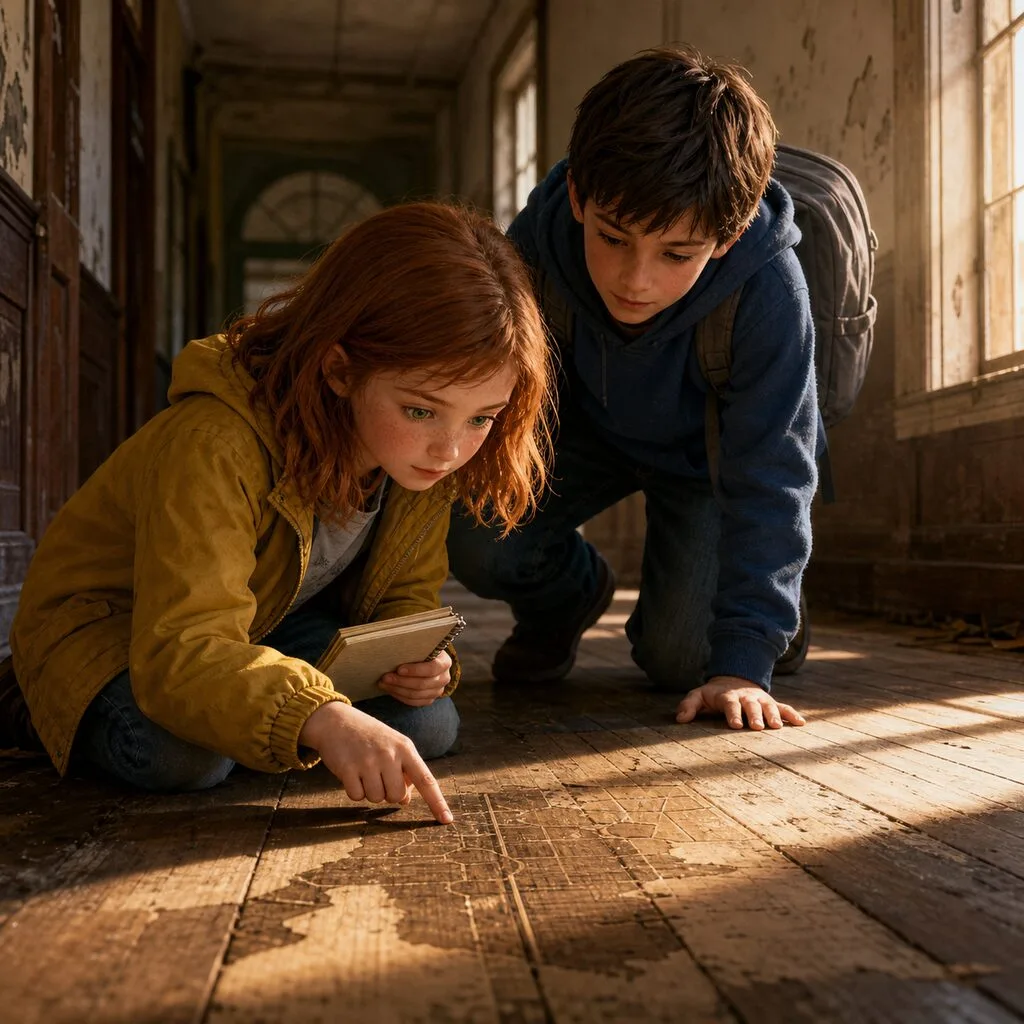
Chodba bola úzka, tichá a trochu chladnejšia než zvyšok školy. Vonku za oknom svietilo mäkké popoludňajšie svetlo, ale sem dovnútra dopadalo len v tenkých pásikoch. Drevo na podlahe bolo tmavé a lesklé od mnohých rokov. No práve v jeho strede si Ela všimla niečo zvláštne.
„Tomáš, pozri sa na to,“ zašepkala a sklonila sa k zemi.
Chlapec sa postavil vedľa nej a prešiel pohľadom po doskách. Najprv nič nevidel. Potom však zbadal, že niektoré boli o čosi svetlejšie a iné tmavšie. Medzi nimi sa tiahli drobné ryhy, akoby ich niekto kedysi prešiel malým nástrojom.
Ela vytiahla svoj malý zošit a začala si kresliť, čo vidí. „Tu začína vzor,“ povedala potichu. „A tu ide ďalej.“
„Vyzerá to ako mapa,“ zamyslel sa Tomáš. „Ale nie papierová.“
Podlaha mlčala, no práve to bolo na nej najzvláštnejšie. Jedna ryha smerovala doľava, druhá doprava a tretia sa končila malou šípkou pri hrane dosky. Keď sa deti lepšie pozreli, zistili, že značky nie sú náhodné. Boli rozmiestnené tak, aby niečo ukazovali.
„Možno je to len ozdoba,“ napadlo Elu, ale hneď pokrútila hlavou. „Nie, niekto to musel urobiť úmyselne.“
Tomáš si kľakol a zmeral vzdialenosť medzi značkami prstami. „Pozri, nie sú vedľa seba len tak. Sú v poradí. Ako keby niekoho viedli.“
Vtom sa za nimi ozvali pomalé kroky. Deti sa otočili, no keď zbadali školníka Karola, hneď sa im uľavilo. Mal na sebe svoju zelenú pracovnú bundu a v očiach ten pokojný výraz, akoby ho v starej škole nič neprekvapilo.
„Tak vy ste už našli aj podlahu, ktorá chce rozprávať,“ povedal s miernym úsmevom.
Ela sa postavila. „Vy viete, čo to je?“
Karol sa na chvíľu zahľadel na dosky. Potom prešiel dlaňou len tesne nad jednou ryhou, akoby nechcel rušiť spiacu spomienku. „Škola si pamätá viac, než si ľudia myslia,“ povedal ticho. „A niekedy si pamätá aj to, čo si písali deti dávno pred vami.“
Tomáš sa zamračil. „Bola to nejaká hra?“
„Možno,“ odvetil Karol. „A možno orientačné znamenia. Kedysi sa podobné značky používali, keď si niekto potreboval ticho označiť cestu. Nie vždy na papieri. Niekedy aj na dreve.“
To bola len malá odpoveď, ale deťom stačila, aby ich zvedavosť ešte viac vzpriamila ako pružina. Ela si zapísala presný začiatok vzoru a Tomáš si všimol, že jedna z dosiek má na okraji drobný zárez.
„To je zvláštne,“ povedal. „Tu akoby bol malý znak.“
Prstom opatrne prešiel po hrane a zrazu sa pousmial. „Počkaj… to je sova.“
Ela sa naklonila bližšie. Naozaj. Na okraji dosky bol vyrezaný drobný symbol malej sovy. Nebol veľký ani nápadný. Keby si človek nekľakol, ľahko by si ho nevšimol.
„Prečo práve sova?“ spýtala sa dievčina.
Karol sa oprel o stenu a prikývol. „Sovy boli pre niektorých žiakov znak ticha, pozorovania a trpezlivého čakania. V starej škole sa kedysi vytvárali malé úkryty. Miesta, kde sa čítalo, písalo, rozprávalo pošepky a schovávali sa drobné veci.“
„Tajný klub?“ vyhŕkol Tomáš.
„Možno klub,“ povedal Karol. „Možno len tichý kút, ktorý mal niekomu pomáhať. To už musíte zistiť sami.“
Deti si vymenili pohľad. V ich očiach sa zablyslo vzrušenie, no zároveň aj opatrnosť. Nebolo treba utekať ani robiť veľké kroky. Stačilo sledovať stopy.
Najprv si Ela myslela, že najjasnejšia šípka ukazuje správny smer. Chcela sa hneď vybrať k miestu, kde sa dosky zbiehali pri stene. Tomáš ju však zastavil zdvihnutou rukou.
Keď sa veci začnú meniť
„Počkaj,“ povedal pokojne. „Nechajme si čas. Ak je to mapa, musíme ju čítať celú.“
Dievča sa na chvíľu zamračilo, no potom prikývlo. Spolu počítali dosky, porovnávali šípky a zapisovali si poradie značiek. Medzitým Karol stál opodiaľ a nechával ich premýšľať. Nepomáhal im priamo, ale jeho tichá prítomnosť bola ako svetlo, ktoré neoslňuje.
Po chvíli Tomáš ukázal na jednu vetvu značiek. „Toto by viedlo len k prázdnej stene.“
Ela prikývla. „A tu je druhá cesta. Tá ide ďalej.“
„Presne,“ ozval sa Karol. „Niekedy je najviditeľnejší smer len omyl. Správna cesta býva tichšia.“
Deti sa posunuli o pár krokov ďalej. Na zemi bola ďalšia doska s jemnou ryhou a hneď za ňou stál nenápadný starý kus dreva, ktorý vyzeral ako obyčajná súčasť steny. Lenže keď naň dopadlo slnečné svetlo, ukázalo sa, že je to skrytý rám dverí.
„Tu!“ zašepkala Ela.
Tomáš položil dlaň na úzky okraj. Dvere neboli zamknuté. Otvorili sa ľahko, akoby čakali len na niekoho, kto si všimne správne značky. Za nimi bola malá miestnosť, ktorá sa z chodby zdala úplne neviditeľná.
Vo vnútri bolo ticho. Skutočné, mäkké ticho, aké sa objaví len v miestnosti, do ktorej dlho nikto nevstúpil. Na stole ležalo niekoľko starých papierikov, malá krabička a zopár drobných predmetov. Nebolo tam nič lesklé ani veľké. Napriek tomu miestnosť pôsobila dôležito.
Ela sa pomaly rozhliadla. „Vyzerá to ako úkryt,“ povedala potichu.
„Alebo miesto na premýšľanie,“ dodal Tomáš.
Na stole ležal zoznam mien. Niektoré boli vyblednuté, iné čitateľné len napoly. Vedľa nich boli drobné poznámky, krátke vety a značky v tvare malých šípok. Z krabičky vykukovali staré gombíky, farebná stuha a jeden zrolovaný papierik.
Karol vošiel dnu až posledný. Neprehovoril hneď. Len sa rozhliadol s výrazom, akoby sa vrátil na známe miesto z dávnych čias.
„Tak predsa,“ povedal napokon. „Bývalí žiaci si tu ukrývali zápisky a malé predmety. Chodili sem potichu, keď chceli byť sami alebo keď si niečo potrebovali nechať pre seba.“
Ela otvorila papierik a opatrne ho rozvinula. Bola na ňom len krátka veta: „Nezabudni sledovať sovu.“
„Tá sova je všade,“ usmial sa Tomáš.
„A možno je dôležitejšia, než sa zdá,“ odvetila Ela.
Potom si všimla, že pri jednom mene na zozname chýba časť. Kúsok papiera bol odtrhnutý, no na zadnej strane starej kartičky, ktorá ležala vedľa, bolo čosi napísané drobným písmom. Tomáš ju otočil a nahlas prečítal: „Patrilo tým, čo radi počúvali ticho.“
Deti sa na seba pozreli. Nebolo to celé riešenie. Stále nevedeli, komu presne miestnosť patrila. No nová stopa bola jasná a pokojná. Ukazovala na skupinu žiakov, ktorí možno kedysi radi sedávali v tichu, písali si poznámky a ukrývali malé tajomstvá pred ruchom školy.
Karol si zložil ruky za chrbát. „Treba len počúvať pomaly,“ povedal.
Tomáš sa usmial. „Takže sme našli správny smer.“
„Áno,“ prikývol Karol. „A našli ste ho spolu.“
Ela si zavrela zápisník a odložila ceruzku. Mala pocit, že v miestnosti sa rozhostil pokoj, akoby sa po dlhom čakaní niečo konečne posunulo na svoje miesto. Nebolo potrebné nič viac dokazovať. Zistili, že podlahový vzor bol naozaj mapou. Zistili aj to, že za skrytými dverami býval tichý úkryt plný starých spomienok. A čo bolo najlepšie, odhalili to bez hádky a bez zhonu.
Keď sa vrátili do chodby, teplé svetlo už bolo mäkšie. Na doskách pod nohami sa malá sova zaleskla len na okamih, akoby im chcela povedať, že ich cesta pokračuje. Deti sa zastavili ešte raz pri dverách, no tentoraz už necítili napätie. Len zvedavosť.
„Myslíš, že tam ešte niečo je?“ spýtala sa Ela.
Tomáš si upravil popruh na batohu. „Určite. A teraz vieme, kde hľadať ďalej.“
Karol zamkol dvere za nimi len napoly. Potom sa na deti pokojne usmial. „Niekedy stačí, že človek nájde správnu otázku,“ povedal.
Dôležitý okamih
Ela sa zasmiala. „A my máme hneď niekoľko otázok.“
„Presne,“ dodal Tomáš.
Odchádzali z chodby pomaly. Nie preto, že by sa báli. Skôr preto, že si chceli zapamätať každý detail. Tichú podlahu. Drobné ryhy. Symbol sovy. A pocit, že škola im aj tentoraz dovolila nazrieť o kúsok hlbšie do svojich spomienok.
Za skrytými dverami zostala miestnosť, ktorá stále čakala na ďalšie odhalenie. A niekde v nej, možno na ďalšej kartičke alebo v starom papieri, sa mohla skrývať odpoveď na otázku, komu patrilo toto tiché miesto v starej časti školy.
Ela a Tomáš to ešte nevedeli. No vôbec im to nevadilo. Tajomstvo sa otvorilo len trochu, a práve to stačilo, aby mali chuť pokračovať ďalej. Navyše teraz mali novú stopu: vyrezanú malú sovu na hrane dosky.
A tá určite viedla k ďalšiemu príbehu.
Secrets of the Old School, part 9: The Quiet Floor Map
The Story Begins
In the old school, there was always something that did not show itself at first glance. Ella and Thomas already knew that. Under the stairs, they had found a brass key. Near the gym, they had opened old locker number 17. Each time, it felt as if the school was whispering another secret to them.
This time, a clue from the old Owls Club led them to a hallway where children did not usually go. What was more, a small floor repair was supposed to begin there tomorrow. So if there was something important in the wooden boards, they did not have much time.
The hallway was narrow, quiet, and a little colder than the rest of the school. Outside the window, soft afternoon light was shining, but only thin stripes fell inside. The wood on the floor was dark and shiny from many years. Yet right in the middle, Ella noticed something strange.
"Thomas, look at this," she whispered, bending down.
The boy stood beside her and looked over the boards. At first, he saw nothing. Then he noticed that some boards were a little lighter and some were darker. Between them were tiny lines, as if someone had once passed a small tool over them.
Ella took out her small notebook and began to draw what she saw. "This is where the pattern begins," she said softly. "And here it continues."
"It looks like a map," Thomas thought aloud. "But not a paper one."
The floor stayed silent, but that was the strangest thing about it. One line pointed left, another pointed right, and a third ended in a tiny arrow near the edge of a board. When the children looked more closely, they found that the marks were not random. They were placed to show something.
"Maybe it is only decoration," Ella said, but then she shook her head. "No, someone made this on purpose."
Thomas knelt down and measured the distance between the marks with his fingers. "Look, they are not just next to each other. They are in a order. As if they were leading someone."
Just then, slow footsteps sounded behind them. The children turned, and when they saw Caretaker Karl, they felt better at once. He wore his green work jacket, and his eyes had that calm look, as if nothing in the old school could surprise him.
"So, you have found the floor that wants to talk," he said with a small smile.
Ella stood up. "You know what it is?"
Karl looked at the boards for a moment. Then he moved his hand just above one line, as if he did not want to disturb a sleeping memory. "The school remembers more than people think," he said quietly. "And sometimes it remembers what children wrote down long before you."
Thomas frowned. "Was it some kind of game?"
"Maybe," Karl answered. "And maybe it was a sign for finding your way. Long ago, people sometimes used marks like these when they needed to show a path quietly. Not always on paper. Sometimes on wood too."
It was only a small answer, but it was enough to make the children even more curious. Ella wrote down the exact start of the pattern, and Thomas noticed that one board had a tiny notch on its edge.
"That is strange," he said. "It is like a little sign here."
He carefully ran his finger along the edge, and then he smiled. "Wait… it is an owl."
Ella leaned closer. It was true. On the edge of the board, there was a small carved symbol of an owl. It was not big or flashy. If someone did not kneel down, they might never notice it.
When Things Start to Change
"Why an owl?" the girl asked.
Karl leaned against the wall and nodded. "For some pupils, owls were a sign of silence, watching, and patient waiting. In the old school, small hiding places were made long ago. Places to read, write, speak in whispers, and hide little things."
"A secret club?" Thomas blurted out.
"Maybe a club," Karl said. "Maybe just a quiet corner that helped someone. You will have to find that out yourselves."
The children exchanged a look. Excitement flashed in their eyes, but caution was there too. They did not need to run or make big moves. It was enough to follow the clues.
At first, Ella thought the clearest arrow showed the right way. She wanted to go straight to the place where the boards met near the wall. But Thomas stopped her with a raised hand.
"Wait," he said calmly. "Let us take our time. If this is a map, we need to read all of it."
The girl frowned for a moment, then nodded. Together they counted boards, compared arrows, and wrote down the order of the marks. Meanwhile, Karl stood a little way off and let them think. He did not help them directly, but his quiet presence was like light that did not shine too brightly.
After a while, Thomas pointed to one branch of the marks. "This would lead only to an empty wall."
Ella nodded. "And here is the other path. This one goes farther."
"Exactly," said Karl. "Sometimes the most visible way is only a mistake. The right path is often quieter."
The children moved a few steps farther. On the floor there was another board with a soft line, and right behind it stood an unremarkable old piece of wood that looked like a normal part of the wall. But when sunlight fell on it, they could see that it was a hidden door frame.
"Here!" Ella whispered.
Thomas put his hand on the narrow edge. The door was not locked. It opened easily, as if it had only been waiting for someone who noticed the right marks. Behind it was a small room that seemed completely invisible from the hallway.
Inside, it was quiet. Real, soft quiet, the kind that comes only to a room where no one has entered for a long time. On the table lay a few old slips of paper, a small box, and some little objects. There was nothing shiny or large there. Still, the room felt important.
Ella slowly looked around. "It looks like a hiding place," she said softly.
"Or a place for thinking," Thomas added.
On the table lay a list of names. Some were faded, and some could only be read halfway. Beside them were small notes, short sentences, and marks shaped like little arrows. From the box, old buttons, a colorful ribbon, and one rolled-up paper peeked out.
Karl came in last. He did not speak at once. He only looked around with an expression like someone returning to a familiar place from long ago.
"So it was true after all," he said at last. "Former pupils hid notes and little objects here. They came quietly when they wanted to be alone or when they needed to keep something for themselves."
Ella opened the paper and carefully unrolled it. There was only one short sentence on it: "Do not forget to watch the owl."
"That owl is everywhere," Thomas said with a smile.
"And maybe it is more important than it seems," Ella answered.
Then she noticed that one name on the list was missing a part. A piece of paper had been torn away, but on the back of an old card lying next to it, something was written in small letters. Thomas turned it over and read aloud: "It belonged to those who liked to listen to silence."
An Important Moment
The children looked at each other. It was not the whole answer. They still did not know exactly whose room it had been. But the new clue was clear and calm. It pointed to a group of pupils who may have liked to sit in silence long ago, write notes, and hide small secrets from the noise of the school.
Karl folded his hands behind his back. "You just need to listen slowly," he said.
Thomas smiled. "So we found the right direction."
"Yes," Karl nodded. "And you found it together."
Ella closed her notebook and put away her pencil. She had the feeling that peace had filled the room, as if something had finally moved to the right place after a long wait. There was no need to prove anything more. They had learned that the floor pattern was truly a map. They had also learned that behind the hidden door was a quiet hiding place full of old memories. And best of all, they found it without an argument and without rushing.
When they returned to the hallway, the warm light had grown softer. On the boards under their feet, the small owl shone for just a moment, as if it wanted to tell them that their journey would continue. The children stopped once more by the door, but this time they felt no tension. Only curiosity.
"Do you think there is more there?" Ella asked.
Thomas adjusted the strap on his backpack. "For sure. And now we know where to look next."
Karl locked the door behind them only halfway. Then he gave the children a calm smile. "Sometimes it is enough for a person to find the right question," he said.
Ella laughed. "And we have quite a few questions."
"Exactly," Thomas added.
They walked out of the hallway slowly. Not because they were afraid. Rather because they wanted to remember every detail. The quiet floor. The tiny lines. The owl symbol. And the feeling that the school had once again let them peek a little deeper into its memories.
Behind the hidden door, the room stayed there, waiting for the next discovery. And somewhere inside it, perhaps on another card or in an old paper, there could still be the answer to the question of who had used this silent place in the old part of the school.
Ella and Thomas did not know yet. But they did not mind at all. The mystery had opened only a little, and that was enough to make them want to continue. What was more, they now had a new clue: the small owl carved into the edge of the board.
And that would surely lead to the next story.