
Vypočujte si slovenskú audio verziu príbehu
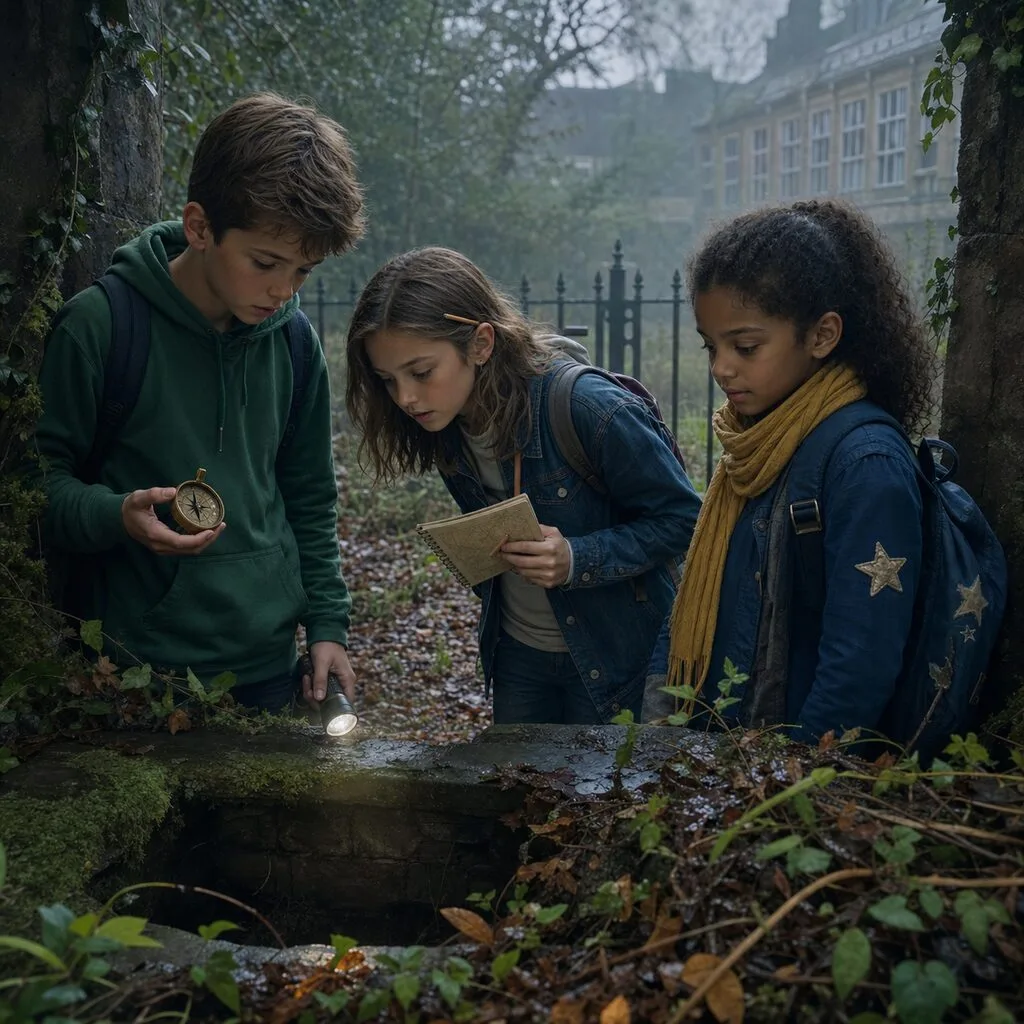
Kompas ukazuje späť je nová časť seriálu Dom na konci mapy, pripravená ako dvojjazyčný detský príbeh v slovenčine aj angličtine.
Kompas ukazuje späť: začína sa príbeh
Oliver položil starý mosadzný kompas na lavicu medzi zošit z prírodovedy a zastrúhanú ceruzku. Ihlou najprv jemne potočil, ako to robieval vždy, keď chcel ukázať, že prístroj funguje spoľahlivejšie než školský nástenný kompas.
Lenže ihla sa neotočila na sever.
Zastavila sa smerom k oknu.
Za oknom sa v popoludňajšom svetle leskol školský dvor. Na mokrom asfalte zostalo pár kaluží po rannej prehánke. Pri zadnom múre ležala hromada hrdzavých listov, ktoré vietor zhrnul do rohu.
„To je divné,“ zašepkal Oliver a zdvihol kompas bližšie k očiam.
Nina sa odlepila od svojho mapového zošita. Ceruzku mala, ako zvyčajne, zastrčenú za uchom. „Skús ho otočiť.“
Chlapec kompas otočil. Mosadzné viečko ticho cinklo o lavicu. Ihla sa zachvela, zakrúžila a opäť ukázala k oknu.
„Možno je tu niečo kovové,“ povedal rýchlo. „Veľký radiátor, skrinka, potrubie v stene…“
„Radiátor je tam,“ pripomenula Mia a ukázala na opačnú stranu triedy. Jej žltý šál bol prehodený cez operadlo stoličky. „A kompas ukazuje úplne inam.“
Oliver ho položil na zem. Potom ho skúšal pri dverách, pri tabuli aj pri poličke s atlasmi. Ihlou to zakaždým trochu pohlo, no vždy sa vrátila k tomu istému smeru.
K zadnému kútu dvora.
Práve tam, kde sa za novým múrom končila škola.
Mia chvíľu mlčala. Jej teplé hnedé oči sa upierali na okno, akoby počúvala niečo, čo ostatní nepočuli.
„V tom rohu je ticho,“ povedala napokon.
Oliver sa zamračil. „Na dvore býva ticho, keď tam nie sú deti.“
„Nie takéto.“ Mia si prekrížila ruky. „Skôr… akoby tam niečo dlho čakalo, aby si to niekto všimol. Ale nie je to zlé.“
Nina pozrela na kompas, potom na stenu za oknom. V poslednej epizóde sa na starej mape v knižnici objavilo číslo 5.B. Odvtedy jej to číslo neprestávalo chodiť po rozume. Ich dnešná trieda sa síce tiež volala 5.B, ale stará mapa ukazovala čosi iné: triedu, ktorá na súčasnom pláne školy vôbec nebola.
„Ihla nemieri len na dvor,“ povedala potichu. „Mieri na presný bod.“
Zazvonilo na koniec hodiny. Stoličky zaškrípali, spolužiaci vybehli na chodbu a trieda sa naplnila hlasmi. Traja kamaráti však zostali pri lavici ešte o chvíľu dlhšie.
Oliver zavrel kompas do dlane. „Po škole ho vyskúšame vonku. A keď sa ukáže, že za múrom je stará kovová rúra, budem mať pravdu.“
„A keď nie?“ spýtala sa Nina.
Chlapec si zastrčil kompas do vrecka zelenej mikiny. „Potom budem mať aspoň zaujímavú chybu prístroja.“
Mia sa usmiala len kútikom úst. „Myslím, že nie všetky chyby sú chyby.“
Neskôr sedeli v školskej knižnici pri stole pri okne. Pani Urbanová bola pri regáloch s encyklopédiami a zapisovala vrátené knihy do počítača. Jej strieborné okuliare sa vždy zablysli, keď otočila hlavu.
Nina rozložila starú mapu mesta. Papier voňal prachom, drevom a niečím, čo pripomínalo zatvorenú zásuvku po starých rodičoch. Na jej okraji bol stále zakreslený dom na konci mapy, ten dom, ktorý sa po zotmení objavoval tam, kde ho nik nečakal.
Oliver položil kompas k mape.
Ihla sa pohla.
Nie prudko. Len raz, pomaly a rozhodne.
Nina priložila pravítko od smeru ihly k nákresu školy. Čiara prešla cez školský dvor a skončila pri pravom zadnom rohu budovy.
„Tu,“ povedala.
Mia sa naklonila bližšie. „Pri novom múre?“
„Áno. Ale pred novým múrom je na starom pláne ešte niečo.“ Nina prstom sledovala takmer neviditeľnú sivú linku. „Pozrite. Hlavná chodba kedysi pokračovala ďalej. A tu mala byť miestnosť.“
Oliver prižmúril oči. „Možno sklad.“
„Sklad nemá dve okná a dvere z chodby,“ odpovedala Nina. „To bola trieda.“
Práve vtedy sa papier pod jej prstom jemne zavlnil. Nie ako pri vetre, lebo okná boli zatvorené. Skôr ako keď sa stránka v knihe sama narovná po dlhom preložení.
Medzi vyblednutými čiarami sa objavila nová tenká linka.
Keď sa veci začnú meniť
Potom druhá.
A nakoniec malý obdĺžnik, ktorý sa pripojil k starej časti školy.
V jeho strede stálo bledým písmom: 5.B.
Oliver odtiahol ruku. „Dobre. To už nie je potrubie.“
Pani Urbanová za regálom zakašľala. Deti stíchli a sklonili sa nad mapu. Nový pôdorys bol taký slabý, že by ho niekto iný mohol pokladať za poškodenie papiera. Nina však videla každý roh. Miestnosť mala dvere smerom k chodbe a druhý, menší vstup na dvor.
„Kompas ukazuje na tie druhé dvere,“ povedala. „Ale dnes tam už žiadne nie sú.“
Oliver položil prst vedľa nakresleného vchodu. „Ak tam kedysi boli dvere, možno po nich zostalo niečo pod zemou.“
Mia sa pozrela smerom k zatvorenému oknu knižnice. „Poďme pomaly. To miesto nechce, aby sme sa cezň prehnali.“
„Miesta nič nechcú,“ namietol Oliver automaticky.
Dievča sa naňho pokojne pozrelo. „Tak povedzme, že my nechceme pokaziť stopu.“
S tým sa už nedalo hádať.
Po vyučovaní bol dvor takmer prázdny. Z telocvične sa ozývalo pískanie trénerovej píšťalky a od jedálne voňala polievka, hoci obed už dávno skončil. Deti prešli popri stojanoch na bicykle, potom obišli budovu až k zadnému múru.
Tu sa škola menila. Predná časť mala čistú fasádu a nové okná, no za budovou rástla tráva vyššia než inde. Zem bola nerovná, posiata tenkými koreňmi a mokrým lístím. Múr, ktorý sem dali pri prestavbe, bol svetlejší než zvyšok budovy. Vyzeral tak nový, až vedľa starých tehál pôsobil trochu cudzí.
Nina držala mapu v oboch rukách. „Sme asi štyri kroky príliš vľavo.“
„Podľa čoho?“ spýtal sa Oliver.
„Podľa odkvapu, rohu budovy a toho kríka.“ Ukázala na nízky lieskový ker. „Na mape je tu malý znak. Asi strom alebo záhon. Krík je možno mladší, ale miesto sedí.“
Oliver vytiahol kompas. Ihla už nekmitla neisto. Ukazovala medzi lístie pri múre.
„Tak teda stará kovová rúra,“ zamrmlal, no tentoraz to znelo menej presvedčene.
Chcel vykročiť dopredu, ale Mia ho chytila za rukáv mikiny. Nie silno, iba tak, aby sa zastavil.
„Počkaj.“
„Na čo?“
„Na nič. Len chvíľu nechoďme.“
Vietor sa oprel do korún stromov. Lístie zašuchotalo po zemi a jeden suchý list sa zatočil Oliverovi pri topánke. Inak bolo za školou nezvyčajne pokojne. Ani z telocvične sem nedoliehal hluk tak jasne ako pred chvíľou.
Mia si kľakla. Jej kučeravé čierne vlasy jej padli dopredu, keď opatrne odsunula z pôdy niekoľko listov. „Necítim tu strach,“ povedala ticho. „Skôr niečo, čo bolo prikryté. Ako veta v knihe, keď ju niekto zalepí papierom.“
Nina si kľakla vedľa nej. „Veta sa dá prečítať, keď ten papier zdvihneš opatrne.“
„Presne.“
Tentoraz sa k nim pridal aj Oliver. Namiesto toho, aby odhrnul lístie naraz, vybral spod neho jeden list po druhom. Medzitým Nina kontrolovala mapu a ukazovala, kde by mal byť okraj starého vstupu.
Najprv našli plochý kameň.
Potom druhý, dlhší a tmavší.
Pod vrstvou hliny sa črtal úzky obdĺžnik. Nebol to chodník, pretože končil pri múre. Nebol to ani obyčajný kus dlažby, lebo jeho okraje vytvárali presnú rovinu.
„Prah,“ vydýchla Nina.
Kamenný prah bol ošúchaný, na jednom rohu odštiepený. Zem ho za roky skoro celého pohltila, no stále tam ležal, rovný a pevný. Za ním sa v tráve črtal slabý obrys miesta, kde kedysi museli stáť dvere.
Oliver sa dotkol prahu končekom prsta. Kameň bol studený.
„Tu sa naozaj vchádzalo do školy,“ povedal. „Nie do skladu. Do tej triedy.“
Nina položila mapu vedľa odkrytého miesta. Nakreslený vchod sedel presne pri kamennom okraji.
Chlapec zdvihol kompas a priblížil ho k prahu. Ihla sa krátko roztriasla, potom sa upokojila tak náhle, až všetci traja zadržali dych.
Ukázala na zem tesne za starým kameňom.
Oliver sa usmial, hoci v jeho tvári zostalo aj trochu neistoty. „Dedo mi vravel, že kompas nie je kúzelný. Že ukazuje len smer.“
Dôležitý okamih
„Možno ukazuje smer,“ povedala Mia. „Len nie vždy ten, ktorý čakáš.“
„Ale sever je sever,“ namietol ešte raz, už však bez vzdoru.
Nina si prezerala svetlý múr. „Tvoj kompas možno nehľadá sever. Možno hľadá miesto, ktoré je dôležité.“
Oliver chvíľu mlčal. Potom kompas zavrel a pevne ho stisol v dlani. „Ak je to tak, tak nás sem priviedol správne.“
Pod prahom už nehľadali nič násilím. Spolu očistili jeho okraj od zvyškov lístia a zistili, že vedľa neho vedie tenká línia menších kameňov. Naznačovala šírku niekdajšieho vstupu. Za múrom stála nová časť školy, ale pod ich topánkami zostával otlačok starej.
Minulosť nezmizla. Len ju prekryli novou omietkou, trávou a rokmi.
O chvíľu Nina zbadala pri bočnom okraji prahu niečo malé. Nebol to ďalší kameň. V zemi sa leskol kúsok kovu, taký špinavý, že ho najprv pokladala za uzáver z fľaše.
Oliver vytiahol z vrecka malú baterku. Jej svetlo sa odrazilo od predmetu.
Bol to tenký mosadzný štítok, asi veľký ako necht. Na povrchu mal vyrazené číslo.
Nie celé meno. Len číslo 12.
„Dvanásty kľúč?“ spýtala sa Mia.
„Alebo dvanásta skrinka,“ povedal Oliver.
Nina obrátila mapu. Pri novom pôdoryse triedy 5.B sa práve objavila ešte jedna drobnosť: malý znak pri dverách na dvor. Vyzeral ako úzka obdĺžniková visačka.
Pod ním sa pomaly ukázali tri slová.
POSLEDNÝ DEŇ PRED PRESTAVBOU.
Deti sa na seba pozreli.
Z telocvične opäť zaznela píšťalka a odrazu im pripomenula, koľko času prešlo. Oliver vložil mosadzný štítok do vrecka vedľa kompasu. Nina mapu opatrne zrolovala a Mia položila posledný suchý list vedľa odkrytého prahu, nie naň.
Keď odchádzali popri novom múre, kompas už neťahal Oliverovu ruku k zemi. Ihla sa pokojne otočila na sever.
Za nimi zostal starý prah, tichý pod večerným svetlom. Pred nimi však čakala otázka, ktorú už nešlo odložiť: čo sa stalo v triede 5.B v posledný deň pred prestavbou — a kto si na to ešte pamätal?
Pokračovanie nabudúce…
The House at the Edge of the Map, part 8: The Compass Points Back
The Story Begins
Oliver placed the old brass compass on the desk between his science notebook and a sharpened pencil. He gave the needle a small turn first, the way he always did when he wanted to show that the tool worked better than the school wall compass.
But the needle did not turn north.
It stopped and pointed toward the window.
Outside, the schoolyard shone in the afternoon light. A few puddles still lay on the wet asphalt after the morning rain. By the back wall, a pile of rusty leaves had been blown into the corner by the wind.
“That’s odd,” Oliver whispered, lifting the compass closer to his eyes.
Nina looked up from her map notebook. As usual, her pencil was tucked behind her ear. “Try turning it around.”
The boy turned the compass. The brass lid clicked softly against the desk. The needle trembled, spun once, and again pointed toward the window.
“Maybe there’s something metal here,” he said quickly. “A big radiator, a cabinet, pipes in the wall…”
“The radiator is over there,” Mia said, pointing to the other side of the classroom. Her yellow scarf was draped over the back of her chair. “And the compass is pointing somewhere else.”
Oliver set it on the floor. Then he tried it by the door, by the board, and by the shelf with the atlases. Each time the needle moved a little, but it always came back to the same direction.
To the back corner of the yard.
That was exactly where the school ended behind the new wall.
Mia stayed quiet for a moment. Her warm brown eyes rested on the window as if she were listening to something the others could not hear.
“There is a silence in that corner,” she said at last.
Oliver frowned. “The yard is quiet when there are no children there.”
“Not like this.” Mia folded her arms. “It feels more like… something has been waiting a long time for someone to notice it. But it isn’t bad.”
Nina looked at the compass, then at the wall outside the window. In the last episode, the number 5.B had appeared on the old map in the library. Since then, that number would not leave her mind. Their classroom was also called 5.B, but the old map showed something else: a classroom that was not on the school plan anymore.
“The needle is not just pointing to the yard,” she said softly. “It is pointing to one exact place.”
The bell rang for the end of the lesson. Chairs scraped back, classmates rushed into the hallway, and the room filled with voices. Still, the three friends stayed by the desk a little longer.
Oliver closed his hand around the compass. “After school, we’ll try it outside. And if there’s an old metal pipe behind the wall, I’ll be right.”
“And if there isn’t?” Nina asked.
The boy slipped the compass into the pocket of his green hoodie. “Then I’ll at least have an interesting mistake.”
Mia smiled with just one corner of her mouth. “I think not all mistakes are mistakes.”
Later, they sat in the school library at the table by the window. Mrs Urbanová was by the encyclopedia shelves, writing returned books into the computer. Her silver glasses always flashed when she turned her head.
Nina spread out the old city map. The paper smelled of dust, wood, and something that made Oliver think of an old drawer closed for years. On the edge, the house at the end of the map was still drawn there, the house that appeared after dark where no one expected it.
When Things Start to Change
Oliver placed the compass beside the map.
The needle moved.
Not sharply. Just once, slowly and firmly.
Nina set a ruler from the direction of the needle toward the school drawing. The line crossed the schoolyard and ended at the right back corner of the building.
“Here,” she said.
Mia leaned closer. “Near the new wall?”
“Yes. But before the new wall, there is still something on the old plan.” Nina followed a nearly invisible grey line with her finger. “Look. The main corridor used to go farther. And here, there should have been a room.”
Oliver narrowed his eyes. “Maybe a storage room.”
“A storage room does not have two windows and a door from the corridor,” Nina answered. “That was a classroom.”
Just then, the paper under her finger moved slightly. Not like in the wind, because the windows were closed. More like a page in a book straightening itself after being folded for a long time.
Between the faded lines, a new thin line appeared.
Then a second one.
And finally a small rectangle joined the old part of the school.
In the middle of it, in pale letters, stood: 5.B.
Oliver pulled his hand back. “Okay. That is no pipe.”
Mrs Urbanová coughed behind the shelves. The children fell silent and bent over the map. The new floor plan was so faint that someone else might have thought it was only damage on the paper. But Nina could see every corner. The room had a door toward the corridor and another, smaller entrance toward the yard.
“The compass points to the other door,” she said. “But there are no doors there now.”
Oliver put his finger beside the drawn entrance. “If there used to be a door there, maybe something is still under the ground.”
Mia looked toward the closed library window. “Let’s go slowly. That place does not want us to rush through it.”
“Places do not want anything,” Oliver said automatically.
The girl looked at him calmly. “Then let’s say we do not want to ruin the clue.”
There was no argument against that.
After lessons, the yard was almost empty. A whistle sounded from the gym, and soup still drifted from the dining hall, even though lunch had long been over. The children walked past the bike stands, then around the building to the back wall.
Here, the school changed. The front had a clean face and new windows, but behind the building the grass grew taller than in other places. The ground was uneven, full of thin roots and wet leaves. The wall added during rebuilding was lighter than the rest of the building. It looked so new that, next to the old bricks, it seemed almost чужое—no, almost strange and out of place.
Nina held the map with both hands. “We are about four steps too far to the left.”
“According to what?” Oliver asked.
“According to the gutter, the corner of the building, and that bush.” She pointed to a low hazel bush. “There is a small sign on the map here. Maybe a tree or a flower bed. The bush may be younger, but the place fits.”
Oliver took out the compass. The needle no longer trembled unsurely. It pointed into the leaves by the wall.
“So, an old metal pipe,” he muttered, though now he sounded less sure.
He wanted to step forward, but Mia caught the sleeve of his hoodie. Not hard, only enough to make him stop.
“Wait.”
“Wait for what?”
“For nothing. Let’s just not move for a moment.”
The wind pressed into the tree tops. Leaves rustled over the ground, and one dry leaf spun by Oliver’s shoe. Otherwise, it was unusually quiet behind the school. Even the noise from the gym did not reach them as clearly as before.
An Important Moment
Mia knelt down. Her curly black hair fell forward as she carefully moved several leaves away from the ground. “I do not feel fear here,” she said softly. “It feels more like something that was covered up. Like a sentence in a book when someone glues paper over it.”
Nina knelt beside her. “A sentence can be read if you lift the paper carefully.”
“Exactly.”
This time Oliver joined them too. Instead of sweeping the leaves away all at once, he picked them up one by one. Meanwhile, Nina checked the map and showed where the edge of the old entrance should be.
First, they found a flat stone.
Then a second one, longer and darker.
Under a layer of dirt, a narrow rectangle began to show. It was not a path, because it ended at the wall. It was not a common piece of paving either, because its edges made a clean straight line.
“A threshold,” Nina breathed.
The stone threshold was worn down, chipped at one corner. Over the years, the ground had almost swallowed it, but it was still there, straight and solid. Behind it, in the grass, there was a faint shape of where doors must have stood long ago.
Oliver touched the threshold with the tip of his finger. The stone was cold.
“This really was the entrance to the school,” he said. “Not to a storage room. To that classroom.”
Nina laid the map beside the uncovered place. The drawn entrance matched the stone edge exactly.
The boy lifted the compass and brought it close to the threshold. The needle shook briefly, then grew still so suddenly that all three held their breath.
It pointed to the ground just behind the old stone.
Oliver smiled, though there was still a little uncertainty on his face. “Grandpa used to tell me a compass is not magic. It only shows direction.”
“Maybe it does show direction,” Mia said. “Just not always the one you expect.”
“But north is north,” he said one more time, though there was no stubbornness left in it.
Nina studied the pale wall. “Your compass may not be looking for north. Maybe it is looking for a place that matters.”
Oliver was quiet for a moment. Then he closed the compass and held it tightly in his palm. “If that is true, then it brought us here the right way.”
They did not dig under the threshold by force. Instead, they brushed away the remains of leaves from its edge and found a thin line of smaller stones beside it. It showed the width of the old entrance. Behind the wall stood the new part of the school, but under their shoes the mark of the old one remained.
The past had not disappeared. It was only covered by new plaster, grass, and years.
A moment later, Nina noticed something small near the side of the threshold. It was not another stone. A bit of metal gleamed in the dirt, so dirty that she first thought it was a bottle cap.
Oliver pulled a small flashlight from his pocket. Its light bounced off the object.
It was a thin brass tag, about the size of a fingernail. A number was stamped into its surface.
Not a full name. Only the number 12.
“A twelfth key?” Mia asked.
“Or the twelfth locker,” Oliver said.
Nina turned the map over. Beside the new floor plan of classroom 5.B, one more detail had appeared: a small sign near the door to the yard. It looked like a narrow rectangular label.
Under it, three words slowly came into view.
What Comes Next
LAST DAY BEFORE THE REBUILDING.
The children looked at one another.
The whistle from the gym sounded again, and suddenly it reminded them how much time had passed. Oliver put the brass tag into his pocket beside the compass. Nina carefully rolled up the map, and Mia placed the last dry leaf beside the uncovered threshold, not on it.
As they walked away along the new wall, the compass no longer pulled Oliver’s hand toward the ground. The needle turned calmly to north.
Behind them, the old threshold stayed in the evening light, quiet and still. But in front of them waited a question that could no longer be put off: what happened in classroom 5.B on the last day before the rebuilding — and who still remembered it?
To be continued…
