
Dom na konci mapy, časť 9: Trieda, ktorá zmizla

Trieda, ktorá zmizla v sérii Dom na konci mapy odhalí prázdnu lavicu pri okne a meno Samuela Horského.
Vypočujte si slovenskú audio verziu príbehu
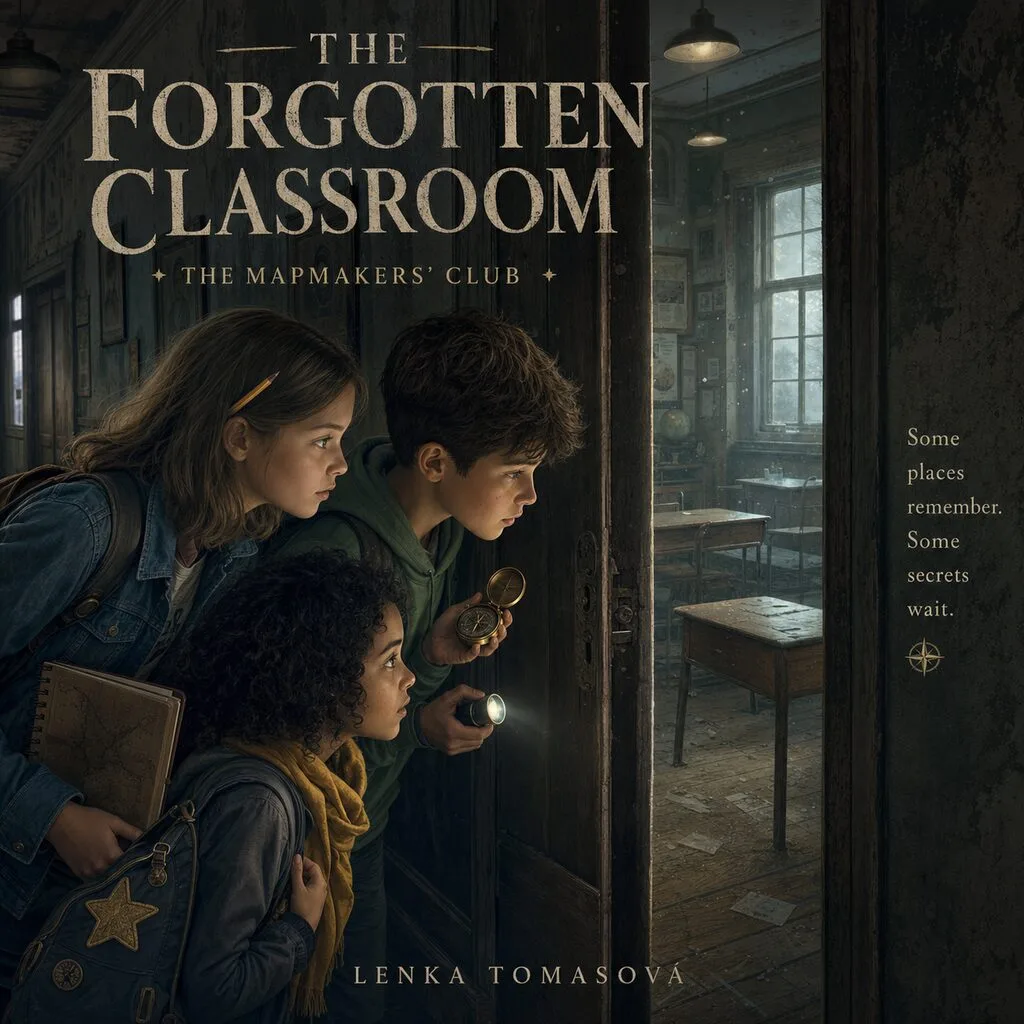
Posledné zvonenie sa rozozvučalo školou tak hlasno, až sa Nina strhla. Z chodieb sa hneď vyvalil šum krokov, hlasov a zatvárajúcich sa dverí. O pár minút však staršia časť budovy stíchla. Práve tam zostali Nina, Oliver a Mia pri drevených dverách s vyblednutou tabuľkou Sklad učebníc.
Za dverami sa začínala chodba, ktorú škola už dávno nepoužívala. Omietka bola popukaná, pri strope sa tiahla tenká čiara po starej zatečenej vode a vzduch voňal po dreve, prachu a niečom suchom, čo Nine pripomínalo kriedu.
„Pani Urbanová povedala, že zaniknutá časť školy bola niekde tu,“ zašepkal Oliver. V jednej ruke držal malú baterku, v druhej starý mosadzný kompas po dedovi. „Lenže na normálnom pláne sa končí pri schodisku.“
Nina otvorila svoj mapový zápisník. Stará mapa, ktorú kedysi našli v školskej knižnici a ktorá ich zaviedla k Domu na konci mapy, ležala medzi stránkami opatrne vyrovnaná. Ešte ráno sa na nej tenká sivá čiara končila pri zadnom krídle školy.
Teraz pokračovala ďalej.
Dievča si priblížilo mapu k svetlu z okna. Nová linka bola bledá, ale istá. Tiahla sa rovno popri stene, pri ktorej stáli.
„Táto chodba tam včera nebola,“ povedala rozhodne.
Oliver sa naklonil bližšie. „Možno sme ju len zle videli. Staré plány bývajú nepresné. Niekto ich mohol prekresľovať.“
„Mapa sa sama neprekresľuje,“ pripomenula mu Mia. Žltú šatku si pritiahla tesnejšie ku krku. „A je tu chladnejšie než pri schodoch.“
Oliver chcel niečo namietnuť, ale práve vtedy sa dvere skladu za nimi pomaly privreli. Nezabuchli. Len ticho dosadli do rámu.
Všetci traja sa obzreli.
„Prievan,“ povedal chlapec, hoci pri tých dverách nebolo otvorené žiadne okno.
Nina prehltla. Tma jej nikdy nebola príjemná, najmä takáto školská tma, v ktorej človek poznal každý kút, a predsa si nebol istý, čo je za ním. Nechcela však, aby sa Mia cítila ešte horšie.
„Pôjdeme spolu,“ povedala. „Pomaly. A nič nebudeme chytať, kým nebudeme vedieť, čo to je.“
„To je rozumný plán,“ uznal Oliver. „Konečne máme pravidlá pre chodenie po chodbách, ktoré nemajú existovať.“
Mia sa naňho slabo usmiala. Potom sa chytila popruhu batoha s nášivkou hviezdy a vykročili.
Chodba bola dlhšia, než by mala byť. Nina si to všimla po desiatich krokoch. Potom po dvadsiatich. Na mape mala byť stena, lenže pred nimi sa ďalej tiahli staré drevené lišty a sivé dlaždice.
„Jeden roh chýba,“ zamrmlala a kreslila ceruzkou do zápisníka. „Pôvodné krídlo malo zatáčať doprava. Namiesto toho je tu úzky priechod.“
Oliver začal počítať kroky. „Dvadsaťšesť, dvadsaťsedem, dvadsaťosem… Ak je toto naozaj za telocvičňou, mali by sme už stáť v skrini na lopty.“
„Nechcem stáť v skrini na lopty,“ povedala Mia.
„Ani ja,“ priznal. „Najmä ak by tam bola basketbalová lopta s vlastným názorom.“
Jeho vtip nebol veľmi dobrý, ale práve preto sa Mia potichu zasmiala. Zvuk sa však po chodbe nerozbehol ako obyčajne. Akoby ho staré steny hneď pohltili.
Pri ďalšej stene sa Oliverov kompas zachvel. Strelka sa otočila o kúsok doľava, potom späť na sever a znovu doľava.
„To nie je možné,“ povedal chlapec už bez žartu. „Nie je tu kovová skrinka ani káble. Aspoň nie podľa toho, čo viem o škole.“
Práve vtedy sa na konci chodby objavili dvere.
Pred chvíľou tam neboli. Nina by si ich všimla. Mali tmavozelenú farbu, z ktorej sa odlupovali drobné šupinky. Nad mosadznou kľučkou visela krivá tabuľka. Nápis na nej bol takmer zotretý, no ešte sa dal prečítať.
5.B
Mia zastala. „To je tá trieda?“
Nina prikývla, hoci jej v hrdle vyschlo. V ôsmej epizóde mapa doplnila pôdorys zaniknutej časti školy. Teraz ich zaviedla presne sem.
„Podľa záznamov mala byť zrušená pred veľa rokmi,“ povedal Oliver. „Triedy predsa len tak nezmiznú.“
„Táto asi áno,“ zašepkala Mia.
Nina položila prsty na kľučku. Kov bol studený. Na okamih sa jej zachcelo otočiť a vrátiť sa ku skladu, k hlučnej hlavnej chodbe a k obyčajným triedam, kde na nástenkách viseli čerstvé výkresy.
Keď sa veci začnú meniť
Potom si spomenula, ako dom reagoval, keď našli pravdivú stopu. Nežiadal od nich, aby boli nebojácni. Len aby sa pozerali pozorne.
Stlačila kľučku.
Dvere sa otvorili bez vŕzgania.
Za nimi bola trieda plná starých lavíc. Prach sa v slabom svetle pri oknách vznášal v jemných bodkách. Na stenách viseli zažltnuté nástenky, na jednej sa črtali kresby stromov a pod nimi nápis Naša jar. Pri tabuli zostal drevený ukazovateľ. Na katedre ležal zošit otvorený na stránke, ktorá sa už dávno nedala čítať.
Najviac však pôsobilo to, že miestnosť nevyzerala opustená.
Vyzerala, akoby z nej žiaci odišli pred piatimi minútami, ibaže tých päť minút trvalo celé desaťročia.
Oliver rozsvietil baterku, no držal ju nízko, aby nesvietil priamo na staré papiere. „Nikto sa ničoho nedotýka,“ povedal. „Dohoda stále platí.“
„Platí,“ potvrdila Nina.
Medzitým Mia podišla k prvej lavici. Na jej okraji ležal malý papierový obdĺžnik. Bol zaprášený, ale písmo ostalo čitateľné.
„Tu je meno,“ povedala.
Na menovke stálo: Zuzana Kováčová.
Ďalšia lavica mala menovku tiež. A ďalšia. Oliver prechádzal pohľadom po radoch a čítal potichu: „Peter Janík. Lenka Bartošová. Roman Šimek…“
Nina si sadla na lavicu pri voľnom mieste pri dverách a zakresľovala lavice do zápisníka. Štyri rady, vždy po štyri lavice. Okná na ľavej strane. Katedra pri tabuli. Staré kachle v zadnom rohu, hoci už dávno neboli zapojené.
„Je ich pätnásť,“ povedal Oliver po chvíli. „Pätnásť menoviek.“
„A koľko lavíc?“ spýtala sa Nina.
Chlapec ich spočítal ešte raz. Tentoraz pomalšie.
„Šestnásť.“
Pri okne, v poslednom rade, stála jedna lavica bez menovky.
Nebola rozbitá ani posunutá. Na doske ležal rovnaký prach ako všade inde. Stolička bola zasunutá rovno pod ňou, akoby sa jej majiteľ mal každú chvíľu vrátiť z prestávky.
Mia k nej nepodišla hneď. Zostala o krok ďalej a pozrela na ostatné lavice. „Všetky majú svoje miesto,“ povedala. „Len táto nie.“
„Možno menovka odpadla,“ navrhol Oliver. Prehľadal podlahu okolo lavice, ale nič nezdvihol. „Alebo ju niekto zobral.“
Nina zavrtela hlavou. „Nie. Pozri sa na rozloženie. Všetky mená sú na miestach, kde niekto sedel. Aj táto lavica bola súčasťou triedy. Nie je to náhradná lavica.“
Keď sa priblížila, cítila chlad až cez rukávy džínsovej bundy. To ju prinútilo zastaviť.
„Bojíš sa?“ spýtala sa Mia jemne.
Nina chcela automaticky povedať nie. Potom sa pozrela na prázdnu dosku pri okne a pravda z nej vyšla jednoduchšie, než čakala.
„Áno,“ priznala. „Viac než pri dome. Tam aspoň vieme, že sa niečo mení. Toto vyzerá úplne obyčajne. A práve preto je to horšie.“
Mia prikývla. „Najstrašidelnejšia tu nie je tma. Je to tá lavica. Vyzerá, že niekto mal sedieť medzi ostatnými, ale nikto mu nenechal ani meno.“
Oliver sklopil baterku. Svetelný kruh sa zastavil na nástenke. Pod vrstvou prachu viseli triedne pravidlá: Nevykrikujeme. Pomáhame si. Požičiavame si veci len so súhlasom.
Vedľa nich bol rozpis služieb. Mená boli v stĺpcoch, pri každom týždni malé krížiky. V strede však zostalo prázdne políčko. Nie vytrhnuté. Nie rozmazané. Len prázdne.
„To nedáva zmysel,“ povedal Oliver. „Ak mali šestnásť lavíc, mali mať šestnásť žiakov. Ale v rozpise je pätnásť mien.“
Na katedre bola zásuvka vysunutá len trochu. Jej drevo bolo tmavšie než ostatný nábytok a zvnútra vykúkal roh zažltnutého papiera.
„Nič nepresúvame,“ pripomenula Nina, „ale papier už je vonku.“
Oliver sa opatrne naklonil. Dvoma prstami vytiahol list len natoľko, aby ho mohli čítať. Bol to triedny zoznam. Mená sa zhodovali s menovkami na laviciach.
Jedno miesto medzi nimi však bolo začmárané sivou šmuhou. Nie atramentom. Akoby niekto prešiel po riadku mokrou handrou a potom ho znova a znova zotieral.
„Skúsim ho prečítať pod uhlom,“ zašepkal Oliver. Natočil baterku, ale písmo sa neukázalo.
Nina porovnávala poradie mien, lavíc a rozpisu služieb. Ceruzka jej rýchlo škrabala po papieri. „Nie je to chyba v zozname. Niekto tu bol. Mal lavicu, pravdepodobne aj miesto v poradí. Len ho z týchto vecí vynechali.“
Dôležitý okamih
Mia sa pozrela na prázdnu lavicu pri okne. V jej očiach sa odrážalo slabé sivé svetlo.
„Myslíte, že ho ostatní nechceli medzi sebou?“ spýtala sa.
Nikto jej hneď neodpovedal.
„Možno sa presťahoval,“ povedal Oliver, ale už to neznelo presvedčivo.
„Keby sa presťahoval, jeho meno by tu ostalo,“ namietla Nina. „Aspoň na zozname. Ale niekto sa snažil, aby tu nebolo.“
Mia sa nadýchla. Nehovorila hlasno, no každé slovo bolo v triede jasné.
„Možno niekoho vynechali zo spoločného miesta. A potom sa tvárili, že tam nikdy nebol.“
Vzduch pri okne sa pohol.
Nebolo to ako vietor. Záclony sa nepohli a okná ostali pevne zatvorené. Len prach nad prázdnou lavicou sa zatočil do tenkého kruhu. Oliverova baterka na okamih zablikala.
Na doske lavice sa objavil bledý obdĺžnik.
Všetci traja zostali stáť bez slova.
Papierová menovka najprv vyzerala ako škvrna v prachu. Potom sa jej okraje vyjasnili. Napokon sa na nej začali črtať písmená, pomalé a tmavé, akoby ich niekto písal neviditeľnou ceruzkou.
Samuel Horský.
Mia si pritisla dlaň na ústa. Nina si meno prepísala do zápisníka tak opatrne, až sa jej ceruzka ani raz nezachvela.
Oliver sa pozrel na zažltnutý zoznam. „Samuel Horský,“ zopakoval. „To bude ten riadok. Ten, ktorý niekto vymazal.“
„Ale trieda ho nezabudla úplne,“ povedala Mia. „Inak by nám to meno neukázala.“
Pri tých slovách sa chlad pri okne trochu zmiernil. Nebol preč, len už nepôsobil ako studený prst na zátylku.
Nina zavrela zápisník. „Nemali by sme tu hľadať viac nasilu.“
Oliver prikývol. Prekvapilo ju to. Zvyčajne by chcel premerať každú lavicu, nakresliť tabuľku a nájsť desať ďalších dôkazov.
„Čísla nám povedali, že jedno miesto chýba,“ povedal ticho. „Ale nepovedia, prečo ho niekto vymazal.“
Na chvíľu si sadli na tri susedné lavice uprostred triedy. Neotvárali ďalšie zásuvky, nevolali Samuelovo meno a nesnažili sa z miestnosti vytiahnuť odpoveď, na ktorú ešte nebola pripravená.
Ticho bolo ťažké, ale už nebolo nepriateľské.
O chvíľu Oliver zdvihol kompas. Strelka sa konečne ustálila na severe.
„Aspoň prestal tancovať ako na kolotoči,“ poznamenal.
Mia sa zasmiala o niečo hlasnejšie než predtým. „Tvoj kompas by na kolotoči vyzeral veľmi zmätene.“
„Vyzerá zmätene aj bez kolotoča,“ povedala Nina a cítila, ako jej napätie povolilo aspoň o malý kúsok.
Keď vstali, pri okne sa rozsvietilo mäkšie svetlo. Nebolo jasné ani teplé ako slnko, ale už nemalo tú ostrú zimnú farbu.
Pri dverách Nina opäť otvorila mapu.
V starom pôdoryse sa dokončila čiara triedy 5.B. Nebola už prerušovaná. Tvorila celú miestnosť so štyrmi radmi lavíc a úzkym miestom pri okne. Na okraji stránky, tam, kde predtým nič nebolo, sa objavili dve slová.
Samuel Horský.
Oliver ich porovnal s menovkou na lavici. „Presne rovnaké písmo.“
„Mapa si ho zapamätala,“ povedala Mia.
Za nimi trieda nezmizla s treskom ani sa nerozplynula do dymu. Skôr sa začala vzďaľovať, hoci stáli stále pri tých istých dverách. Lavice tmavli v prachu, nástenky bledli a slabé svetlo pri okne sa stiahlo do úzkeho pásika.
Nina naposledy pozrela na Samuelovu lavicu. Už nebola bez mena. Stále však ostávala prázdna.
Dvere sa za nimi zatvorili tak potichu, ako sa predtým otvorili.
Na chodbe opäť cítili obyčajný školský vzduch a z diaľky k nim doliehal smiech niekoho z ihriska. Len mapa v Nininej ruke zostala teplá.
„Vieme, komu patrila lavica,“ povedal Oliver.
Mia sa obzrela na zelené dvere, ktoré už vyzerali ako staré skladové dvere bez nápisu. „Ale nevieme, čo sa stalo v posledný deň 5.B.“
Nina mapu opatrne zavrela. „Niekto to ešte môže vedieť.“
A keď sa spolu vydali späť ku schodisku, na poslednej strane zápisníka sa pri Samuelovom mene objavila nová, zatiaľ prázdna čiara.
Pokračovanie nabudúce…