
Vypočujte si slovenskú audio verziu príbehu
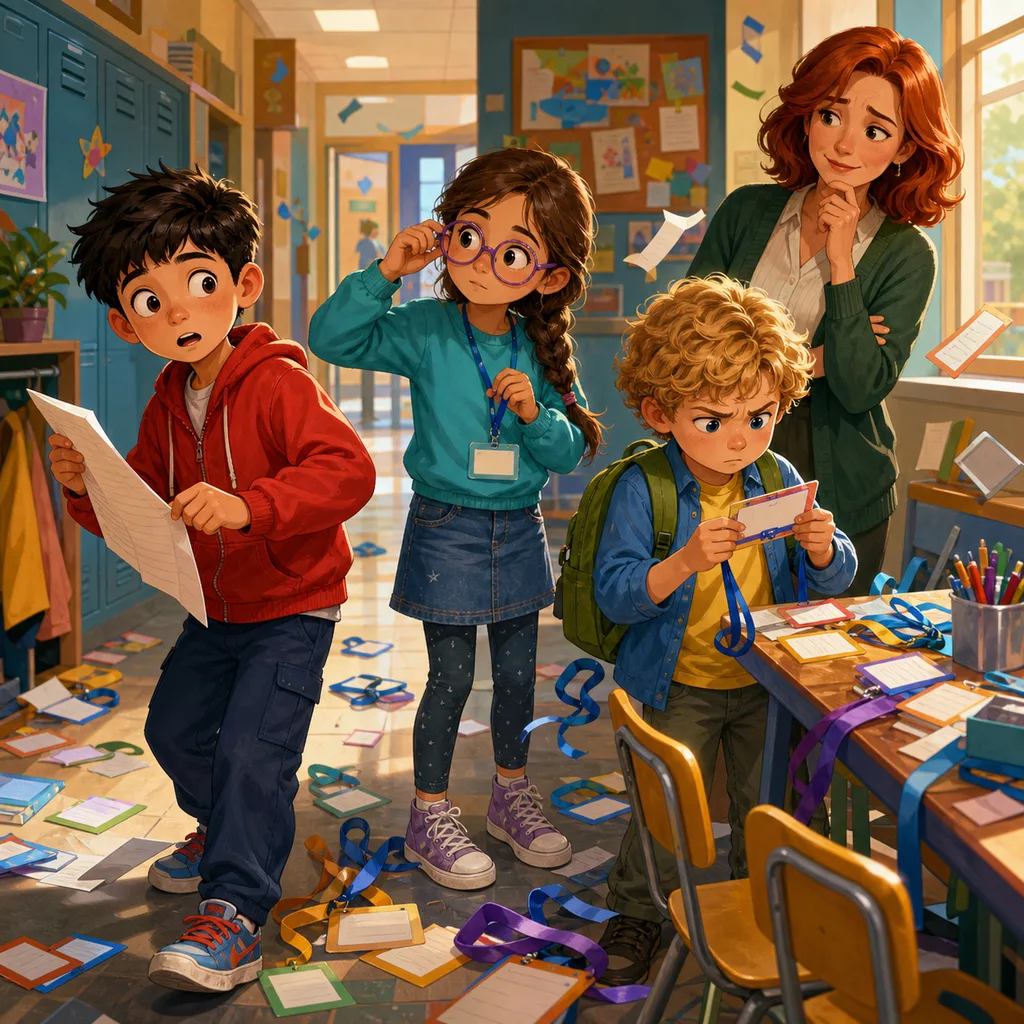
Deň obrátených menoviek je nová časť seriálu Klub veľkých omylov, pripravená ako dvojjazyčný detský príbeh v slovenčine aj angličtine.
Deň obrátených menoviek: začína sa príbeh
V triede pani učiteľky Benkovej to ráno šušťalo papierom, stužkami a tajnými plánmi. Na katedre ležal veľký zoznam úloh, vedľa neho krabička s farebnými menovkami na šnúrkach.
„Dnes máme malé školské podujatie pre viac tried,“ povedala pani učiteľka. „Budú ukážky výkresov, krátky program a hry v chodbe. Každý pomocník dostane jednoduchú úlohu.“
Adam sa natiahol za zoznamom. „Jednoduchú? To je výborné. Ja zvládnem aj tri jednoduché úlohy naraz. Alebo päť. Podľa toho, či sa stoličky počítajú osobitne.“
Ela si prečítala svoju menovku a naklonila hlavu. „Na jednej kartičke je napísané ‚pripraviť pomôcky‘ a na druhej ‚pomôcky pripravené‘. To sú dve rôzne veci?“
„Možno jedna kartička pracuje v minulom čase,“ povedal Samo vážne.
Pani učiteľka sa usmiala. „Menovky vám len pomôžu, aby ste vedeli, kam ísť. Nie sú to kúzelné príkazy.“
Samo si chytil šnúrku okolo krku. „Čiže môžem zmeniť miesto? Aj keď na nej bude moje meno?“
„Samozrejme,“ prikývla pani Benková. „Menovka nie je osud.“
Adam už stál pri dverách. „Tak poďme zachraňovať podujatie skôr, než bude potrebovať záchranu!“
Na chodbe bolo rušno. Pri stolíku čakali krabičky s ceruzkami, papierové šípky, stužky, malé kartónové čísla a balóny. Niekto otvoril dvere do skladu, niekto iný priniesol ďalšiu kopu menoviek a práve vtedy sa cez stolík prešmykol prievan.
Kartičky sa zdvihli, zatočili a popadali na zem.
„Neutekajte!“ zvolal Samo za nimi. „Ešte ste sa neprihlásili na odchod!“
Adam sa zohol a schmatol najdlhší papier, aký našiel. Bol plný bodov, šípok a malých poznámok. Na vrchu stálo: HLAVNÝ PRÍPRAVNÝ PLÁN.
„Aha,“ povedal spokojne. „Toto je určite pre mňa.“
Ela zdvihla kartičku s veľkým symbolom mikrofónu. „A toto je určite pre niekoho, kto rád hovorí pred davom.“
Samo si vytiahol spod stoličky iný lístok. Čítal pomaly: „Malé veci daj na správne miesto. Potom sa vráť s tým, čo patrí k sebe.“
Zamyslel sa. „To znie ako úloha pre veľmi opatrného človeka.“
„Takže pre teba,“ povedala Ela.
„Ďakujem. Budem opatrný až do poslednej spinky.“
Pani Benková medzitým pomáhala prvákom s kabátmi. Trojica sa na seba pozrela, prikývla a každý vyrazil na inú stranu chodby.
Adamov plán začínal vetou: PRESUNÚŤ STOLIČKY. Hneď pod tým bolo: SKONTROLOVAŤ BALÓNY. Ďalej: ROZLOŽIŤ STUŽKY, PRIPRAVIŤ TABUĽU, OZNÁMIŤ PORADIE, SKONTROLOVAŤ REKVIZITY.
„Perfektné,“ vyhlásil. „Najprv spravím všetko.“
Odvliekol dve stoličky ku dverám a potom si všimol, že balóniky pri okne sú trochu nakrivo. Stoličky nechal uprostred chodby, narovnal balóniky a potom zbadal stužky. Tie sa mu zdali príliš krátke, preto ich preniesol bližšie k pódiu. Potom našiel tabuľu, na ktorú napísal veľkými písmenami VITAJTE!
O chvíľu ju presunul, lebo mu napadlo, že pri dverách ju uvidí viac ľudí. Keď ju premiestňoval, zavadil o šípky na podlahe.
„Tieto ukazujú zle,“ rozhodol. „Alebo dobre. Záleží, kam chceme ísť.“
Ela prišla k nemu s menovkou pri mikrofóne a sledovala ho ponad okrúhle fialové okuliare.
„Adam,“ povedala, „tvoj plán má viac bodov než naša trieda pasteliek.“
„Neboj sa. Mám systém.“
„Kde je?“
Chlapec sa rozhliadol po stoličkách, šípkach, stužkách a tabuľke, ktorá teraz mierila do skladu. „Práve sa presúva.“
Medzitým Ela prišla pred aulu. Pri mikrofóne stáli deti z druhej triedy a čakali, kto im povie, kam sa majú postaviť. Jeden chlapec držal papierového šaša, dievča s dvoma vrkočmi zase veľkú škatuľu s rekvizitami.
„Ty si uvádzačka?“ spýtala sa jej staršia žiačka.
Ela pozrela na kartičku s mikrofónom. „Dnes zrejme áno. Kartička si vybrala dobrodružný život.“
Zapla mikrofón. Ozvalo sa krátke písknutie. Ela sa ani nepohla.
„Prváci s papierovými zvieratami pôjdu k modrej stene,“ povedala pokojne. „Tašky dajte pod vešiaky. Rekvizity položte na stôl pri okne. Nie na stoličky, lebo stoličky budú mať čoskoro vlastný program.“
Deti sa zasmiali a pohli sa správnym smerom.
„A kto má menovku s hviezdičkou?“ pokračovala. „Ten pomáha pri hrách. Kto nemá hviezdičku, nemusí si ju kresliť. Hviezdičky dnes nie sú vstupenky na Mars.“
Keď sa veci začnú meniť
Zástup sa usporiadal tak rýchlo, že pani Benková sa pri dverách na chvíľu zastavila. Ela síce nehovorila hlasno, ale každé jej slovo bolo jasné ako šípka na čistej podlahe.
Pri stolíku s pomôckami Samo medzitým rozložil všetko do malých kôpok. Ceruzky podľa farby. Gumy podľa veľkosti. Stužky podľa dĺžky. Kartónové čísla podľa toho, či vyzerali, že patria k sebe.
„Jednotka je sama,“ zamrmlal. „Dvojka má dvojku. To je jednoduché. Ale sedmička a osmička sa len tvária, že sú kamaráti.“
Našiel pravítko a gumu ležiace vedľa seba. Zdvihol ich oboma rukami.
„Vy patríte k sebe?“ spýtal sa.
Samozrejme, neodpovedali.
„Mlčanie beriem ako súhlas.“
Preto ich vložil do jednej krabičky s nápisom PÍSANIE. Potom zbadal tri malé zvončeky. Kartička hovorila, aby malé veci dal na správne miesto. Samo si spomenul, že pri mikrofóne sa ozýval zvuk, a odniesol zvončeky k aule.
„Tieto patria k zvuku,“ vysvetlil Ele.
„Samo, to sú zvončeky na hru v chodbe.“
„Aha. Tak patria k chodbe.“
Odbehol späť. Cestou však uvidel papierové šípky, ktoré Adam presunul opačne. Keďže šípky patria k smeru, opatrne ich poukladal k dverám skladu.
O desať minút sa chodba zmenila na zvláštnu mapu. Stoličky stáli v rade pred skladom. Balóny viseli pri nástenke. Rekvizity boli pri okne, okrem troch zvončekov, ktoré práve cestovali tam a späť. A Adam mal okolo krku okrem menovky aj štyri kartičky, dve stužky a zoznam, ktorý mu plápolal o červenú mikinu ako malá papierová plachta.
Potom prišiel čas začiatku programu.
Prváci čakali pri modrej stene. Druháci stáli pri dverách, hoci mali byť pri hrách. Niekto hľadal číslo tri. Niekto iný držal tabuľu VITAJTE! a nevedel, kam s ňou. Z auly sa ozval hlas: „Môžeme už ísť?“
Adam zdvihol ruky. „Dobre! Všetci spravíme tri kroky doprava, potom—“
„Nie,“ prerušila ho Ela ticho, ale rýchlo. „Ak spravia tri kroky doprava, vojdú do skladu.“
Samo pribehol s krabičkou. „Našiel som číslo tri. Bolo s číslom šesť, ale myslím, že sa len náhodou stretli.“
Adam pozrel na svoj plán. Potom na deti. A napokon na stoličku, na ktorej visela stuha, šípka a jedna osamelá menovka.
„Asi sme trochu pomiešali veci,“ povedal.
„Trochu?“ Ela nadvihla obočie. „Chodba si práve myslí, že je bludisko.“
Pani učiteľka Benková pristúpila bližšie. Nevyzerala nahnevane. Len sa pozrela na trojicu a spýtala sa: „Čo potrebujete ako prvé?“
To bola lepšia otázka než všetky Adamove rýchle nápady dohromady.
Samo vytiahol zo zeleného batoha klubový zošit. Mal na obálke škvrnu od starého atramentu a v rohu nakreslenú veľkú ceruzku. Doteraz doň zapisovali najmä vtipné pravidlá po svojich omyloch. Teraz ho Ela otvorila na čistej strane.
„Rýchly záchranný plán,“ povedala. „Najprv zistíme, čo sa začne hneď.“
„Privítanie,“ odpovedala staršia žiačka pri mikrofóne.
„Potom hra so zvončekmi,“ dodal Samo.
„A potom výkresy,“ povedal Adam už pomalšie. „Takže stoličky teraz vôbec netreba presúvať.“
„Výborný objav,“ poznamenala Ela. „Stoličky budú nadšené.“
Chlapec sa nezamračil. Namiesto toho zroloval dlhý plán. „Ja vrátim šípky a zavolám deti do správneho radu. Len jednu skupinu naraz.“
Ela vzala mikrofón. „Prváci zostanú pri modrej stene. Druháci, prosím, ku hrám v chodbe. Ak držíte rekvizitu, držte ju ďalej. Ak držíte len nervy, tie môžete na chvíľu pustiť.“
Samo položil krabičky na stôl a ukazoval prstom. „Zvončeky sem. Čísla sem. Ceruzky tam. Guma a pravítko môžu zostať spolu, ale iba v krabičke na písanie.“
„Prečo?“ spýtal sa Adam, keď popri ňom prebehol.
„Lebo som sa ich opýtal.“
O chvíľu už mali rekvizity na správnom stole. Šípky opäť ukazovali k aule. Tabuľa VITAJTE! stála pri vchode, kde ju naozaj každý videl. Adam nezorganizoval celú školu, iba tri dôležité veci. A presne to stačilo.
Program sa začal s malým oneskorením, no nikomu to veľmi neprekážalo. Ela privítala triedy, Samo podal zvončeky správnej skupine a Adam držal dvere, aby sa nikto nezamotal do stužiek.
Dôležitý okamih
Po podujatí sa všetci vrátili do triedy. Pani Benková položila na lavicu zvyšné menovky.
„Zdá sa, že tieto patrili niekomu inému,“ povedala.
Adam si našiel svoju. „Takže hlavný prípravný plán nebol môj?“
„Nie,“ povedala pani učiteľka. „Bol pre troch pomocníkov.“
Ela si odopla menovku s mikrofónom. „Škoda. Už som si zvykla, že kartička robí, čo chce.“
„A ja som dostal triedenie,“ povedal Samo spokojne. „To sedí. Len nabudúce sa najprv spýtam, či sa veci naozaj poznajú od narodenia.“
Do klubového zošita napokon napísali veľkými písmenami nové pravidlo: MENOVKA NIE JE OSUD.
Adam sa zasmial. „Dnes som skoro riadil pol školy.“
„Aspoň si si všimol, kam čo patrí,“ povedala Ela.
Samo sa zahľadel na ich správne menovky. „Dá sa aj smiech triediť podľa menoviek?“
Pani učiteľka Benková zavrela krabičku s kartičkami. „Ten sa, myslím, delí sám.“
A keď sa triedou ozval smiech, nikto už nepotreboval vedieť, komu presne patrí.
Pokračovanie nabudúce…
The Big Mistake Club, part 3: The Day of Swapped Name Tags
The Story Begins
That morning, paper, ribbons, and secret plans rustled in Mrs. Benková’s classroom. On the teacher’s desk lay a big list of jobs, and next to it a box full of coloured name tags on strings.
“Today we have a small school event for more classes,” said the teacher. “There will be picture displays, a short programme, and games in the corridor. Every helper will get one simple task.”
Adam stretched for the list. “Simple? Great. I can do three simple tasks at once. Or five. It depends on whether chairs count separately.”
Ela read her name tag and tilted her head. “On one card it says ‘prepare supplies’ and on another it says ‘supplies prepared.’ Are those two different things?”
“Maybe one card works in the past tense,” Samo said seriously.
Mrs. Benková smiled. “The name tags only help you know where to go. They are not magic commands.”
Samo touched the string around his neck. “So I can change places? Even if my name is on it?”
“Of course,” Mrs. Benková nodded. “A name tag is not fate.”
Adam was already at the door. “Then let’s save the event before it needs saving!”
The corridor was busy. By one table waited boxes with pencils, paper arrows, ribbons, small cardboard numbers, and balloons. Someone opened the storage room door, someone else brought another pile of name tags, and just then a draft slipped across the table.
The cards lifted up, spun around, and fell to the floor.
“Don’t run away!” Samo called after them. “You still haven’t signed up to leave!”
Adam bent down and grabbed the longest sheet of paper he could find. It was full of dots, arrows, and little notes. At the top it said: MAIN PREPARATION PLAN.
“Aha,” he said happily. “This is definitely for me.”
Ela picked up a card with a big microphone symbol. “And this is definitely for someone who likes speaking in front of a crowd.”
Samo pulled another slip from under a chair. He read slowly: “Put small things in the right place. Then come back with what belongs together.”
He thought for a moment. “That sounds like a job for a very careful person.”
“So, for you,” Ela said.
“Thank you. I will be careful until the very last staple.”
Meanwhile, Mrs. Benková was helping first graders with their coats. The three friends looked at one another, nodded, and each went off in a different direction of the corridor.
Adam’s plan began with the line: MOVE THE CHAIRS. Right under that was: CHECK THE BALLOONS. Then came: LAY OUT THE RIBBONS, PREPARE THE BOARD, ANNOUNCE THE ORDER, CHECK THE PROPS.
“Perfect,” he declared. “First I’ll do everything.”
He dragged two chairs to the door, then noticed that the balloons by the window were a little crooked. He left the chairs in the middle of the corridor, straightened the balloons, and then saw the ribbons. They seemed too short, so he carried them closer to the stage. After that, he found the board and wrote WELCOME! in big letters.
A moment later he moved it again, because he thought more people would see it near the door. While he was moving it, he bumped into the arrows on the floor.
“These are pointing the wrong way,” he decided. “Or the right way. It depends on where we want to go.”
Ela came over with her microphone tag and watched him over her round purple glasses.
“Adam,” she said, “your plan has more points than our class has crayons.”
“Don’t worry. I have a system.”
When Things Start to Change
“Where is it?”
The boy looked around at the chairs, arrows, ribbons, and the board, which was now pointing toward the storage room. “It’s moving right now.”
At the same time, Ela reached the hall entrance. Children from another class were waiting by the microphone, hoping someone would tell them where to stand. One boy was holding a paper clown, and a girl with two braids had a big box of props.
“Are you the announcer?” the older pupil asked.
Ela looked at the card with the microphone. “Today, apparently yes. The card chose an adventurous life.”
She switched on the microphone. It made a short squeak. Ela did not move at all.
“First graders with paper animals will go to the blue wall,” she said calmly. “Bags under the coat hooks. Props on the table by the window. Not on the chairs, because the chairs will soon have their own programme.”
The children laughed and moved in the right direction.
“And who has the star card?” she continued. “You help with the games. If you do not have a star, you do not need to draw one. Stars are not tickets to Mars today.”
The line formed so quickly that Mrs. Benková paused by the door. Ela was not speaking loudly, but every word was clear, like an arrow on a clean floor.
By the supply table, Samo was arranging everything into little piles. Pencils by colour. Erasers by size. Ribbons by length. Cardboard numbers by whether they looked as if they belonged together.
“One is alone,” he muttered. “Two has two. That is easy. But seven and eight only pretend to be friends.”
He found a ruler and an eraser lying next to each other. He picked them up with both hands.
“Do you belong together?” he asked.
Of course, they did not answer.
“I’ll take silence as yes.”
So he put them into one box marked WRITING. Then he saw three small bells. The card had said to put small things in the right place. Samo remembered hearing a sound near the microphone, so he carried the bells to the hall.
“These belong to sound,” he explained to Ela.
“Samo, those are bells for the hallway game.”
“Oh. Then they belong to the hallway.”
He ran back. On the way, he saw the paper arrows that Adam had turned around. Since arrows belong to directions, he carefully put them near the storage room door.
Ten minutes later, the corridor had become a strange map. Chairs stood in a row in front of the storage room. Balloons hung by the notice board. Props were by the window, except for three bells, which were travelling back and forth. And Adam had four cards, two ribbons, and the list hanging from his red hoodie like a tiny paper sail.
Then it was time to begin the programme.
The first graders waited by the blue wall. The second graders stood by the door, even though they were supposed to be at the games. Someone was looking for number three. Someone else was holding the WELCOME! board and did not know where to put it. From the hall, a voice called out, “Can we go now?”
Adam raised his hands. “Okay! Everyone take three steps to the right, then—”
“No,” Ela interrupted softly, but quickly. “If they take three steps to the right, they’ll walk into the storage room.”
Samo ran up with a box. “I found number three. It was with number six, but I think they just met by accident.”
Adam looked at his plan. Then at the children. And finally at the chair with a ribbon, an arrow, and one lonely name tag.
An Important Moment
“I think we mixed things up a little,” he said.
“A little?” Ela lifted an eyebrow. “The corridor thinks it’s a maze.”
Mrs. Benková came closer. She did not look angry. She only looked at the three of them and asked, “What do you need first?”
That was a better question than all of Adam’s quick ideas together.
Samo pulled the club notebook from his green backpack. On the cover there was a stain from old ink, and in one corner a big pencil was drawn. So far, they had mostly written funny rules after their mistakes. Now Ela opened it to a clean page.
“Quick rescue plan,” she said. “First, we find what starts right away.”
“Greeting,” answered the older pupil by the microphone.
“Then the bell game,” Samo added.
“And after that, the pictures,” Adam said more slowly now. “So we do not need to move the chairs at all right now.”
“Excellent discovery,” Ela said. “The chairs will be delighted.”
The boy did not frown. Instead, he rolled up the long plan. “I’ll put the arrows back and call the children into the right line. Just one group at a time.”
Ela took the microphone. “First graders stay by the blue wall. Second graders, please go to the hallway games. If you are holding a prop, keep holding it carefully. If you are only holding your nerves, you may let them go for a moment.”
Samo put the boxes on the table and pointed. “Bells here. Numbers here. Pencils there. The eraser and ruler can stay together, but only in the writing box.”
“Why?” Adam asked as he hurried past.
“Because I asked them.”
Soon the props were on the right table. The arrows pointed to the hall again. The WELCOME! board stood by the entrance, where everyone could really see it. Adam did not organise the whole school, only three important things. And that was exactly enough.
The programme began a little late, but nobody minded much. Ela welcomed the classes, Samo handed the bells to the right group, and Adam held the door so no one got tangled in the ribbons.
After the event, everyone returned to the classroom. Mrs. Benková put the extra name tags on the desk.
“It seems these belonged to someone else,” she said.
Adam found his own. “So the main preparation plan was not mine?”
“No,” said the teacher. “It was for three helpers.”
Ela unclipped the microphone tag. “Too bad. I was already getting used to the card doing whatever it wanted.”
“And I got sorting,” said Samo happily. “That fits. Only next time I’ll first ask whether things really know each other from birth.”
In the club notebook, they finally wrote the new rule in big letters: A NAME TAG IS NOT FATE.
Adam laughed. “Today I almost ran half the school.”
“At least you noticed where everything belonged,” Ela said.
Samo looked at their correct name tags. “Can laughter be sorted by name tags too?”
Mrs. Benková closed the box of cards. “I think that one sorts itself.”
And when laughter filled the classroom, nobody needed to know exactly who it belonged to.
To be continued…
