
Vypočujte si slovenskú audio verziu príbehu
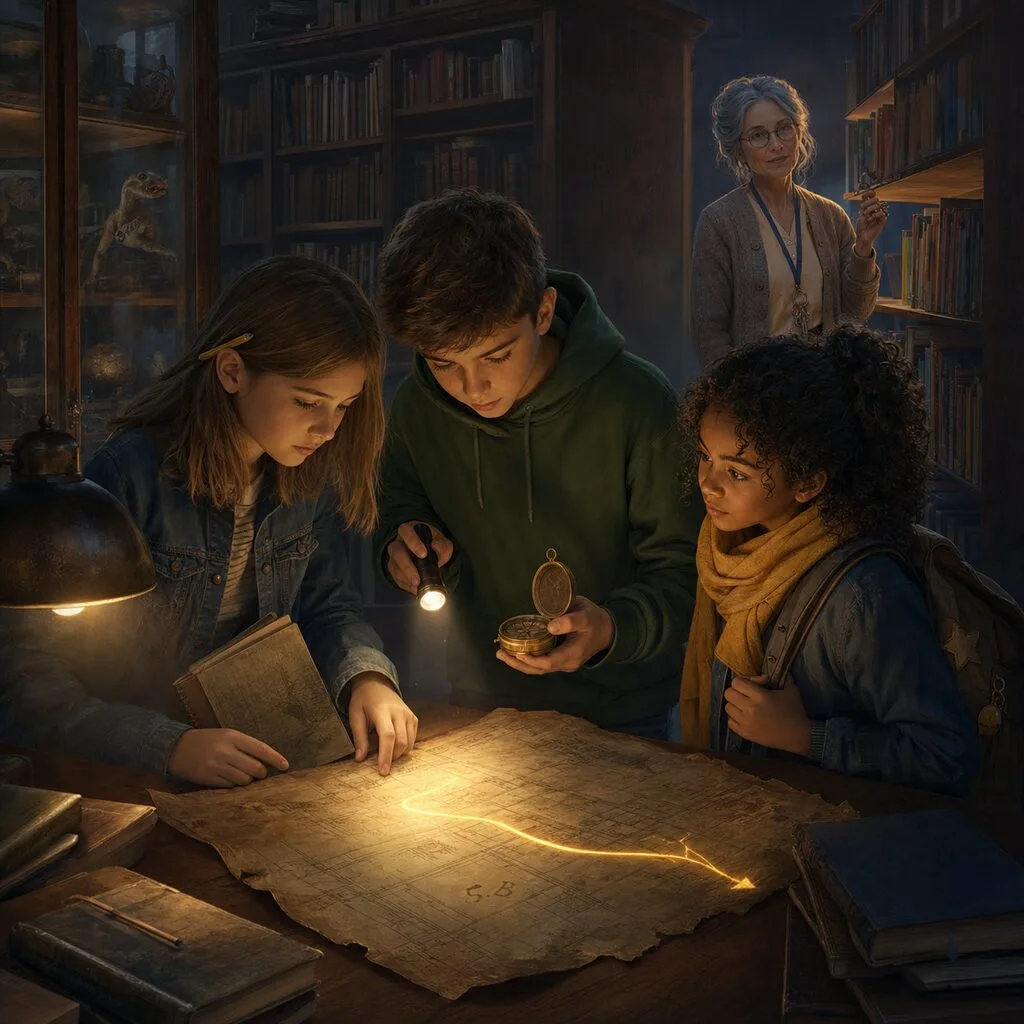
Knižnica zamknutých príbehov je nová časť seriálu Dom na konci mapy, pripravená ako dvojjazyčný detský príbeh v slovenčine aj angličtine.
Knižnica zamknutých príbehov: začína sa príbeh
Ticho po zatvorení knižnice bolo také husté, že v ňom bolo počuť aj šuchot kabátov. Nina, Oliver a Mia stáli v malej študovni pri stole, na ktorom ležala stará mapa mesta. Lampy svietili len slabšie než cez deň a sklenené dvierka skríň odrážali ich tváre ako v zakalenej vode.
„Myslel som si, že po zatváracích hodinách už sa tu nič nedeje,“ zamrmlal Oliver a prstom prešiel po hrane kompasu na retiazke. „Vyzerá to skôr ako obyčajná mapa než tajná správa.“
Nina si k nemu prisunula svoj malý zápisník. „Pozri sem,“ zašepkala. „Pri detských knihách sa objavila nová čiara.“
Na papieri sa naozaj čosi zmenilo. Medzi sivými ulicami mesta sa objavilo tenké svetlé vlákno, ktoré viedlo k polici pri okne. A pri nej sa zjavilo číslo 5.B, napísané tak drobne, akoby ho niekto do mapy vpísal len pred chvíľou.
Mia sa naklonila bližšie. Chlad z rohu miestnosti ju jemne pohladil po tvári. Nebolo to nepríjemné, skôr to pripomínalo ticho, ktoré čaká, kým ho niekto vypočuje.
„Cítiš to?“ spýtala sa potichu. „Akoby tu niečo čakalo na otvorenie.“
„Ale čo presne?“ Oliver zdvihol obočie. „Veď v knižnici sú knihy otvorené stále. Aspoň väčšina z nich.“
Vtom sa pri dverách ozvali ľahké kroky. Do študovne vstúpila pani Urbanová. Na nose mala strieborné okuliare a na šnúrke pri kabáte sa jej hompáľali kľúče. Nepôsobila prekvapene. Skôr akoby ich presne tam čakala.
„Dnes ste prišli neskoro,“ povedala ticho, no v hlase jej nechýbala mäkkosť. „Niektoré knihy sa totiž otvárajú až po zatvorení.“
Podala im malý kľúč od skladu a pri odchode ešte dodala: „Ak mapa niekam ukazuje, neponáhľajte sa. Stopy majú rady trpezlivosť.“
Oliver sa usmial. „To znie ako veta, ktorú by povedal niekto, kto vie viac, než prezradí.“
Pani Urbanová sa len mierne pousmiala a zmizla medzi policami.
Kľúč v zámke zacítili skôr rukami než sluchom. Keď Oliver opatrne odsunul označenú policu, drevo ticho zavŕzgalo a odhalilo úzky priestor za ňou. Bol taký malý, že doň deti najprv videli iba nabok, cez tenkú štrbinu.
Vo vnútri stálo niekoľko starých kníh s tmavými tvrdými obalmi. Obaly boli oprášené časom, no stránky v nich vyzerali čudne nové. Úplne prázdne. Ako keby ich niekto pripravil na písanie, ale ešte nikdy sa nerozhodol začať.
Na malej úzkej poličke ležali tri predmety, ktoré deti poznali až príliš dobre: zošit, fotografia a malý školský zvonček.
„Tak toto už nie je náhoda,“ povedal Oliver a vytiahol si baterku. Malý kužeľ svetla prebehol po prachu, po chrbtoch kníh aj po predmetoch. „Toto je systém. Veci, knihy, reakcia. Otázka je len, v akom poradí.“
Nina sa prikrčila bližšie k polici. Na hrane dreva boli tri miesta odreté od prachu, akoby sa ich niekto dlho dotýkal presne na tých istých miestach.
„Tri dotyky,“ zašepkala. „Tri veci. Tri spomienky?“
Mia natiahla ruku do priestoru, ale nedotkla sa ničoho. Len sa na okamih zastavila vo vzduchu. „Táto miestnosť nechce, aby sme ju zahanbili rýchlosťou,“ povedala jemne. „Skôr ju máme počúvať.“
Oliver sa uškrnul, no neodporoval. „Dobre. Počúvať budem. Ale zároveň môžeme skúšať.“
Prvý pokus prišiel hneď. Chlapec opatrne vložil zošit k prvej knihe a čakal. Nič. Stránky zostali biele. Len sa ozvalo tiché zašumenie, ako keď sa v noci otočí strana bez slov.
„Hm,“ zamrmlal. „Tak to zjavne nie je také jednoduché.“
Nina skúsila otvoriť jednu z kníh viac, no ani vtedy sa nič nezmenilo. Prázdnota vnútri zostala pokojná a bez odpovede.
Mia sa nadýchla. „Možno tie knihy nevypĺňa predmet sám. Možno najprv potrebuje spomienku.“
„Spomienku?“ zopakoval Oliver.
„Áno,“ prikývla. „Keď držím ten zvonček, mám pocit, akoby niekto čakal na signál. A fotografia… tá pôsobí smutne, ale nie zle. Len zabudnuto.“
Nina si prešla prstom po obálke zošita. „A tento zošit patrí niekomu, kto si chcel niečo zapamätať presne.“
Keď sa veci začnú meniť
Tentoraz to skúsili inak. Najprv položili fotografiu k druhej knihe. Papier na okamih zbelel ešte viac, potom sa na stránkach objavil slabý odtieň sivej. Najskôr len obrys triedy, potom stôl, tabuľa a niečia ruka zdvihnutá nad okrajom obrazu.
„Vidíte to?“ vydýchla Nina.
„Vidím,“ šepol Oliver a baterku priblížil tak blízko, že sa mu od nej zaleskli oči. „Toto už je stopa.“
Na ďalšej strane sa objavila krátka veta: „Trieda 5.B čakala po vyučovaní, kým sa niekto vráti.“
Mia sa jemne dotkla žltého šálu pri krku. „Tak preto je tu to ticho. Nie je prázdne. Je naplnené čakaním.“
Nina vytiahla zošit, otvorila ho a na prvej strane zbadala niekoľko starostlivo napísaných mien. Keď ho priložila k tretej knihe, písmo sa začalo pomaly prenášať. Stránky sa zaplnili vetou o domácej úlohe, o čakaní na zvonenie a o tom, že niekto z 5.B si zapisoval mená spolužiakov, aby sa nič nestratilo.
„To bol poriadkumilovný človek,“ povedal Oliver. „Konečne niekto, s kým sa viem stotožniť.“
„Ty si si raz označil aj ponožky,“ pripomenula mu Nina sucho.
Chlapec sa zatváril urazene len na dve sekundy, potom sa rozosmial. Napätie v miestnosti sa na chvíľu uvoľnilo a aj prázdne knihy akoby zľahka vydýchli.
Napokon Mia zdvihla malý zvonček. Bol studený, no nie nepríjemne. Len veľmi starý. Keď ním jemne pohla, v priestore zaznelo jedno jediné tiché cinknutie.
V tom momente sa otvorila ďalšia kniha sama od seba. Na jej strane sa ukázal útržok o hodine, na ktorú prišiel len jeden z chlapcov z 5.B neskôr než ostatní. Vedľa vety stálo meno, no bolo ešte neúplné, zahmlené ako písmeno pod parou. Deti vedeli len toľko, že príbeh čaká na ďalší dielik.
Oliver sa narovnal. „Takže to funguje. Ale nie ako bežný zámok. Skôr ako skladanie puzzle.“
„Presne,“ povedala Nina. „Každá vec patrí k inej časti príbehu.“
„A keď ich dáme spolu,“ doplnila Mia, „spomienka sa prestane báť, že zostane sama.“
Oliver sa nechcel vzdať bez skúšky. „Dobre, tak teraz overím, či nie je možné poradie trošku urýchliť.“
„To znie ako nebezpečný plán,“ poznamenala Nina.
„Nie nebezpečný. Len… praktický.“
Vymenil dve veci. Zvonček položil tam, kde predtým ležala fotografia, a fotografiu zas presunul k miestu pre zošit. Čakal, že knihy aspoň trochu zareagujú. Nestalo sa nič. Stránky zostali prázdne a priestor sa naplnil tichom, ktoré bolo tesné ako zadržaný dych.
Mia stisla pery. „Vidíš? Teraz je tá miestnosť smutná.“
Oliver sa zamračil. „Smutná?“
„Nie nahnevaná,“ odpovedala. „Len vie, že sme sa pomýlili.“
Nina si medzitým všimla, že sa na mape posunula bodka pri polici. Tenká čiara už nešla priamo. Najprv sa oblúkom odchýlila, akoby ukazovala, že treba obísť okraj priestoru, a až potom mierila k tretej knihe.
„Aha,“ povedala potichu. „Mapa sa mení podľa poradia.“
Oliver si vzdychol. „Takže nestačí vedieť, čo je čo. Treba vedieť aj kedy a kam.“
„A počúvať,“ doplnila Mia.
Chlapec prikývol, tentoraz bez protestu. „Dobre. Beriem späť svoj názor o rýchlom riešení.“
Deti sa naklonili bližšie k polici. O chvíľu sa z tretej knihy ozvalo slabé šuchnutie. Ako keď sa niekto za stenou snaží nevyrušiť ostatných, ale predsa len chce, aby si ho všimli.
Keď sa predmety vrátili na svoje miesta podľa mapy, všetko sa zmenilo. Najprv sa papier v knihách jemne zachvel. Potom sa písmo začalo objavovať rýchlejšie, akoby ho niekto zapisoval neviditeľným perom.
Zošit otvoril stránku plnú mien žiakov 5.B. Fotografia zrazu ukázala celú triedu pred tabuľou, usmiatu a trochu zmätenú, ako sú deti vždy, keď ich niekto fotí po zvonení. A pri tretej knihe sa zvonček zaleskol tak silno, až Oliver zamrkal.
„Počkaj,“ povedal. „Tu je niečo nové.“
Na okraji textu sa objavilo meno Samuel. Tentoraz bolo napísané jasne, bez rozmazania a bez tieňa. Malý zvonček sa pri ňom jemne zachvel, akoby meno poznal.
Dôležitý okamih
Nina si rýchlo začala písať do svojho mapového zošitka. „Samuel,“ zopakovala. „To je prvýkrát, čo ho vidíme takto jasne.“
V knihe sa objavila aj veta, ktorá ich na chvíľu úplne stíšila: „Trieda kedysi držala spolu, no potom sa ich príbeh prerušil a niektoré mená sa stratili z pamäti dospelých aj detí.“
Mia zadržala dych. „Takže to nebolo len o jednej veci,“ povedala veľmi potichu. „Bolo ich viac. A niekto si zaslúži, aby sa naňho nezabudlo.“
V tom sa pri dverách znovu objavila pani Urbanová. Neprešla dnu hneď. Len stála v slabom svetle a pozerala na stĺpec žiariaceho písma medzi policami.
„Niekedy knihy pamätajú viac než ľudia,“ povedala. „A niekedy čakajú, kým im niekto vráti správne poradie.“
Oliver sa k nej otočil. „Vy ste o tom vedeli?“
Knihovníčka si upravila okuliare. „Vedela som dosť na to, aby som vás sem pustila. A dosť málo na to, aby ste to museli objaviť sami.“
Na mape sa medzitým objavil nový detail: malý symbol zvončeka pri mieste, kde v meste stál starý školský dvor.
Keď sa posledné riadky v knihách usadili, priestor sa znova upokojil. Stránky sa samy zatvorili. Nepráskli, len sa ticho zložili, akoby si chceli zapamätať, čo im deti pomohli nájsť.
Pani Urbanová im dopriala chvíľu ticha. Nebolo to nepríjemné mlčanie. Skôr taká pauza, v ktorej sa človek pozerá na niečo dôležité a nechce to hneď stratiť.
„Zoberte si čas,“ povedala nakoniec. „Na niektoré odpovede sa treba pripraviť. A na niektoré aj vracať.“
Nina si starostlivo zapísala všetko, čo videli. Na okraj pridala malý nákres police, šípku k trom predmetom a hviezdičku pri mene Samuel. Potom sa pozrela na Olivera.
„Tentoraz si to zaslúžime všetci,“ povedala.
„Hej,“ prikývol chlapec. „Bez tvojho oka na mapu a Miinho pocitu by som len hádal. A hádanie nie je to isté ako hľadanie.“
Mia sa usmiala. „A bez tvojho svetla by sme zas nič neprečítali.“
To bola pravda. Tri rôzne spôsoby, ako vidieť jednu vec, im práve otvorili dvere k ďalšej záhade.
Pred odchodom sa mapa ešte raz pohla. Zvončekový symbol sa zaleskol a z neho sa oddelila tenká čiara smerom k starému školskému dvoru. Bola taká jasná, že ju bolo vidieť aj v slabo osvetlenej študovni.
Práve vtedy sa z hlbiny za policou ozvalo jedno slabé cinknutie.
Nebolo hlasné. Nebolo desivé. Bolo však také jasné, že všetci traja sa naraz pozreli tým smerom.
„Počuli ste to?“ zašepkala Mia.
Oliver prikývol. „Áno. A ak mám byť úprimný, vôbec sa mi to nepáčilo. Ale zároveň áno.“
Nina si pritisla mapový zošit k hrudi. „Tak to znamená, že sme len na začiatku ďalšej časti.“
Pani Urbanová otvorila dvere o kúsok viac. Chladný vzduch zo školského chodníka vošiel dnu spolu s vôňou mokrého dreva a neskorej noci.
„Dom na konci mapy ešte neprehovoril celý,“ povedala ticho. „Ale vy už viete, kde hľadať ďalej.“
Deti vyšli do chodby s pocitom, že noc je stále dlhá, no už nie sama. Mapa v Nininej ruke ukazovala nový smer a zvonček, hoci bol malý a studený, akoby v sebe niesol ozvenu niekoho z dávnej triedy 5.B.
Keď sa za nimi zatvorili dvere knižnice, posledné slabé cinknutie ešte chvíľu viselo vo vzduchu. A potom sa stratilo niekde medzi školou, dvorom a domom na konci mapy.
Pokračovanie nabudúce…
The House at the Edge of the Map, part 7: The Library of Locked Stories
The Story Begins
After the library closed, the silence was so thick that even the rustle of coats could be heard. Nina, Oliver, and Mia stood in the small study room at the table where an old city map lay open. The lamps shone more weakly than they did in the daytime, and the glass doors of the cabinets reflected their faces like cloudy water.
"I thought nothing happened here after closing time," Oliver muttered, running a finger along the edge of the compass on his chain. "This looks more like a normal map than a secret message."
Nina pulled her small notebook closer to him. "Look here," she whispered. "A new line appeared near the children’s books."
Something had really changed on the paper. Between the grey streets of the town, a thin pale line had appeared. It led to the shelf by the window. And near it, the number 5.B showed up, written so small that it looked as if someone had added it only moments ago.
Mia leaned closer. A cool draft from the corner of the room touched her face. It was not unpleasant. It felt more like silence waiting for someone to listen.
"Do you feel that?" she asked softly. "It’s as if something here is waiting to be opened."
"But what exactly?" Oliver lifted his eyebrows. "Books in a library are open all the time. At least most of them."
Just then, light footsteps sounded by the door. Mrs Urbanová stepped into the study room. She wore silver glasses on her nose, and keys hung from a ribbon on her coat. She did not look surprised. It was more as if she had been waiting for them there all along.
"You came late today," she said quietly, but her voice was still gentle. "Some books only open after closing time."
She handed them a small key to the storage room and, as she left, added, "If the map points somewhere, do not hurry. Clues like patience."
Oliver smiled. "That sounds like something someone would say if they knew more than they wanted to tell."
Mrs Urbanová only smiled a little and disappeared between the shelves.
They felt the key in the lock before they heard it. When Oliver slowly pushed the marked shelf aside, the wood gave a soft creak and revealed a narrow space behind it. It was so small that at first the children could only see it from the side, through a thin gap.
Inside stood several old books with dark hard covers. Time had dusted the covers, but the pages inside looked strangely new. Completely blank. It was as if someone had prepared them for writing, but had never decided to begin.
On a small narrow shelf lay three things the children knew very well: a notebook, a photograph, and a little school bell.
"Well, this is definitely not a coincidence," Oliver said, taking out his flashlight. The small beam of light moved over the dust, over the backs of the books, and over the objects. "This is a system. Things, books, reaction. The only question is the order."
Nina crouched closer to the shelf. On the edge of the wood, there were three worn spots in the dust, as if someone had touched the same places again and again for a long time.
"Three touches," she whispered. "Three things. Three memories?"
Mia reached out into the space, but she did not touch anything. She only stopped her hand in the air for a moment. "This room doesn’t want us to rush it," she said gently. "It wants us to listen."
When Things Start to Change
Oliver gave a small grin, but he did not argue. "Fine. I’ll listen. But we can also try things."
The first try came right away. The boy carefully put the notebook next to the first book and waited. Nothing happened. The pages stayed white. Only a soft rustle could be heard, like a page turning at night without words on it.
"Hm," he muttered. "So it’s not that simple."
Nina tried opening one of the books wider, but nothing changed then either. The emptiness inside stayed calm and silent.
Mia drew a slow breath. "Maybe the books do not need the object alone. Maybe they need the memory first."
"A memory?" Oliver repeated.
"Yes," she nodded. "When I hold that bell, it feels like someone is waiting for a signal. And the photograph… it feels sad, but not in a bad way. Just forgotten."
Nina ran her finger over the cover of the notebook. "And this notebook belongs to someone who wanted to remember things exactly."
This time, they tried it a different way. First, they placed the photograph by the second book. The paper flashed even whiter for a moment, and then a faint grey shape appeared on the pages. At first it was only the outline of a classroom, then a desk, a blackboard, and someone’s hand raised above the edge of the picture.
"Do you see that?" Nina breathed.
"I do," Oliver whispered, bringing the flashlight closer until his eyes shone in its light. "Now that’s a clue."
On the next page, a short sentence appeared: "Class 5.B waited after lessons for someone to come back."
Mia touched the yellow scarf at her neck. "That’s why the silence is here. It isn’t empty. It is full of waiting."
Nina took out the notebook, opened it, and saw several neatly written names on the first page. When she put it beside the third book, the writing slowly began to move over. The pages filled with a sentence about homework, waiting for the bell, and someone from 5.B writing down the names of classmates so nothing would be lost.
"That was a very careful person," Oliver said. "At last, someone I can understand."
"You once labeled your socks," Nina reminded him dryly.
The boy looked offended for only two seconds, and then he laughed. The tension in the room loosened for a moment, and even the empty books seemed to breathe out.
Finally, Mia picked up the little bell. It was cold, but not in an unpleasant way. Only very old. When she moved it gently, one single soft ring sounded in the room.
At that moment, another book opened by itself. On its page appeared a piece of a story about a lesson that only one of the boys from 5.B arrived to late. Next to the sentence was a name, but it was still unfinished, cloudy like a letter seen through steam. The children knew only one thing: the story was waiting for another piece.
Oliver straightened up. "So it works. But not like a normal lock. More like putting a puzzle together."
"Exactly," Nina said. "Each thing belongs to a different part of the story."
"And when we put them together," Mia added, "the memory will stop being afraid that it will stay alone."
Oliver did not want to give up without trying one more thing. "All right, then I’ll check if the order can be sped up a little."
"That sounds like a dangerous plan," Nina said.
"Not dangerous. Just… practical."
He switched two objects. He placed the bell where the photograph had been, and the photograph where the notebook had been. He expected the books to react at least a little. Nothing happened. The pages stayed blank, and the room filled with a silence as tight as held breath.
An Important Moment
Mia pressed her lips together. "See? Now the room is sad."
Oliver frowned. "Sad?"
"Not angry," she answered. "Just aware that we made a mistake."
Meanwhile, Nina noticed that the dot on the map had moved near the shelf. The thin line no longer went straight. First it curved away, as if showing that the edge of the space had to be walked around, and only then did it point toward the third book.
"Oh," she said softly. "The map changes with the order."
Oliver sighed. "So it’s not enough to know what is what. You also have to know when and where."
"And listen," Mia added.
The boy nodded, this time without protest. "Fine. I take back my opinion about quick solutions."
The children leaned closer to the shelf. After a while, a faint rustle came from the third book. It sounded like someone behind a wall trying not to disturb others, but still wanting to be noticed.
When the objects returned to their places according to the map, everything changed. First, the paper in the books trembled softly. Then the writing began to appear faster, as if someone were writing it with an invisible pen.
The notebook opened to a page full of the names of the pupils of 5.B. The photograph suddenly showed the whole class in front of the blackboard, smiling and a little confused, the way children always look when someone takes a picture after the bell. And by the third book, the bell shone so brightly that Oliver blinked.
"Wait," he said. "There’s something new here."
On the edge of the text, the name Samuel appeared. This time it was written clearly, without blur and without shadow. The little bell trembled softly beside it, as if it knew the name.
Nina quickly wrote it into her map notebook. "Samuel," she repeated. "This is the first time we’ve seen him this clearly."
Another sentence appeared in the book, and it made all three of them fall silent for a moment: "The class once stayed together, but then their story was broken, and some names were lost from the memory of adults and children."
Mia held her breath. "So it wasn’t just one thing," she said very softly. "There were more. And someone deserves not to be forgotten."
Then Mrs Urbanová appeared again by the door. She did not come in at once. She only stood in the dim light and looked at the line of shining writing between the shelves.
"Sometimes books remember more than people," she said. "And sometimes they wait for someone to return the right order."
Oliver turned to her. "You knew about this?"
The librarian adjusted her glasses. "I knew enough to let you come here. And not enough, so you had to discover it yourselves."
At the same time, a new detail appeared on the map: a small bell symbol near the place where the old school yard stood in town.
When the last lines in the books settled, the space grew calm again. The pages closed by themselves. They did not slam shut. They only folded closed quietly, as if they wanted to remember what the children had helped them find.
Mrs Urbanová gave them a moment of silence. It was not an uncomfortable silence. It was more like a pause, the kind when you look at something important and do not want to lose it right away.
"Take your time," she said at last. "Some answers need you to be ready. And some need you to return."
Nina carefully wrote down everything they had seen. On the edge of the page, she added a small sketch of the shelf, an arrow to the three objects, and a star beside the name Samuel. Then she looked at Oliver.
What Comes Next
"This time, we all earned it," she said.
"Yeah," the boy said with a nod. "Without your eye for maps and Mia’s feeling, I would only have been guessing. And guessing is not the same as looking."
Mia smiled. "And without your light, we would not have been able to read anything."
That was true. Three different ways of seeing one thing had just opened the door to the next mystery.
Before they left, the map moved once more. The bell symbol flashed, and a thin line separated from it and led toward the old school yard. It was so bright that it could be seen even in the weak light of the study room.
Just then, a faint ring sounded from deep behind the shelf.
It was not loud. It was not scary. But it was so clear that all three of them looked in that direction at the same time.
"Did you hear that?" Mia whispered.
Oliver nodded. "Yes. And to be honest, I didn’t like it at all. But at the same time, I did."
Nina pressed her map notebook to her chest. "Then that means we are only at the start of the next part."
Mrs Urbanová opened the door a little wider. Cool air from the school path came in with the smell of wet wood and late night.
"The House at the Edge of the Map has not spoken completely yet," she said quietly. "But now you know where to look next."
The children stepped out into the corridor with the feeling that the night was still long, but no longer alone. The map in Nina’s hand showed a new direction, and the bell, though small and cold, seemed to carry the echo of someone from the long-ago class 5.B.
When the library door closed behind them, the last soft ring still hung in the air for a moment. Then it disappeared somewhere between the school, the yard, and the House at the Edge of the Map.
To be continued…
