
Dom na konci mapy, časť 6: Chlapec na fotografii

Chlapec na fotografii z Domu na konci mapy mení tvár podľa toho, kto sa díva. Nina, Oliver a Mia odhalia stopu k Samuelovi.
Vypočujte si slovenskú audio verziu príbehu
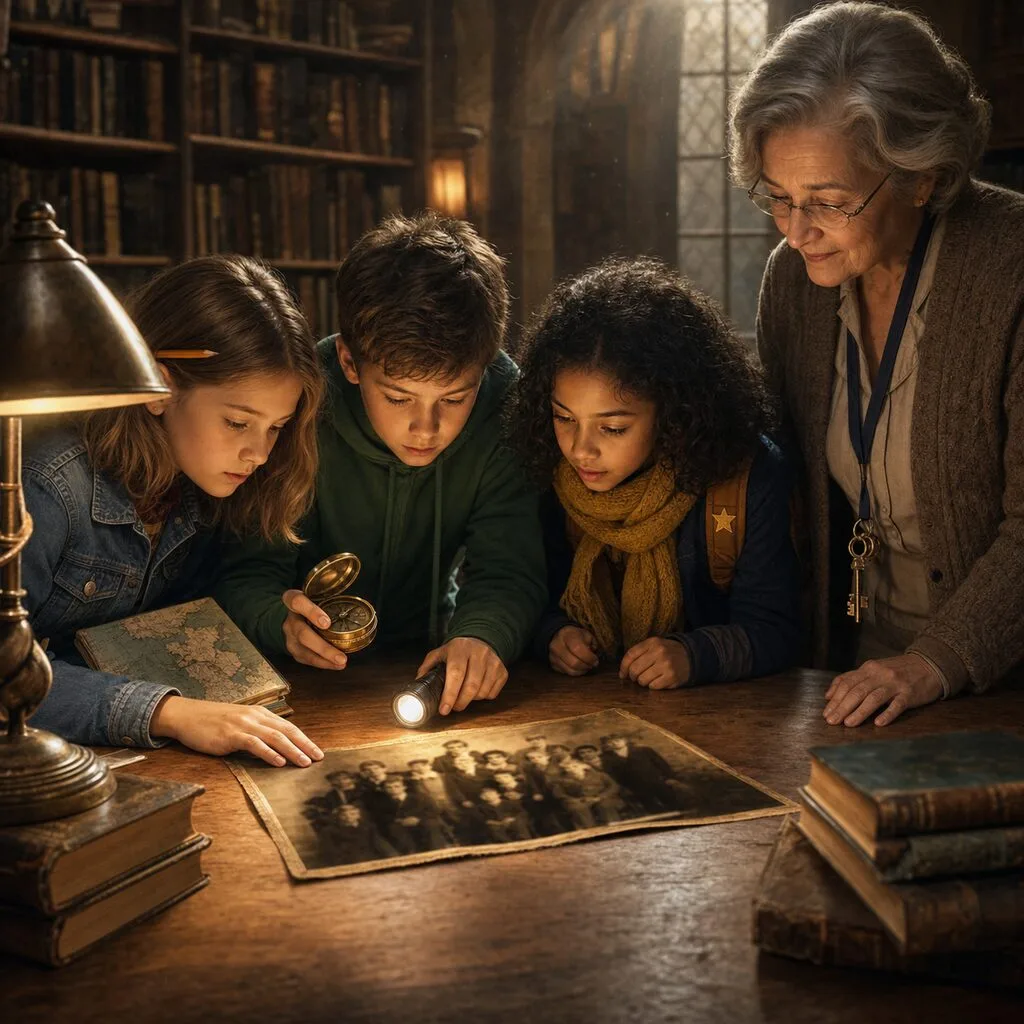
Starú fotografiu položila Nina presne do kruhu svetla pod lampou. Lampa stála na najnižšom stole v školskej knižnici a jej žlté sklo bolo poškrabané drobnými čiarami. Vonku za vysokými oknami stekal po tabuliach dážď. Vnútri voňalo drevo, prach a stránky kníh, ktoré celé roky nik neotvoril.
„Toto je lepšie než na chodbe,“ povedal Oliver a vytiahol malú baterku. „Tu aspoň vieme, odkiaľ ide svetlo.“
„A vieme, kam sa schovať, keď fotka začne spievať?“ spýtala sa Mia.
Oliver sa na ňu pozrel. „Fotografie nespievajú.“
„To bol vtip,“ povedala Mia pokojne. „Ale trochu slabý, uznávam.“
Nina sa usmiala, hoci sa jej prsty pevnejšie stisli na okraji zošita s mapami. Fotografia, ktorú našli po daždi pri dome na konci mapy, ležala medzi nimi. Bola malá, pokrčená a na rohoch zmäknutá vlhkosťou. Zachytávala triedu detí pri laviciach. Väčšina tvárí bola sivá, no stále rozoznateľná. Len chlapec v zadnom rade zostával rozmazaný, akoby sa niekto pokúsil jeho podobu zotrieť gumou.
Pod lampou sa na papieri zablysol tenký prúžok svetla.
„Pozrite,“ zašepkala Nina.
Pri ľavom okraji fotografie sa ukázal roh miestnosti. Predtým tam bola iba sivá škvrna. Teraz bolo vidieť kúsok okna, pás tmavšej steny a dve lavice postavené šikmo za sebou.
Nina vytiahla ceruzku spoza ucha a začala kresliť.
„To nie je obyčajný roh,“ povedala. „Lavice nestoja v radoch. Aspoň nie úplne. Tá zadná je otočená k oknu.“
Oliver naklonil hlavu takmer k stolu. „Možno je fotka poškodená. Keď je papier zvlnený, veci vyzerajú krivo.“
„Nie,“ ozvala sa Mia. Jej teplé hnedé oči sa upierali na rozmazaného chlapca. „On stojí pri tej otočenej lavici. Ale nepozerá sa na fotoaparát.“
V knižnici sa na chvíľu zdalo chladnejšie. Nie nepríjemne, skôr ako keď niekto otvorí dvere do prázdnej chodby. Mia si pritiahla žltý šál bližšie ku krku.
„Kam sa pozerá?“ spýtal sa Oliver.
Dievča chvíľu mlčalo. „Akoby čakal, že ho niekto zavolá.“
Oliver prešiel baterkou cez fotografiu. Kužeľ bieleho svetla sa na papieri pohol, no chlapcova tvár sa v ňom nevyjasnila. Keď však baterku vypol a zostalo iba mäkké svetlo lampy, rozmazané črty sa jemne posunuli.
Nina videla tenký obrys ucha a líniu líca.
Oliver videl niečo celkom iné.
„V pozadí je chyba,“ povedal náhle. „Za nimi. Na nástenke.“
„Aká chyba?“
Chlapec ukázal nechtom na miesto nad hlavičkami detí. „Tá nástenka má zelený rám. Lenže na fotke je všetko staré. Lavice, okná, skrinka. Zelené plastové rámy sa v škole používali až oveľa neskôr. Aspoň podľa fotiek na chodbe.“
Mia sa naklonila. „Ja tam nevidím nástenku. Vidím dvere.“
„Dvere tam nemôžu byť,“ namietol Oliver. „Pozri, tie dve svetlé čiary sú pripináčiky.“
„Alebo kľučka a okraj skla,“ povedala Mia.
Nina si fotografiu opatrne vzala. V jej rukách sa obraz znovu zmenil. Pri stene sa objavil sotva viditeľný náčrt štyroch lavíc a medzi nimi úzka cesta. Žiadne dvere, žiadna nástenka. Len priestor, ktorý jej pripomínal plánek.
„Každý vidíme niečo iné,“ povedala.
Oliver si založil ruky. „To nie je možné. Papier predsa nemôže ukazovať tri rôzne veci naraz.“
„Možno neukazuje tri veci,“ navrhla Mia. „Možno ukazuje tú, ktorú práve potrebujeme nájsť.“
„Alebo tú, ktorú si vymýšľame,“ odvetil Oliver ostrejšie, než chcel.
Ticho po jeho slovách nebolo hrozivé. Skôr ťažké. Mia sklopila zrak a Nina prestala kresliť. Vtedy sa fotografia vo svetle lampy nepatrne zachvela. Papier sa ani nepohol. Len žltý odlesk na jeho povrchu sa na okamih zavlnil, podobne ako hladina vody.
Oliver zbledol.
„Dobre,“ povedal po chvíli. „To som si nevymyslel.“
„Ani my nie,“ odpovedala Nina.
Práve vtedy sa medzi policami ozvali kroky. Pani Urbanová sa objavila s vozíkom plným kníh. Na nose mala strieborné okuliare a na stužke pri svetri sa jej ticho pohupovali kľúče.
„Dúfam, že ste sa nerozhodli čítať zakázané knihy po tme,“ povedala prísne milým hlasom.
Keď sa veci začnú meniť
Oliver rýchlo prikryl fotografiu dlaňou. Potom si uvedomil, že to vyzerá ešte podozrivejšie, a ruku stiahol.
Pani Urbanová sa zastavila.
Úsmev jej zmizol z tváre, ale nevyzerala nahnevane. Skôr prekvapene, akoby na stole zazrela predmet, ktorý mal zostať len v spomienke.
„Odkiaľ to máte?“ opýtala sa potichu.
Nina povedala pravdu. Vysvetlila jej, že fotografiu našli pri dome na konci mapy, v mokrej tráve pri starom múre. Nespomenula všetko: svetlo v prázdnom okne, tiché kroky v chodbe ani to, ako sa dom objavil tam, kde podľa mapy nemala byť žiadna ulica. Pani Urbanová už aj tak počúvala veľmi pozorne.
Keď Nina skončila, knihovníčka si prisunula stoličku. Nechytila fotografiu hneď. Najprv si upravila okuliare a zahľadela sa na rohy lavíc.
„Túto triedu poznám,“ povedala.
Mia zdvihla hlavu. „Boli ste tam?“
„Nie ako žiačka. Bola som vtedy mladá pomocníčka v knižnici. A občas som nosila učiteľom knihy do tried.“ Prstom sa zastavila tesne nad fotografiou. „Tieto lavice stáli v starej učebni na konci západnej chodby. Dnes je tam sklad výtvarných potrieb.“
Oliver ukázal na zelený detail. „A toto?“
Pani Urbanová sa zamračila. „To nebola nástenka. Bola to sklenená výplň dverí. Mala zelený rám, ale nie plastový. Kovový. Neskôr ju vymenili.“
Oliver otvoril ústa, no nič nepovedal. Mia naňho len krátko pozrela, bez víťazného úsmevu.
„Mala by som vám niečo ukázať,“ pokračovala knihovníčka. „Ak s tým budete zaobchádzať opatrne.“
Kľúče na jej stužke zazvonili, keď prešla k úzkej skrini na konci knižnice. Dolná časť bola zamknutá. Za matným sklom ležali veľké albumy, niektoré zabalené v sivom papieri. Pani Urbanová vytiahla jeden potiahnutý tmavomodrým plátnom. Na chrbte sa sotva dalo prečítať: Škola – roky 19…
Položila ho na stôl oboma rukami.
„Papier je starší než vy všetci dohromady,“ povedala. „Takže žiadne mastné prsty, žiadne ohýbanie strán a Oliver nebude na nič svietiť baterkou, ak to nebude naozaj potrebné.“
„To bolo namierené na mňa?“ spýtal sa Oliver.
„Veľmi presne,“ odvetila pani Urbanová.
Listovali pomaly. Na stránkach boli zábery zo školských výletov, športových dní aj slávností, pri ktorých deti držali papierové kvety. Neskôr sa objavili triedne fotografie. Pod každou bol dátum a trieda napísané atramentom, ktorý už bledol dohneda.
Všimla si číslo skôr než ostatní.
„5.B,“ prečítala Nina.
Na stránke boli dve fotografie. Na prvej stáli deti pred školou, pod vysokou lipou. Na druhej sedeli v triede pri laviciach. Tá druhá sa podobala ich rozmazanej snímke tak veľmi, až Oliverovi vypadol kompas z ruky a ticho cinkol o drevený stôl.
„To je tá miestnosť,“ vydýchla Nina. „Okno je na rovnakom mieste. A tá otočená lavica… tu je tiež.“
Na fotografii v albume sedel pri otočenej lavici chlapec v košeli s malým tmavým odznakom pri golieri. Jeho tvár bola nejasná, nie však rozmazaná. Hlava bola odvrátená bokom, akoby sa práve vtedy obrátil za niečím pri dverách.
Oliver priblížil okuliare pani Urbanovej k stránke, ale nedotkol sa jej. „Ten odznak. Je rovnaký ako na našej fotke. Taký malý štvorec s čiarou cez stred.“
Mia prikývla. „Preto ho Nina videla pri lavici. A ty si videl dvere.“
Pri dolnom okraji stránky boli mená. Väčšina sa dala prečítať: Zuzana, Erik, Hana, Roman. Jedno meno však bolo poškodené. Roh papiera bol odretý, akoby ho celé roky šúchali prsty. Zostalo len niekoľko písmen.
Samue…
Pani Urbanová si zložila okuliare. Držala ich v ruke a dlho hľadela na útržok mena.
„Samuel,“ povedala napokon. Jej hlas bol tichý, ale istý.
Všetci traja sa pozreli na chlapca pri otočenej lavici.
„Pamätáte si ho?“ opýtala sa Mia opatrne.
Knihovníčka sa nadýchla. „Pamätám si, že som to meno videla v zozname. A pamätám si, že raz nechal vrátenú knihu na pulte bez lístka. Mala v sebe záložku s nakreslenou hviezdou.“ Na chvíľu sa usmiala, potom však pokrútila hlavou. „Je zvláštne, ako málo toho človeku zostane. Neviem, aké mal oči. Neviem, či býval blízko školy. Neviem ani, prečo pri jeho mene nie je priezvisko.“
Dôležitý okamih
„Možno sa stránka poškodila náhodou,“ povedal Oliver, no už bez svojej obvyklej istoty.
„Možno,“ súhlasila pani Urbanová. „Staré záznamy sa sťahovali z jednej kancelárie do druhej. Niektoré sa stratili, iné boli prepísané nepresne. A niektoré triedy si pamätáme iba podľa toho, čo nám o nich povedal niekto iný.“
Nina položila vedľa albumu vlastný nákres. Čiary lavíc sa zhodovali. Pri zadnej stene však nakreslila malý prázdny priestor, ktorý na albumovej fotografii nebolo celkom vidieť.
„Tu niečo chýba,“ povedala. „Ale neviem čo.“
Oliver sa zadíval na rozmazanú fotografiu pod lampou. „Chcel som, aby sa ukázal jeden jasný dôkaz. Meno, dátum, presná odpoveď. Lenže namiesto toho každý dostal inú časť.“
„To nemusí byť chyba,“ povedala Mia. „Niekedy si ľudia pamätajú izbu, niekedy odznak. A niekedy len to, že niekto čakal sám.“
Chlapec si prstami pootočil starý mosadzný kompas. Ihla sa na okamih zachvela, potom sa upokojila. „Ak ho každý videl trochu inak, možno preto jeho tvár na fotke nevie zostať rovnaká.“
Pani Urbanová zavrela album len napoly, aby nezakryla útržok mena. „Samuel bol v tej triede. To vieme. Vieme aj to, že sa naňho postupne zabúdalo viac, než by sa malo. Zvyšok zatiaľ nevieme.“
Mia sa pozrela na rozmazaného chlapca. Chlad v knižnici už necítila. Z fotografie sa nevracal strach. Bol to smútok, ktorý konečne niekto prestal prehliadať.
Nina vytiahla starú mapu mesta. Nosila ju zloženú v obale na dne zošita a jej okraje boli jemné ako suché lístie. Keď ju rozprestrela vedľa albumu, fotografia sa zľahka posunula po stole. Zastala na samom kraji mapy, pri mieste, kde sa papier kedysi natrhol.
Pod jej rohom sa objavila tmavá čiarka.
Nina sa sklonila tak blízko, až sa jej vlasy dotkli stola.
„Nie je to čiarka,“ povedala.
Žlté svetlo lampy sa rozochvelo. Na okraji mapy, vedľa miesta bez názvu, sa na pár sekúnd ukázalo malé písmeno S. Nebolo napísané atramentom. Vyzeralo, akoby ho papier vytlačil zo svojej druhej strany.
Oliver už nepovedal, že to musí mať jednoduché vysvetlenie. Namiesto toho si ticho vložil kompas do vrecka.
„To miesto sme ešte nehľadali,“ všimla si Nina.
Mia prešla prstom tesne nad písmenom, no nedotkla sa ho. „Možno tam nie je odpoveď. Možno ďalšia spomienka.“
Pani Urbanová nechala album otvorený pri mene Samue… a usmiala sa na deti ponad strieborné okuliare.
„Tak potom budete potrebovať mapu, odvahu a niekoho, kto si všíma aj veci, ktoré sa nedajú hneď dokázať.“
Za oknom dážď pomaly ustával. Na stole ležala fotografia, otvorený album a mapa s písmenom S. Chlapec v zadnom rade už nevyzeral ako tieň bez mena. Stále bol rozmazaný, stále vzdialený, ale po prvý raz v ich príbehu mal smer.
Pokračovanie nabudúce…