
Vypočujte si slovenskú audio verziu príbehu
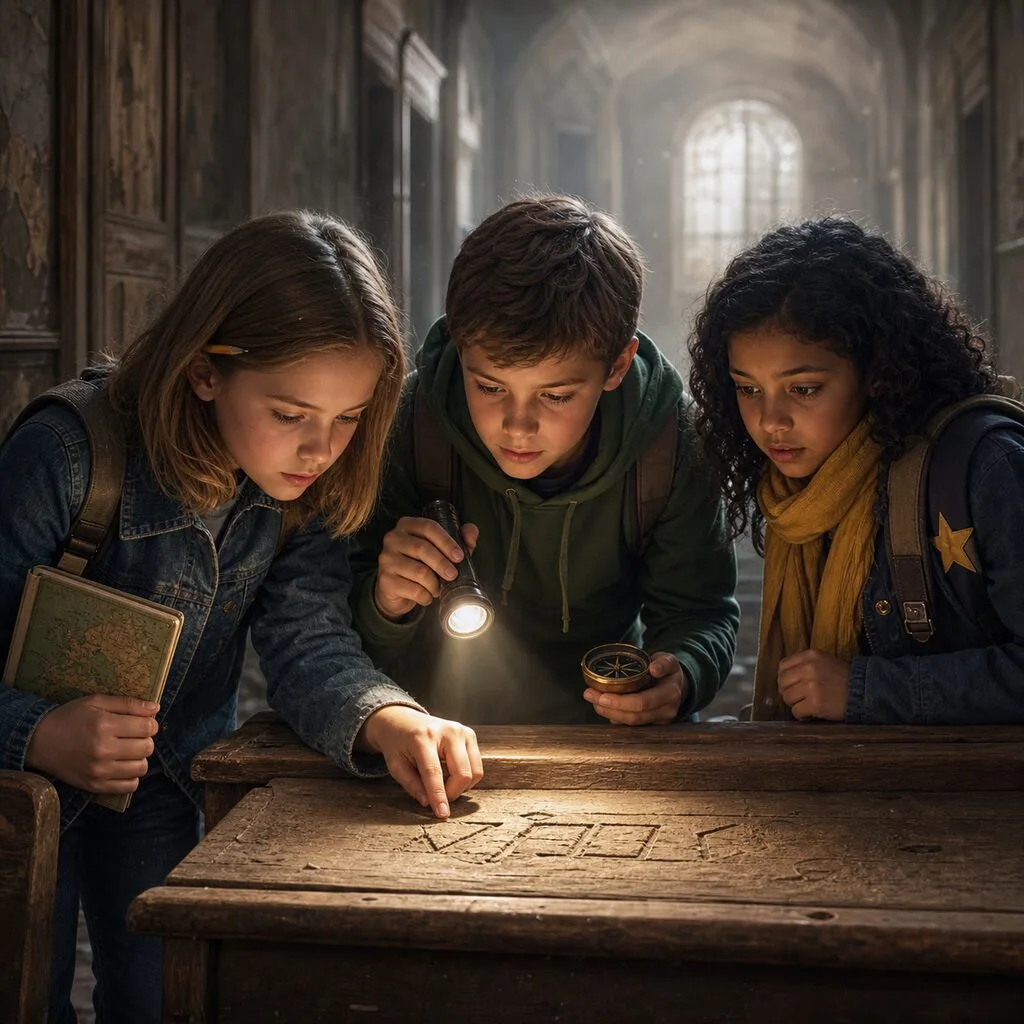
Meno na lavici je nová časť seriálu Dom na konci mapy, pripravená ako dvojjazyčný detský príbeh v slovenčine aj angličtine.
Meno na lavici: začína sa príbeh
Prach v školskom sklade voňal po starom dreve, mokrých kabátoch a zabudnutých zošitoch. Nina stála pri dverách s rukou na vypínači, no svetlo sa po stlačení len raz slabunko mihlo a potom zostalo žlté a unavené.
„To je presne ten druh miestnosti, ktorý by mal mať aspoň jedno okno,“ zamrmlal Oliver. V zelenej mikine držal malú baterku po dedovi, hoci ju zatiaľ nepotreboval.
Mia sa pozrela ponad plece. Jej žltý šál sa jej zachytil o popruh ruksaka s hviezdičkou. „Má okno. Len je za tromi policami a krabicou s nápisom Vianočné ozdoby 2009.“
Prišli sem, pretože pani zborovníčka spomenula, že zo starej časti školy kedysi presunuli nábytok práve do skladu. Po tom, čo včera na triednom pláne chýbalo Samuelovo miesto, sa Nina nedokázala zbaviť pocitu, že mapa a škola ukazujú na tú istú vec.
Medzi prevrátenými stoličkami, mapami stočenými v rúrkach a škatulami plnými učebníc objavili lavicu. Bola nižšia než tie v ich triede, s tmavým drevom a liatinovými nohami. Jedna strana dosky bola poškriabaná, akoby po nej niekto celé roky posúval pravítko.
„Táto sem asi nepatrí,“ povedala Nina. Vytiahla si spoza ucha ceruzku a otvorila malý zápisník s mapou. „Pozrite. Na mape je pri starej triede značka, ktorá vyzerá ako obdĺžnik.“
Oliver si kľakol. „Obdĺžnik môže znamenať hocičo. Dvere, stôl, skriňu…“
„Alebo lavicu,“ doplnila Mia potichu.
Nina prešla dlaňou po zaprášenej doske. Pod prstami sa jej objavili tenké, tmavé ryhy. Najprv rozoznala písmeno S. Potom A. O chvíľu už všetci traja čítali meno, ktoré sa z dreva vynorilo ako veta spod gumy.
SAMUEL HORSKÝ.
V sklade sa nič nepohlo. Práve preto sa Nina zachvela. Chodba za dverami, kde pred chvíľou ktosi prešiel, náhle stíchla. Ani staré potrubie nad nimi nezaškrípalo.
Oliver sklonil tvár bližšie k doske. „Tie ryhy sú staré. Pozri, sú vyhladené. Niekto to vyryl dávno, možno ešte keď bola lavica v triede.“
„Takže Samuel bol skutočný,“ povedala Mia.
„Bol,“ prikývla Nina, hoci to slovo znelo ťažšie, než čakala. Potom sa nadýchla. „A myslím, že viem, kde hľadať ďalej.“
V učebni pri zborovni bolo teplejšie, ale papier v starých skrinkách mal suchú, trochu zatuchnutú vôňu. Pani zborovníčka im dovolila prezrieť niekoľko albumov, pokiaľ ich vrátia presne na miesto a nezačnú z nich vyrábať detektívnu nástenku.
„To posledné povedala najmä tebe,“ poznamenala Mia, keď Oliver položil na stôl baterku, kompas, pravítko a tri ceruzky zoradené podľa dĺžky.
„Detektívna nástenka potrebuje aspoň šnúrku,“ odvetil vážne. „A tú nemám.“
Najhrubší album mal popraskaný modrý obal. Na prvej strane bolo napísané meno triedy a rok, ktorý sa zdal neuveriteľne dávny. Oliver listoval opatrne, akoby sa stránky mohli uraziť, keby sa ich dotkol príliš rýchlo.
Napokon zastal.
„Tu.“
Pri okraji stránky bolo drobným atramentovým písmom napísané: Samuel Horský. Vedľa mena sa tiahla vyblednutá čiara, ktorá sa však náhle končila. Za ňou zostalo prázdne miesto, akoby niekto chcel dopísať vetu a potom sa rozmyslel.
Nina si všimla kresbu v rohu. Bol to jednoduchý plán triedy: dve rady lavíc, katedra, okno a dvere. Jedna lavica pri zadnej stene bola označená malým krížikom.
„Presne tam,“ povedala a otvorila svoj zápisník. „Takto vyzerala miestnosť na mape predtým, než sa začala strácať.“
Mia medzitým čítala maličké poznámky pod zoznamom mien. Musela sa nakloniť tak blízko, že sa jej kučery dotkli papiera.
„Je tu niečo o konci roka,“ zašepkala. „Píše sa tu: Samuelovi pripraviť…“ Zastala. Posledné slová boli rozmazané. „…uznanie za pomoc pri… Nie, ďalej to neviem prečítať.“
Oliver sa zamračil. „Ak mal dostať uznanie, muselo k tomu byť niečo konkrétne. Diplom, kartička, zápis do albumu. Také veci nezmiznú len tak.“
„Niekedy zmiznú,“ povedala Mia. „Keď ich nikto nehľadá.“
Nina sa na chvíľu zahľadela na prázdnu časť pri Samuelovom mene. Včera ju tma v starej triede poriadne vystrašila. Nechcela o tom hovoriť, lebo mala pocit, že by potom musela prestať chodiť ďalej. Teraz však povedala: „Trochu sa bojím, že tá mapa ukáže niečo, čo nebudeme vedieť opraviť. Ale nechcem tam ísť sama.“
Keď sa veci začnú meniť
Oliver okamžite zaklapol album. „Tak nepôjdeš sama.“
Mia sa usmiala. „A ani potme. Aspoň nie dobrovoľne.“
Pani Urbanovú našli na chodbe pri knižnici. Ukladala knihy na vozík a jej strieborné okuliare sa leskli v svetle od vysokých okien. Kľúče na stuhe pri jej boku cinkli, keď sa otočila.
„Ak hľadáte dobrodružnú literatúru, vrátila som ju na správne police,“ povedala. „To znamená, že ju tentoraz nájdete bez mojej pomoci.“
Oliver zdvihol album. „Hľadáme skôr niekoho z tejto knihy.“
Keď vyslovil meno Samuel Horský, pani Urbanová prestala ukladať knihy. Jeden tenký zväzok jej zostal v ruke, otvorený presne v polovici.
„To meno ste kde našli?“ spýtala sa.
Jej hlas nebol prísny. Znel unavene, akoby ho vytiahla z veľmi vzdialeného miesta.
Nina ukázala fotografiu lavice, ktorú stihla urobiť mobilom. „V sklade. Je na nej vyryté.“
Pani Urbanová si obrázok nechytila. Len sa naň dlho dívala. Potom zovrela kľúče tak silno, až zacinkali.
„Staré veci je niekedy lepšie neotvárať,“ povedala.
„Pre koho?“ opýtala sa Mia jemne.
Knihovníčka sa na ňu pozrela. V jej tvári bolo niečo prekvapené, no zároveň smutné.
Oliver ukázal na otvorený album. „Pri jeho mene chýba zápis. A pri pláne triedy je lavica označená krížikom. To nemôže byť náhoda.“
„Nie,“ povedala pani Urbanová. „To nie je náhoda.“
Na chvíľu sa zdalo, že odíde. Kľúč od knižnice už držala medzi prstami. Napokon však otvorila dvere a ticho povedala: „Poďte dnu. Nie sem na chodbu.“
V zadnej časti knižnice stál okrúhly stôl, na ktorom ležala váza so suchými vetvičkami. Za oknom sa pohybovali sivé oblaky. Pani Urbanová položila album pred seba, no dlho ho neotvárala.
„Vtedy som nebola knihovníčka,“ začala. „Pomáhala som v tej triede. Zastupovala som pani učiteľku, nosila som zošity, pripravovala vývesku. Samuel sedával vzadu pri okne.“
Nina si rýchlo načrtla plán lavíc. „Pri tej označenej?“
Knihovníčka prikývla. „Pri tej. Nebol najhlasnejší. Často si mysleli, že keď mlčí, nevie odpoveď. Lenže on najprv pozoroval. Potom si všimol veci, ktoré ostatným unikli.“
„Ako Nina,“ povedala Mia.
Nina sklopila oči k zápisníku, ale ceruzku nepoložila.
Pani Urbanová sa slabo usmiala. „Jedného dňa Samuel našiel starý plán školy. Všimol si, že na ňom chýba jedna trieda. Tá, v ktorej sedel. Smial sa, že miestnosť sa možno urazila.“
Oliver sa prestal hrať s kompasom. „A čo sa stalo potom?“
„Triedu neskôr zavreli kvôli oprave. Všetko presunuli rýchlo. Lavice, nástenky, albumy. Samuel mal na konci roka dostať malé uznanie za pomoc pri školskom projekte. Chceli sme mu do albumu vložiť kartičku a na vývesku pripnúť jeho kresbu plánu školy.“
„Lenže sa to nestalo,“ doplnila Mia.
Pani Urbanová si zložila okuliare a pretrela si oči. „Nie. Sľúbila som mu, že na to nezabudnem. Potom prišiel zmätok, nová trieda, nové povinnosti. Kartička sa stratila. Vývesku dali dole. A keď som si po čase spomenula, zdalo sa mi, že už je neskoro. Akoby som nemala právo vysloviť jeho meno, keď som ten sľub nesplnila.“
Oliver sa nadýchol, pripravený položiť ďalšiu otázku. Potom však zostal ticho.
Mia položila dlaň na okraj albumu, nie na ruku pani Urbanovej, iba blízko nej. „To, že ste mlčali, asi neznamená, že ste zabudli.“
Knihovníčka sa na ňu pozrela. V očiach sa jej zalesklo niečo, čo nebola slza, aspoň nie ešte.
„Nie,“ povedala. „Nezabudla som ani jeden deň.“
Po vyučovaní sa vrátili do starej triedy, ktorá sa objavovala iba vtedy, keď mapa ležala otvorená na stole pri zadnej chodbe. Dvere boli pootvorené. Za nimi čakal chladný vzduch, vôňa dreva a tiché svetlo, ktoré neprichádzalo zo žiadnej lampy.
Lavicu zo skladu priniesť nemohli, no pani školník ju na Oliverovu naliehavú žiadosť posunul aspoň ku dverám starej časti budovy. Keď teraz deti vošli, lavica už stála na mieste označenom krížikom v pláne triedy.
Dôležitý okamih
Nina sa zastavila pri prahu. „Stále sa mi to nepáči,“ priznala. „Ale som rada, že ste tu.“
„Nám sa to tiež nepáči,“ povedal Oliver. „Len máme baterku, kompas a pani Urbanovú. To je celkom dobrá výbava.“
„A šál,“ dodala Mia. „Ten môže byť na všetko.“
Pani Urbanová sa krátko zasmiala. Znel to síce krehko, ale v miestnosti bolo hneď o trochu teplejšie.
Mapa na stene bola napätá množstvom tenkých čiar. Dom na jej vzdialenom okraji sa črtal v jemnej hmle. Nina pristúpila bližšie a ukázala na takmer neviditeľný názov pri starej triede.
„Myslím, že čaká na meno,“ povedala.
Najprv ho vyslovila ona, opatrne a jasne. „Samuel Horský.“
Oliver sa pridal. „Samuel Horský.“
Mia povedala meno tak mäkko, akoby ho vracala niekam, kam patrilo. „Samuel Horský.“
Pani Urbanová zostala ticho. Kľúče jej viseli pri boku bez jediného cinknutia. Potom položila dlaň na starú dosku lavice.
„Samuel Horský,“ povedala pevnejšie, než hovorila celý deň. „Pamätám si ťa. A mrzí ma, že som to nepovedala skôr.“
Práve vtedy sa svetlo pri mape zmenilo. Nebolo silnejšie, iba pokojnejšie. Chlad, ktorý sa držal pri stenách, pomaly povolil. Čiary na mape sa začali strácať, jedna po druhej, až napokon zostala najmä cesta vedúca k domu na konci mapy.
Oliver pristúpil k lavici. „Drevo je stále studené,“ skonštatoval. „Ale už to nie je ten nepríjemný chlad.“
„Možno už nemusí nič držať samo,“ povedala Mia.
Nasledujúce ráno sa stretli znova pri mape. Pani Urbanová priniesla čistý pevný papier, starú fotografiu triedy a malú škatuľku s modrými kartičkami. Oliver presne prepísal vetu, ktorú sa im podarilo rozlúštiť z albumu: Samuel Horský – uznanie za pozornú pomoc pri školskom projekte a za plán, ktorý si všimol aj to, čo chýbalo.
„Nie je to príliš dlhé?“ spýtal sa.
„Nie,“ odpovedala Nina. „Je v tom miesto pre neho aj pre to, čo urobil.“
Mia pridala pod vetu menším písmom: Spomíname si.
Pani Urbanová kartičku dlho držala medzi prstami. Potom ju vložila do albumu na prázdne miesto pri Samuelovom mene.
Na mape ostal dom, cesta a malé miesto pri starej triede. Nina tam ceruzkou napísala Samuel Horský. Tentoraz sa písmo nerozmazalo ani nestratilo.
Všetci na chvíľu mlčali. Dom na konci mapy vyzeral pokojnejšie než predtým, jeho dve okná svietili mäkkým modrým svetlom.
Potom sa v dolnom rohu mapy objavila tenká nová značka. Nebola to ulica ani izba. Vyzerala ako malý prázdny rámik, pripravený na niečo, čo doň ešte len malo prísť.
Oliver sa naklonil bližšie. „To bude posledná stopa, však?“
Nina zavrela zápisník, no tentoraz sa neusilovala tváriť, že sa nebojí. Pozrela na kamarátov, potom na pani Urbanovú a napokon na dom v hmle.
„Asi áno,“ povedala. „A myslím, že bude dôležité, aby Samuelovo meno počuli aj ostatní.“
Pokračovanie nabudúce…
The House at the Edge of the Map, part 11: The Name on the Desk
The Story Begins
Dust in the school storage room smelled of old wood, wet coats, and forgotten exercise books. Nina stood by the door with her hand on the light switch, but when she pressed it, the bulb only blinked weakly once and then stayed yellow and tired.
"This is exactly the kind of room that should have at least one window," Oliver muttered. In his green hoodie, he held the small flashlight from his grandfather, even though he did not need it yet.
Mia looked over her shoulder. Her yellow scarf had caught on the strap of her backpack with a star patch. "It does have a window. It’s just behind three shelves and a box marked Christmas Decorations 2009."
They had come here because the school assistant had mentioned that furniture from the old part of the school had once been moved into this storage room. After the class plan had shown Samuel’s place missing yesterday, Nina could not shake the feeling that the map and the school were pointing to the same thing.
Among the overturned chairs, rolled-up maps, and boxes full of textbooks, they found a desk. It was lower than the ones in their classroom, with dark wood and cast-iron legs. One side of the top was scratched, as if someone had kept sliding a ruler over it for years.
"This probably doesn’t belong here," Nina said. She pulled the pencil from behind her ear and opened her small notebook with the map. "Look. On the map, near the old classroom, there is a mark that looks like a rectangle."
Oliver knelt down. "A rectangle could mean anything. A door, a table, a cupboard…"
"Or a desk," Mia added softly.
Nina ran her hand over the dusty top. Under her fingers, thin dark lines appeared. At first she could make out the letter S. Then A. After a moment, all three of them were reading the name that rose from the wood like a sentence from under an eraser.
SAMUEL HORSKÝ.
Nothing moved in the storage room. That was exactly why Nina shivered. The corridor outside the door, where someone had passed a moment before, suddenly went quiet. Even the old pipes above them did not creak.
Oliver leaned closer to the top. "These marks are old. Look, they’re smooth. Someone carved this a long time ago, maybe when the desk was still in a classroom."
"So Samuel was real," Mia said.
"He was," Nina said, though the word felt heavier than she had expected. Then she took a breath. "And I think I know where to look next."
In the room near the staff office, it was warmer, but the paper in the old cabinets had a dry, slightly stale smell. The school assistant let them look through a few albums, as long as they put them back in exactly the right place and did not start making a detective board out of them.
"That last part was mostly for you," Mia said when Oliver placed his flashlight, compass, ruler, and three pencils in a neat row on the table.
"A detective board needs at least a string," he replied seriously. "And I don’t have one."
The thickest album had a cracked blue cover. On the first page, the class name and a year were written. The year seemed impossibly long ago. Oliver turned the pages carefully, as if they might feel offended if he touched them too fast.
Finally, he stopped.
"Here."
At the edge of the page, the name Samuel Horský was written in tiny ink letters. Beside it ran a faded line, but it stopped suddenly. After that was empty space, as if someone had wanted to finish a sentence and then changed their mind.
When Things Start to Change
Nina noticed a drawing in the corner. It was a simple classroom plan: two rows of desks, the teacher’s desk, a window, and the door. One desk by the back wall was marked with a small cross.
"Right there," she said, opening her notebook. "This is what the room looked like on the map before it started to disappear."
Meanwhile, Mia was reading tiny notes under the list of names. She had to lean so close that her curls touched the paper.
"There’s something about the end of the year," she whispered. "It says: Prepare for Samuel…" She stopped. The last words were blurred. "…recognition for help with… No, I can’t read the rest."
Oliver frowned. "If he was going to get recognition, there must have been something specific. A certificate, a card, an entry in the album. Things like that don’t just vanish."
"Sometimes they do," Mia said. "When nobody looks for them."
For a moment, Nina stared at the empty space next to Samuel’s name. Yesterday, the dark in the old classroom had scared her badly. She did not want to talk about that, because it felt as if saying it out loud would mean she had to stop going forward. But now she said, "I’m a little afraid the map will show us something we won’t be able to fix. But I don’t want to go there alone."
Oliver closed the album at once. "Then you won’t go alone."
Mia smiled. "And not in the dark. At least not on purpose."
They found Mrs Urbanová in the corridor near the library. She was putting books on a cart, and her silver glasses shone in the light from the tall windows. The keys on the ribbon at her side jingled when she turned.
"If you’re looking for adventure books, I put them back on the right shelves," she said. "That means you should be able to find them without my help this time."
Oliver lifted the album. "We’re looking for someone from this book instead."
When he said the name Samuel Horský, Mrs Urbanová stopped arranging the books. One thin volume stayed in her hand, open right in the middle.
"Where did you find that name?" she asked.
Her voice was not strict. It sounded tired, as if she had pulled it from a very faraway place.
Nina showed the photo of the desk she had taken on her phone. "In the storage room. It’s carved on there."
Mrs Urbanová did not take the picture. She only stared at it for a long time. Then she gripped the keys so hard that they jingled.
"Old things are sometimes better left unopened," she said.
"For whom?" Mia asked gently.
The librarian looked at her. There was surprise in her face, but also sadness.
Oliver pointed at the open album. "There’s no note by his name. And the classroom plan has a desk marked with a cross. That can’t be a coincidence."
"No," said Mrs Urbanová. "It isn’t a coincidence."
For a moment, it seemed as if she might walk away. She was already holding the library key between her fingers. In the end, though, she opened the door and said quietly, "Come in. Not out here in the corridor."
At the back of the library stood a round table with a vase of dry branches on it. Grey clouds moved past the window. Mrs Urbanová placed the album in front of her, but she did not open it right away.
"Back then, I was not a librarian," she began. "I helped in that class. I covered for the teacher, carried notebooks, and prepared the notice board. Samuel sat at the back by the window."
An Important Moment
Nina quickly sketched the desk plan. "At the one marked with a cross?"
The librarian nodded. "At that one. He was not the loudest. People often thought that if he was quiet, he did not know the answer. But he watched first. Then he noticed things other people missed."
"Like Nina," Mia said.
Nina lowered her eyes to the notebook, but she did not put the pencil down.
Mrs Urbanová smiled weakly. "One day, Samuel found an old school plan. He noticed that one classroom was missing from it. The one where he sat. He joked that maybe the room had been offended."
Oliver stopped playing with the compass. "What happened after that?"
"Later, the classroom was closed because of repairs. Everything was moved quickly. Desks, notice boards, albums. At the end of the year, Samuel was supposed to get a small award for helping with a school project. We wanted to put a card in the album and pin his drawing of the school plan to the board."
"But it didn’t happen," Mia said.
Mrs Urbanová took off her glasses and rubbed her eyes. "No. I promised him I would not forget. Then there was confusion, a new class, new tasks. The card got lost. The notice board came down. And when I remembered it later, it felt too late. As if I had no right to say his name when I had not kept my promise."
Oliver took a breath, ready to ask another question. Then he stayed quiet.
Mia put her hand on the edge of the album, not on Mrs Urbanová’s hand, just near it. "Just because you were silent doesn’t mean you forgot."
The librarian looked at her. Something shiny appeared in her eyes, though it was not a tear, not yet.
"No," she said. "I did not forget for one single day."
After school, they returned to the old classroom, which appeared only when the map lay open on the table in the back corridor. The door was half open. Cold air waited behind it, along with the smell of wood and a quiet light that came from no lamp.
They could not bring the desk from the storage room, but on Oliver’s urgent request, the janitor had at least moved it close to the door of the old part of the building. When the children stepped inside now, the desk was already standing in the place marked with a cross on the classroom plan.
Nina stopped at the threshold. "I still don’t like this," she admitted. "But I’m glad you’re here."
"We don’t like it either," Oliver said. "But we’ve got a flashlight, a compass, and Mrs Urbanová. That’s a pretty good team."
"And a scarf," Mia added. "That can work for everything."
Mrs Urbanová gave a short laugh. It was fragile, but the room felt a little warmer right away.
The map on the wall was tense with many thin lines. The house at its far edge stood out in soft mist. Nina walked closer and pointed to the almost invisible name near the old classroom.
"I think it’s waiting for a name," she said.
First, she said it carefully and clearly. "Samuel Horský."
Oliver joined in. "Samuel Horský."
Mia said the name so softly, as if she were placing it back where it belonged. "Samuel Horský."
Mrs Urbanová stayed silent. The keys hung at her side without a single jingle. Then she put her hand on the old desk top.
"Samuel Horský," she said more firmly than she had spoken all day. "I remember you. And I’m sorry I did not say it sooner."
What Comes Next
Right then, the light near the map changed. It did not become stronger, only calmer. The cold that had clung to the walls slowly eased away. The lines on the map began to fade, one by one, until only the path leading to the house at the edge of the map was left.
Oliver stepped up to the desk. "The wood is still cold," he said. "But it’s not that unpleasant kind of cold anymore."
"Maybe it doesn’t have to hold everything by itself anymore," Mia said.
The next morning, they met again by the map. Mrs Urbanová brought clean heavy paper, an old class photo, and a small box with blue cards. Oliver carefully copied the sentence they had managed to read from the album: Samuel Horský – recognition for careful help with the school project and for noticing the plan, including what was missing.
"Isn’t that too long?" he asked.
"No," Nina answered. "There’s room in it for him and for what he did."
Mia added, in smaller letters beneath the sentence: We remember.
Mrs Urbanová held the card between her fingers for a long time. Then she placed it in the album, in the empty spot next to Samuel’s name.
On the map, the house, the path, and a small place near the old classroom remained. Nina wrote Samuel Horský there with her pencil. This time, the writing did not blur or disappear.
All of them were quiet for a moment. The house at the edge of the map looked calmer than before, and its two windows shone with a soft blue light.
Then a thin new mark appeared in the lower corner of the map. It was not a street or a room. It looked like a small empty frame, ready for something that was still waiting to come.
Oliver leaned closer. "That will be the last clue, right?"
Nina closed her notebook, but this time she did not try to act as if she was not afraid. She looked at her friends, then at Mrs Urbanová, and finally at the house in the mist.
"Probably," she said. "And I think it will be important for the others to hear Samuel’s name too."
To be continued…