
Vypočujte si slovenskú audio verziu príbehu
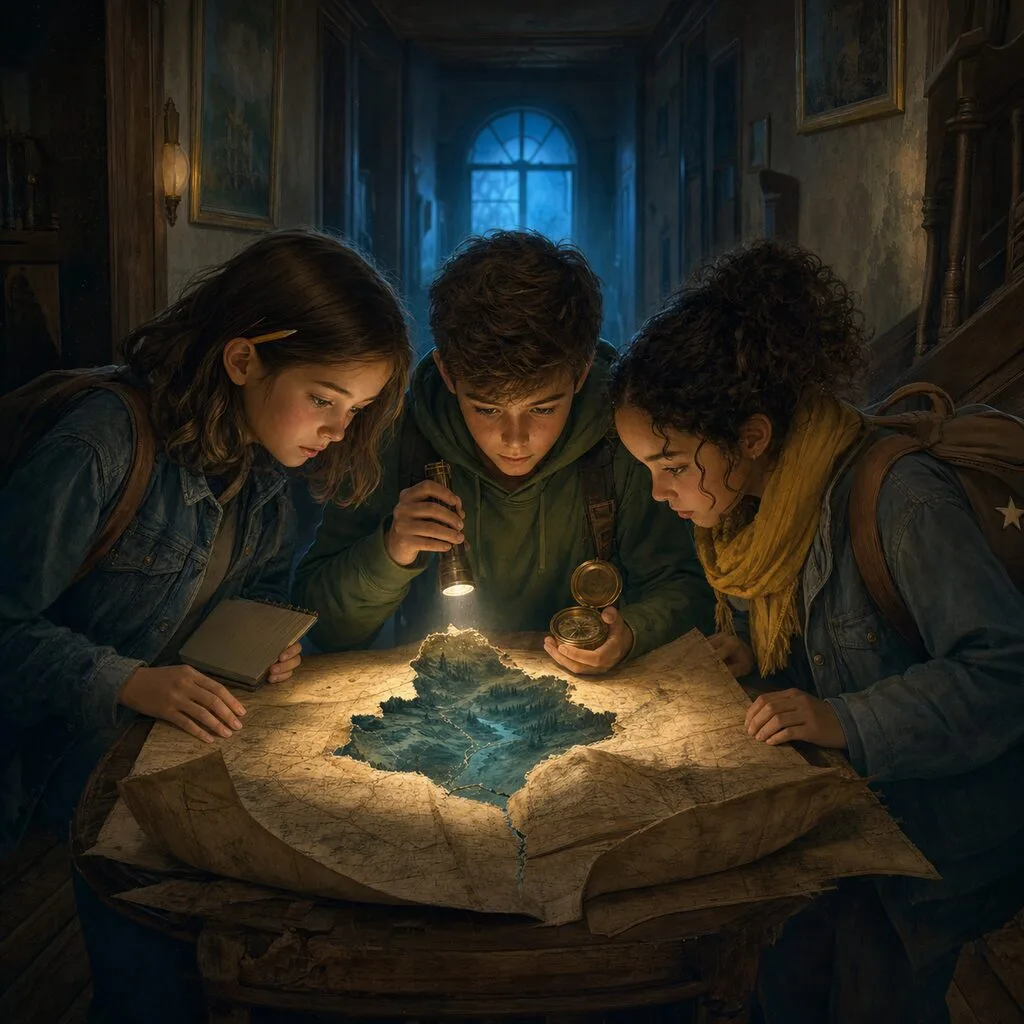
Posledný deň pred prázdninami je nová časť seriálu Dom na konci mapy, pripravená ako dvojjazyčný detský príbeh v slovenčine aj angličtine.
Posledný deň pred prázdninami: začína sa príbeh
Na starej mape sa pri dome objavila nová značka.
Nina sa nad ňou sklonila tak blízko, až jej ceruzka za uchom takmer skĺzla na papier. Medzi tenkými čiarami ulíc, ktoré už poznali, žiaril malý obdĺžnik rozdelený na rovné políčka. Vyzeral ako trieda nakreslená zhora.
Hneď vedľa neho bolo napísané meno.
Samuel Horský.
Atrament bol bledý, akoby ho niekto písal dažďovou vodou.
„Takže to nebolo len meno na fotografii,“ povedal Oliver. V jednej ruke držal svoju malú baterku, v druhej starý mosadzný kompas po dedovi. Ručička kompasu sa netočila na sever. Jemne chvela smerom k domu na konci mapy.
Mia si pritiahla žltý šál bližšie ku krku. „Vyzerá to, akoby ho papier nechcel pustiť. To meno je tu, ale ledva.“
Za nimi sa z hmly vynoril úzky dom. Jeho strecha bola tmavá a jedno okno svietilo mäkkým modrým svetlom. Deti už vedeli, že dom ich nevolá hlasom. Stačilo, aby sa mapa zmenila, a pri nohách sa im objavila známa kamenná cestička.
Nina položila dlaň na miesto so Samuelovým menom.
Papier bol ľadový.
O chvíľu sa vzduch ochladil tiež. Hmla okolo nich nezhustla, ale roztiahla sa do dĺžky, akoby z nej niekto vybudoval chodbu. Z jej konca prišiel zvuk dažďa bubnujúceho na veľké okná.
„Škola,“ zašepkal Oliver.
Práve vtedy sa pod ich topánkami namiesto štrku objavili staré dlaždice. Vo vzduchu zaváňalo mokrými bundami, drevom a kriedou. Na stenách viseli vyblednuté nástenky, hoci obrázky na nich nebolo možné rozoznať.
Dvere na konci chodby niesli nápis 5.B.
Nina sa na kamarátov pozrela. „Ak je to posledný deň pred prázdninami, musíme dávať pozor na všetko. Aj na veci, ktoré vyzerajú obyčajne.“
„To býva pri záhadách najhoršie,“ zamrmlal Oliver. „Obyčajné veci sa tvária nevinnne.“
Mia sa naňho krátko usmiala. „A niekedy sú len obyčajné. Len ich nikto poriadne nevidel.“
Dvere triedy sa samy pootvorili.
Vo vnútri stáli staré lavice v radoch. Po ich doskách sa pohybovali prúžky modrastého svetla, podobné odleskom dažďa. Lenže dovnútra nepršalo. Kvapky svetla sa leskli na dreve, potom mizli, akoby patrili k spomienke, nie k skutočnému dažďu.
Na stene visel veľký papierový plán.
Bol prichytený štyrmi žltými špendlíkmi a na jeho okrajoch sa krútili drobné kúsky krepového papiera. Niekto tam kedysi napísal farebnými fixkami: Posledný deň pred prázdninami.
Pod nadpisom boli mená a úlohy.
Kto prinesie džús. Kto pripraví hudbu. Kto zavesí papierové slnko. Kto povie krátke poďakovanie pani učiteľke. Pri niektorých menách boli smajlíky, pri iných hviezdičky alebo malé kresby.
Nina prešla pohľadom celý zoznam. Potom si stiahla obočie.
„Tu je medzera.“
Oliver pristúpil bližšie. Medzi menami Patrik a Silvia zostalo prázdne miesto. Nebola to obyčajná medzera medzi riadkami. Papier tam niesol slabú stopu po vymazanej ceruzke.
„Samuel Horský mal byť tu,“ povedala Nina. „Je to presne medzi nimi. Podľa abecedy.“
Chlapec vytiahol kompas a podržal ho pri pláne. Ručička sa naklonila k prázdnemu miestu. Potom baterkou osvietil spodný okraj papiera.
„Pozrite. Mená neboli napísané naraz.“
Na zozname boli viditeľné rozdielne odtiene atramentu. Prvé riadky mali tmavomodré písmo, ďalšie svetlejšie. Pri niekoľkých menách zostali malé škrabance od gumy.
„Niekto to prepisoval,“ pokračoval Oliver. „Možno zo zošita. A potom robil opravy narýchlo.“
Mia sa naklonila k pravému rohu papiera. „Je tu odtlačok prsta.“
Na bielom mieste sa naozaj črtal sivý oblúčik. Vedľa neho bola jemná ceruzová čiarka, potom druhá. Ako začiatok písmena, ktoré nikto nedokončil.
V triede niečo zašušťalo.
Nebolo to hlasné. Skôr ako keď niekto listuje zošitom o dve lavice ďalej.
Potom sa pri zadnej stene objavili dve rozmazané postavy. Deti nevideli ich tváre, iba ramená, rukávy školských mikín a pohyb pier.
„Všimol si si to?“ spýtal sa jeden tichý hlas.
„Pani učiteľka to určite opraví,“ odpovedal druhý. „Veď ona má ten pôvodný zoznam.“
Keď sa veci začnú meniť
„Ale Samuel…“
„Počkaj. Teraz všetci nosia veci do triedy. Neskôr.“
Postavy sa rozplynuli.
Zostalo po nich len šumenie dažďa.
Nina zaťala prsty okolo svojho zošita s mapami. „Takže si to všimli.“
„Aspoň dvaja,“ opravil ju Oliver. „Ale nevieme, či mali čas niečo urobiť. Ani či im to potom niekto pripomenul.“
„To z toho nerobí menšiu chybu,“ odsekla.
Mia sa medzi nich postavila skôr, než by sa ich hlasy mohli zdvihnúť. „Nina, máš pravdu, že to bolo nespravodlivé. Len… možno nehľadáme človeka, na ktorého sa dá ukázať prstom.“
Dievča sa znova obrátilo k plánu. Hnev v nej nezmizol, ale už nebol taký ostrý. Skôr pripomínal kamienok v topánke, ktorý sa nedal ignorovať.
Oliver sledoval poradie čiarok a škrabancov. „Najprv bolo Samuelovo meno v pôvodnom zozname. Potom ho niekto prepisoval na tento veľký plán. Pri rýchlej oprave sa vynechalo. Dvaja spolužiaci si to všimli a čakali, že to opraví dospelý. Možno dospelý čakal, že to povedia deti.“
„A medzitým sa chystal koniec roka,“ doplnila Mia. „Všetci boli zaneprázdnení tým, že sa už tešili domov.“
Na chvíľu nikto neprehovoril.
Pri okne sa jedna lavica pomaly odsunutá od ostatných.
Nebola prevrátená ani poškodená. Stála len o trochu bokom, takmer nebadane. Na jej doske ležala papierová menovka. Jedna strana bola prilepená páskou, druhá sa odchlipovala.
Nina podišla k nej. Na menovke sa dali prečítať iba prvé dve písmená.
Sa.
„Samuelova lavica,“ povedala.
V okennom skle sa mihol odraz chlapca. Nemal jasnú tvár, iba tmavé vlasy, školskú tašku pri nohách a malý balíček zabalený v zelenom papieri. Stál vedľa lavice a pozeral sa smerom k dverám.
Akoby čakal, že sa niekto vráti.
Z chodby sa ozval vzdialený smiech. Potom hudba z malého reproduktora. Niekto zakričal, že džús je už pripravený. Spomienka na triednu rozlúčku sa zbehla do jedného krátkeho okamihu.
Chlapec pri okne sa pohol, akoby chcel niečo povedať.
No hlas mu nevyšiel.
Namiesto neho zaznelo len škrípanie stoličky.
Mia si pritisla dlaň na hruď. „Nemyslím, že bol nahnevaný najprv. Skôr nevedel, čo má spraviť. Keď nikto nepovie, kam patríš, začneš rozmýšľať, či tam vôbec patríš.“
Nina prehltla. „Mal ten darček pre triedu.“
„Možno ho chcel dať pani učiteľke,“ povedal Oliver. Jeho hlas už neznel takisto ako predtým, keď skladal fakty. „Alebo ho pripravil pre niekoho z triedy. To teraz nevieme.“
Samuelov odraz sa stratil. Na lavici však zostal zelený záblesk, podobný farbe baliaceho papiera.
„Máme dôkaz,“ vyhlásila Nina, no potom sa zarazila. „Lenže… dôkaz nestačí, však?“
Oliver pomaly sklopil baterku. „Nestačí. Vieme, ako sa to stalo. Ale to mu vtedy nepomohlo. Nikto sa ho nespýtal.“
Stará trieda zašepkala papiermi. Plán na stene sa jemne zachvel, hoci okná boli zatvorené. Hmla pri dverách sa stiahla k mape, ktorá teraz ležala na učiteľskom stole.
Na jej okraji svietil nový znak: malá slučka, akoby sa čiara vracala sama k sebe.
Pod ňou sa objavila veta.
Vrátim sa po to, čo zostalo bokom.
„To nie je trest,“ povedala Mia ticho. „Je to sľub.“
Nina si zahryzla do pery. „Možno niekto vedel, že sa stala chyba.“
„Ale nestihol ju napraviť,“ doplnil Oliver.
Dievča s kučeravými vlasmi položilo ruku na Samuelovu lavicu. „Nemusel to nikto spraviť naschvál. Aj tak ho to bolelo.“
Keď tie slová dozneli, modrasté svetlo v triede sa zmenilo. Nebolo už studené ako dážď na skle. Po doskách lavíc sa rozlialo jemné teplo, podobné posledným lúčom pred večerom.
Nina sa nadýchla. „Dobre. Nebudeme hľadať vinníka naslepo. Budeme hľadať, kto si to pamätá.“
Vzadu v triede cvakli dvierka starej skrinky.
Oliver zodvihol baterku. „To bolo určite úplne obyčajné,“ poznamenal sucho.
„Oliver,“ upozornila ho Nina.
„Dobre, nebolo.“
V skrinke ležali kôpky zošitov, vyschnuté fixky, papierové poháre a obálky so školskou pečiatkou. Medzi nimi bol zasunutý lístok zložený do trojuholníka.
Dôležitý okamih
Mia ho vybrala opatrne, akoby mohol byť krehký ako list zo stromu na jeseň. Na prednej strane bolo roztraseným písmom napísané len:
Vrátim sa po…
Zvyšok vety chýbal. Roh papiera bol odtrhnutý.
Pod vetou sa črtal podpis, ale atrament sa rozpil. Mohlo to byť meno dospelého. Alebo staršieho žiaka. Prvé písmeno vyzeralo ako M, no ďalšie sa stratili v sivom fľaku.
Nina si všimla niečo pri spodnom rohu. „Tento lístok bol pritlačený pod plánom. Vidíte záhyb? Presne sedí na hranu špendlíka.“
Oliver prikývol. „Niekto ho tam schoval alebo ho tam nechal, aby ho našiel ten správny človek.“
„A potom sa už nevrátil?“ spýtala sa Mia.
Trieda na otázku neodpovedala. Namiesto toho sa z chodby ozvalo vzdialené zazvonenie školského zvončeka.
Jediné.
Jemné.
Také, ktoré neoznamovalo začiatok hodiny, ale jej koniec.
Svet okolo nich sa začal rozplývať. Lavice bledli, dažďové svetlo sa menilo na hmlu a na stenách mizli nástenky. Nina si stihla vložiť lístok do svojho zošita práve vo chvíli, keď sa trieda 5.B stratila úplne.
Znova stáli pri dome na konci mapy.
Jeho jedno okno ešte stále svietilo, no o chvíľu aj ono pohaslo do mäkkej modrej žiary. Na mape zostalo Samuelovo meno. Vedľa neho pribudla tenká šípka smerujúca k škole a znak ruky, ktorá sa vracia k papieru.
Oliver vypol baterku. „Tentoraz sa mi nepáči moja obľúbená veta.“
„Ktorá?“ opýtala sa Nina.
„Že všetko má jednoduché vysvetlenie.“ Pozrel na kompas, potom ho schoval do vrecka. „Možno ho má. Len jednoduché vysvetlenie ešte neznamená jednoduchý pocit.“
Mia sa naposledy obzrela k hmle, kde pred chvíľou stála lavica pri okne.
„Aspoň už nie je neviditeľný,“ povedala.
Nina zavrela zošit so založeným lístkom. Nad ich hlavami sa vietor pohral s okrajom mapy a šípka ku škole slabo zažiarila.
Niekto tam možno stále vedel, komu patril sľub vrátiť sa.
A možno si pamätal aj to, čo zostalo bokom.
Pokračovanie nabudúce…
The House at the Edge of the Map, part 10: The Last Day Before the Holidays
The Story Begins
A new mark appeared on the old map beside the house.
Nina bent over it so close that the pencil behind her ear almost slipped onto the paper. Between the thin streets they already knew, a small rectangle shone in the middle of the lines. It was divided into neat little squares. It looked like a classroom seen from above.
Right next to it was a name.
Samuel Horský.
The ink was pale, as if someone had written it with rainwater.
“So it was not just a name on a photo,” Oliver said. He held his small flashlight in one hand and the old brass compass from his grandfather in the other. The needle did not point north. It trembled gently toward the house at the edge of the map.
Mia pulled her yellow scarf closer to her neck. “It looks like the paper does not want to let him go. The name is here, but only just.”
Behind them, the narrow house rose out of the mist. Its roof was dark, and one window gave off a soft blue light. The children already knew that the house did not call with a voice. It was enough for the map to change, and a familiar stone path appeared at their feet.
Nina put her hand on the place with Samuel’s name.
The paper was icy cold.
A moment later, the air turned cold too. The mist around them did not grow thicker. Instead, it stretched into a long shape, as if someone had built a corridor out of it. From the far end came the sound of rain drumming on big windows.
“School,” Oliver whispered.
At the same time, the gravel under their shoes changed into old tiles. The air smelled of wet coats, wood, and chalk. Faded notice boards hung on the walls, though the pictures on them were too blurred to read.
The door at the end of the corridor had a sign on it: 5.B.
Nina looked at her friends. “If this is the last day before the holidays, we have to watch everything. Even things that look normal.”
“That is usually the worst part of mysteries,” Oliver muttered. “Normal things look innocent.”
Mia gave him a quick smile. “And sometimes they are just normal. No one has really looked at them properly.”
The classroom door opened by itself, just a little.
Inside stood old desks in rows. Blue-gray strips of light moved across the wooden tops, like reflections from rain. But it was not raining in the room. The shining drops glimmered on the wood and then disappeared, as if they belonged to a memory and not to real rain.
On the wall hung a large paper plan.
It was held up by four yellow pins, and tiny pieces of crepe paper curled at the edges. Someone had written across the top in colored markers: Last Day Before the Holidays.
Under the title were names and jobs.
Who brings the juice. Who prepares the music. Who hangs up the paper sun. Who says a short thank-you to the teacher. Some names had smiley faces, some had stars, and some had little drawings.
Nina scanned the whole list. Then her eyebrows drew together.
“There is a gap here.”
Oliver stepped closer. Between the names Patrik and Silvia was an empty space. It was not a normal space between lines. The paper there carried a faint mark of erased pencil.
“Samuel Horský was supposed to be here,” Nina said. “Exactly between them. In alphabet order.”
The boy took out the compass and held it near the plan. The needle leaned toward the empty space. Then he shone his flashlight on the bottom edge of the paper.
When Things Start to Change
“Look. The names were not written all at once.”
Different shades of ink were visible on the list. The first lines were dark blue, the next ones were lighter. On several names, small scratch marks from an eraser remained.
“Someone copied it,” Oliver said. “Maybe from a notebook. And then they made quick corrections.”
Mia leaned toward the right corner of the paper. “There is a fingerprint here.”
A gray curve really did show on the white space. Next to it was a thin pencil line, then another. It was like the beginning of a letter that no one finished.
Something rustled in the classroom.
It was not loud. More like the sound of someone turning pages in a notebook two desks away.
Then two blurry shapes appeared by the back wall. The children could not see their faces, only shoulders, the sleeves of school hoodies, and moving mouths.
“Did you notice it?” one quiet voice asked.
“The teacher will surely fix it,” answered the other. “She has the original list.”
“But Samuel…”
“Wait. Now everyone is carrying things into the classroom. Later.”
The shapes faded away.
Only the whisper of rain stayed behind.
Nina clenched her fingers around her map notebook. “So they did notice.”
“At least two people,” Oliver corrected. “But we do not know if they had time to do anything. Or if anyone reminded them after that.”
“That does not make it less wrong,” she shot back.
Mia stepped between them before their voices could rise. “Nina, you are right that it was unfair. Only… maybe we are not looking for someone to point a finger at.”
The girl turned back to the plan. The anger in her did not vanish, but it was no longer as sharp. It felt more like a pebble in her shoe, impossible to ignore.
Oliver studied the order of lines and scratches. “First, Samuel’s name was in the original list. Then someone copied it onto this big plan. During the quick correction, it was left out. Two classmates noticed and expected an adult to fix it. Maybe the adult expected the children to say something.”
“And meanwhile the end of the year was coming,” Mia added. “Everyone was busy getting ready to go home.”
For a moment, no one spoke.
By the window, one desk slowly slid away from the others.
It was not broken or turned over. It stood just a little to the side, almost too easy to miss. On its top lay a paper name tag. One side was stuck down with tape, and the other side was lifting up.
Nina walked over to it. On the tag, only the first two letters could still be read.
Sa.
“Samuel’s desk,” she said.
In the window glass, the reflection of a boy flashed for a moment. His face was not clear, only dark hair, a school bag by his feet, and a small package wrapped in green paper. He stood beside the desk and looked toward the door.
As if he were waiting for someone to come back.
From the corridor came distant laughter. Then music from a small speaker. Someone shouted that the juice was ready. The memory of the class farewell rushed into one short moment.
The boy by the window moved, as if he wanted to say something.
But no voice came out.
Instead, only the creak of a chair was heard.
Mia pressed her hand to her chest. “I do not think he was angry at first. More like he did not know what to do. When nobody says where you belong, you start wondering if you belong there at all.”
An Important Moment
Nina swallowed. “He had that gift for the class.”
“Maybe he wanted to give it to the teacher,” Oliver said. His voice no longer sounded the same as before, when he was only putting facts together. “Or maybe he made it for someone in the class. We do not know that now.”
Samuel’s reflection disappeared. But a green glimmer remained on the desk, like the color of wrapping paper.
“We have proof,” Nina said, then stopped. “But… proof is not enough, is it?”
Oliver slowly lowered the flashlight. “No. We know how it happened. But that did not help him then. No one asked him.”
The old classroom whispered through the papers. The plan on the wall trembled softly, although the windows were closed. The mist by the door pulled back to the map, which now lay on the teacher’s desk.
On its edge, a new sign glowed: a small loop, as if the line were coming back to itself.
Under it, a sentence appeared.
I will return for what was left aside.
“That is not a punishment,” Mia said quietly. “It is a promise.”
Nina bit her lip. “Maybe someone knew a mistake had been made.”
“But they did not have time to fix it,” Oliver added.
The girl with curly hair placed her hand on Samuel’s desk. “No one may have done it on purpose. But it still hurt.”
When those words ended, the blue light in the classroom changed. It was no longer cold like rain on glass. A gentle warmth spread across the desk tops, like the last sunlight before evening.
Nina took a breath. “All right. We will not look for a guilty person blindly. We will look for who remembers.”
At the back of the classroom, an old cupboard clicked open.
Oliver lifted his flashlight. “That was definitely completely ordinary,” he said dryly.
“Oliver,” Nina warned.
“Fine. It was not.”
Inside the cupboard were stacks of notebooks, dried-up markers, paper cups, and envelopes with the school stamp. Between them was a note folded into a triangle.
Mia took it out carefully, as if it could be as fragile as a leaf in autumn. On the front, only these words were written in shaky letters:
I will return for…
The rest of the sentence was missing. The corner of the paper had been torn off.
Under the sentence, a signature could be seen, but the ink had run. It might have been the name of an adult. Or an older student. The first letter looked like M, but the others were lost in a gray stain.
Nina noticed something near the bottom corner. “This note was pressed under the plan. Do you see the fold? It fits the edge of the pin exactly.”
Oliver nodded. “Someone hid it there, or left it there so the right person would find it.”
“And then never came back?” Mia asked.
The classroom did not answer. Instead, a distant school bell rang from the corridor.
Only once.
Softly.
It did not mean the beginning of a lesson, but its end.
The world around them started to blur. The desks faded, the rain light turned into mist, and the notice boards on the walls disappeared. Nina had just enough time to slip the note into her notebook when the classroom of 5.B vanished completely.
They were standing again by the house at the edge of the map.
One window was still lit, but after a moment it faded into a soft blue glow. Samuel’s name remained on the map. Next to it, a thin arrow now pointed toward the school, and there was a mark of a hand returning to paper.
What Comes Next
Oliver switched off his flashlight. “This time, I do not like my favorite sentence.”
“Which one?” Nina asked.
“That everything has a simple explanation.” He looked at the compass, then put it into his pocket. “Maybe it does. But a simple explanation does not always mean a simple feeling.”
Mia looked once more toward the mist, where the desk by the window had stood a moment ago.
“At least he is not invisible anymore,” she said.
Nina closed her notebook with the folded note inside. Above their heads, the wind played with the edge of the map, and the arrow toward the school glowed faintly.
Somewhere there, someone might still remember who the promise belonged to.
And maybe they still remembered what had been left aside.
To be continued…