
Dom na konci mapy, časť 5: Dvere do dažďa

Dvere do dažďa v Dome na konci mapy otvoria deťom školský dvor z minulosti a rozmazanú tvár na starej fotografii.
Vypočujte si slovenskú audio verziu príbehu
Nina držala starú mapu tak pevne, až sa jej papier pokrčil pri okraji. Pred nimi stál dom na konci mapy, úzky a vysoký, s modrastým svetlom v hornom okne. Hmla sa mu obtierala o múry, no dnes nevoňala po vlhkej tráve ani po dymiacich komínoch. Vo vzduchu bolo cítiť dážď.
„Nezabudnite na posledný deň,“ zašepkala Mia.
Nebola to nová veta. Počuli ju včera večer na schodisku, keď sa z tmy pod nimi ozval tichý hlas. Odvtedy ju nikto z nich nevedel dostať z hlavy.
Oliver vytiahol spod zelenej mikiny starý mosadzný kompas po dedovi. Ihla sa najprv otočila doprava, potom doľava a napokon sa zastavila presne smerom k dverám domu.
„To nie je sever,“ povedal.
„To vidím,“ odvetila Nina a zastrčila si ceruzku pevnejšie za ucho. „Ale pozri na mapu.“
Na papieri sa úzka ulička vedúca k domu posunula. Nebola nakreslená presne tam, kde ju Nina videla naposledy. Teraz sa jemne zahýbala okolo starej školy a končila pri malom tmavom obdĺžniku, ktorý označoval vchod.
Oliver sa zamračil. „Mapy sa samy nehýbu.“
„Možno nie obyčajné,“ povedala Mia.
Dievča s kučeravými čiernymi vlasmi sa zadívalo na dom. Jej žltý šál sa pri tom pohol v slabom vetre. „Pri dverách je to ťažké. Nie nebezpečné. Skôr… ako keď si spomenieš na niečo smutné a nechceš, aby si na to spomenul sám.“
Nina neodpovedala hneď. Dom na konci mapy už poznali dosť na to, aby vedeli, že Mia podobné veci nehovorí len tak.
„Pôjdeme spolu,“ rozhodla napokon. „A nič neotvárame, kým si to všetci neprezrieme.“
„Rozumný plán,“ prikývol Oliver. „A pre istotu mám baterku.“
„Veď je ešte svetlo,“ poznamenala Mia.
Chlapec sa pousmial. „Baterka je ako desiata. Neberieš si ju preto, že ju určite zješ. Berieš si ju pre prípad.“
Dvere domu sa otvorili skôr, než sa ich niekto dotkol.
Vnútri ich privítala úzka predsieň so starým dreveným obkladom. Podlaha slabo zavŕzgala, ale nie nahnevane. Skôr akoby si dom spomenul, že už dlho nemal návštevu. Vzduch tam bol chladnejší než vonku a voňal po starom papieri, dreve a mokrých kabátoch.
Na konci chodby stáli jedny dvere, ktoré tam predtým neboli.
Tmavé drevo bolo takmer čierne. Na kovovej kľučke sa lesklo päť kvapiek vody.
Nina si k nim čupla. „Kvapky sú len na kľučke,“ povedala ticho. „Pod nimi nie je nič. Ani stečená voda, ani mokré drevo.“
Oliver namieril na dvere baterku, hoci jej svetlo bolo v predsieni sotva potrebné. „Možno je za nimi studená stena. Na kove sa zráža vlhkosť.“
„Lenže potom by boli mokré aj pánty,“ namietla Nina.
Chlapec sa natiahol a opatrne sa dotkol kľučky končekom prsta. Hneď ruku stiahol.
„Dobre,“ zamrmlal. „To je naozaj veľmi studená voda.“
Mia pristúpila bližšie, ale kľučky sa nedotkla. Najprv zavrela oči, akoby počúvala niečo vzdialené za stenou.
„Tieto dvere nečakajú, aby nás vystrašili,“ povedala. „Čakajú, aby sme sa pozreli poriadne.“
Nina si otvorila zápisník. Na prázdnu stránku načrtla obdĺžnik dverí, päť kvapiek a ich presné rozloženie. Potom zdvihla pohľad ku kamarátom.
„Spolu?“
Oliver chytil kľučku. Nina položila dlaň na drevo vedľa jeho ruky. Mia sa ich dotkla oboch na zápästí.
Kľučka sa pohla.
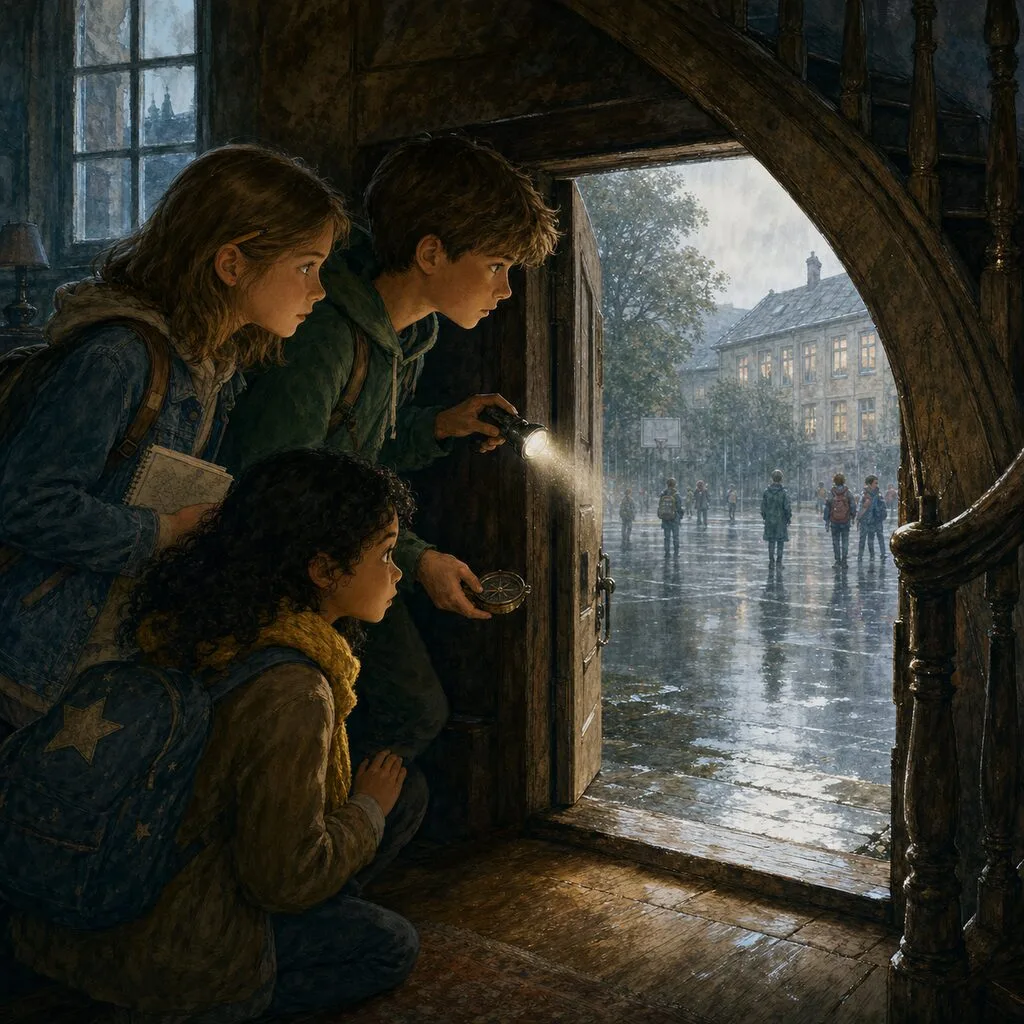
Z dverí vyrazil prúd studeného vzduchu. Nezhasol baterku ani im nestrhol oblečenie, iba priniesol vôňu mokrého asfaltu, školských lavíc a dažďa, ktorý práve dopadol na prach.
Za dverami nebola izba.
Ležal tam školský dvor.
Dlažobné kocky sa leskli pod drobným dažďom. Pri plote rástol starý strom, menší než dnes, s tenšími vetvami a pokrivenou lavičkou pod kmeňom. Na budove školy viseli okná s tmavými rámami. Jedno z nich bolo pootvorené.
Odniekiaľ zazvonil školský zvonček.
Jeho hlas bol vzdialený a zvláštne mäkký, akoby zvonil z minulosti.
„To je náš dvor,“ vydýchla Nina.
„Nie celkom náš,“ opravil ju Oliver. Pozrel na strom, potom na budovu. „Pozri na strechu. Ešte nemá nové odkvapy. A tá lavička zmizla, keď prerábali plot.“
Keď sa veci začnú meniť
Nina rýchlo kreslila. Zachytila okno, lavičku, strom aj smer kaluží na dlažbe. Kvapky dažďa dopadali na jej papier, ale neostávali na ňom. Akoby pršalo iba vo výhľade pred nimi.
Oliver držal kompas pred sebou. Ihla sa prestala točiť a ukázala na školský dvor.
„Aha,“ povedal pomaly. „Kompas nehľadá sever. Hľadá miesto, kam patrí táto stopa.“
„Takže sme v spomienke?“ spýtala sa Nina.
„Neviem, ako by sa to dalo technicky dokázať,“ priznal. „Ale obyčajná chodba určite nevedie na dvor, ktorý bol pred rokmi iný.“
Mia sa pozerala k pootvorenému oknu. Za sklom visel svetlý záves, ktorý sa sotva hýbal.
„Tam niekto chýba,“ povedala.
Oliver sa obzrel. „Kde?“
„Neviem. Len to cítim. Akoby pri tom okne niekto kedysi stál a potom sa naňho prestalo čakať.“
Práve vtedy sa na stene pri okne objavil obdĺžnik. Najprv vyzeral ako odraz mokrého svetla. O chvíľu však deti rozoznali rám starej fotografie.
Visela tam triedna fotka.
Deti na nej stáli v troch radoch pred školou. Niektoré sa usmievali, iné žmúrili do svetla. Jeden chlapec držal zošit, dievča vpredu malo na kolene veľkú náplasť. Nad nimi bol nápis, ktorý dážď rozmazal len trochu: 5.B.
Na pravej strane fotografie bola jedna tvár nejasná.
Nevyzerala ako čierna škvrna ani ako diera. Skôr ako obraz, cez ktorý niekto prešiel mokrou handričkou. Obrys vlasov sa ukazoval a strácal. Miesto očí sa zalesklo, potom sa opäť rozplynulo v sivej vode.
Nina pristúpila bližšie. „Musím to prekresliť, kým sa to zmení.“
„Nepribližuj sa úplne,“ upozornil ju Oliver. „Svetlo z okna sa hýbe. Možno je to len odraz.“
„Odraz nemá rukáv,“ povedala Nina a ukázala na okraj rozmazanej postavy. „Tu. Vedľa nej je modrý rukáv. Alebo kus bundy.“
Mia stála o krok ďalej. V jej teplých hnedých očiach sa odrážali kaluže zo dvora.
„Nie je to náhoda,“ povedala veľmi ticho. „Tá tvár nevyzerá, akoby ju zmazal dážď. Vyzerá, akoby sa na ňu nikto poriadne nepozeral.“
Oliver chcel niečo namietnuť, no namiesto toho zdvihol baterku. Nesvietil priamo na fotografiu, len trochu bokom, aby zmenil uhol svetla.
Rozmazaná tvár sa pohla.
Nie doslova. Papier zostal na stene. Ale sivý fľak sa vytiahol do jasnejšieho obrysu líca a na okamih sa ukázal kútik úst. Potom sa všetko znovu rozmylo.
„Fotografia reaguje na svetlo,“ povedal Oliver. „A možno aj na to, odkiaľ sa na ňu pozeráme.“
„Tak sa na ňu nepozerajme len ako na dôkaz,“ povedala Mia. „Možno je to niečia spomienka.“
Nina spomalila. Ceruzka jej zostala visieť nad stránkou. Chcela zachytiť každý detail, každú čiaru, každý tieň. No potom si všimla, že čím rýchlejšie kreslí, tým menej rozumie tomu, čo vidí.
Zavrela zápisník.
„Dobre,“ povedala. „Najprv sa pozrieme. Až potom budem kresliť.“
Traja kamaráti stáli pred fotografiou potichu. Dážď šumel na dlažbe a v otvorenom okne sa pohol záves.
Postupne sa ukázali ďalšie detaily. Pri nohách detí na fotke ležal mokrý školský dáždnik. V pozadí, za stromom a rohom budovy, sa objavil malý nakreslený symbol dáždnika. Nebol súčasťou pôvodnej fotografie. Mal tenké čierne oblúkové striešky a krivú rúčku, akoby ho niekto doplnil ceruzkou.
Nina lapla po dychu. „Je pri starej škole. Presne tam, kde sa na mape posunula ulička.“
Oliver sklonil kompas nad fotografiu. Ihla sa chvela, potom ukázala na drobný symbol.
„To nie je len značka,“ povedal. „Kompas ho berie ako smer.“
Mia si objala popruh batoha so záplatou v tvare hviezdy. „Možno dáždnik niekoho chránil. Alebo niekto pod ním čakal.“
„Na koho?“ spýtala sa Nina.
Nikto neodpovedal. Rozmazaná tvár sa práve znovu stratila.
Dážď na dvore zhustol. Nebola to búrka, len sivý záves, cez ktorý začali miznúť hrany vecí. Strom sa rozplýval do mäkkých čiar. Lavička akoby ustupovala ďalej. Aj dvere, ktorými prišli, sa vytratili za prúdom vody.
Dôležitý okamih
„To sa zatvára,“ povedal Oliver.
Tentoraz znel jeho hlas menej isto.
Nina otvorila zápisník a ukázala na náčrt. „Dvere boli za nami, trochu vľavo od stromu. Ak sa budeme držať pri plote, mali by sme ich nájsť.“
„Ale v spomienke sa veci môžu posunúť,“ upozornil Oliver. Potom sa pozrel na kompas a stisol pery. „Počkajte. Kľučka. Studená voda na nej. Ihla sa správala zvláštne, kým sme sa jej nedotkli.“
Chlapec vytiahol z vrecka malú baterku a posvietil na mokrú dlažbu. Medzi obyčajnými dažďovými kvapkami sa objavila úzka línia bledého svetla. Viedla popri plote, cez kaluž a ďalej do sivej clony.
„Nie je to sever,“ povedal Oliver. „Je to cesta späť.“
Mia chytila Ninu za ruku. Druhou rukou sa dotkla Oliverovho rukáva.
„Pomaly,“ povedala. „Keď sa rozbehneme, budeme vidieť iba dážď. Držme sa toho, čo už vieme.“
Prešli popri strome. Nina porovnávala každú vetvu s náčrtom, ktorý stihla urobiť. Oliver sledoval svetelnú čiaru a kompas. Mia ich viedla tak blízko pri sebe, že sa nikto nestratil ani na krok.
O chvíľu sa v sivom závese objavil tmavý obdĺžnik.
Dvere.
Na kľučke sa lesklo päť studených kvapiek.
„Je ich stále päť,“ zašepkala Nina.
„Tak ich nepokazme,“ povedal Oliver, hoci sa pri tom nervózne usmial.
Spolu položili ruky na kov. Chlad im prebehol až po lakte. Potom sa dvere otvorili a dažďový dvor zmizol ako obraz v zatvorenej knihe.
Stáli opäť v predsieni domu.
Za nimi bolo ticho. Žiadny dážď, žiadny zvonček, iba slabé praskanie dreva v stenách. Všetci traja mali suché topánky. Nina však mala na prstoch drobnú kvapku vody.
Dvere sa pomaly zavreli.
Na stole pri stene ležala stará mapa. Nina k nej pristúpila, akoby sa bála, že sa jej dotykom rozpadne. Papier bol teplý a suchý. Pri kresbe starej školy sa však objavil nový detail: malý čierny dáždnik s krivou rúčkou.
Dievča ho opatrne obtiahlo ceruzkou do svojho zápisníka.
„Dvere naozaj neviedli do ďalšej izby,“ povedal Oliver. Kompas už zasa ukazoval sever, no jeho mosadzný okraj bol chladný. „Viedli do jedného dňa. Možno do pár minút z neho.“
Mia sa zadívala na zatvorené dvere. „A tá tvár nebola strašidelná.“
„Nie,“ prikývla Nina.
„Bola zabudnutá,“ dodala Mia. „To je niekedy skoro rovnako smutné.“
Oliver položil kompas na mapu. „Tak zistíme, komu patrí. Staré triedne fotky môžu byť v škole. Alebo v knižnici. Pani Urbanová možno vie, kde hľadať.“
Nina sa usmiala, hoci jej po chrbte ešte stále behalo jemné chvenie. „Nabudúce sa na tú fotografiu nevrátime len preto, aby sme našli meno. Najprv zistíme, čo sa stalo v ten posledný deň.“
Mia prikývla. „A pôjdeme spolu.“
Keď vyšli z domu, hmla už redla. Za ich chrbtami ostala na kovovej kľučke jedna studená kvapka. Neodpadla ani vtedy, keď sa dvere potichu zavreli.
Na mape pri starej škole sa leskol malý dáždnik, akoby práve čakal, kto pod ním kedysi stál.
Pokračovanie nabudúce…