
Vypočujte si slovenskú audio verziu príbehu
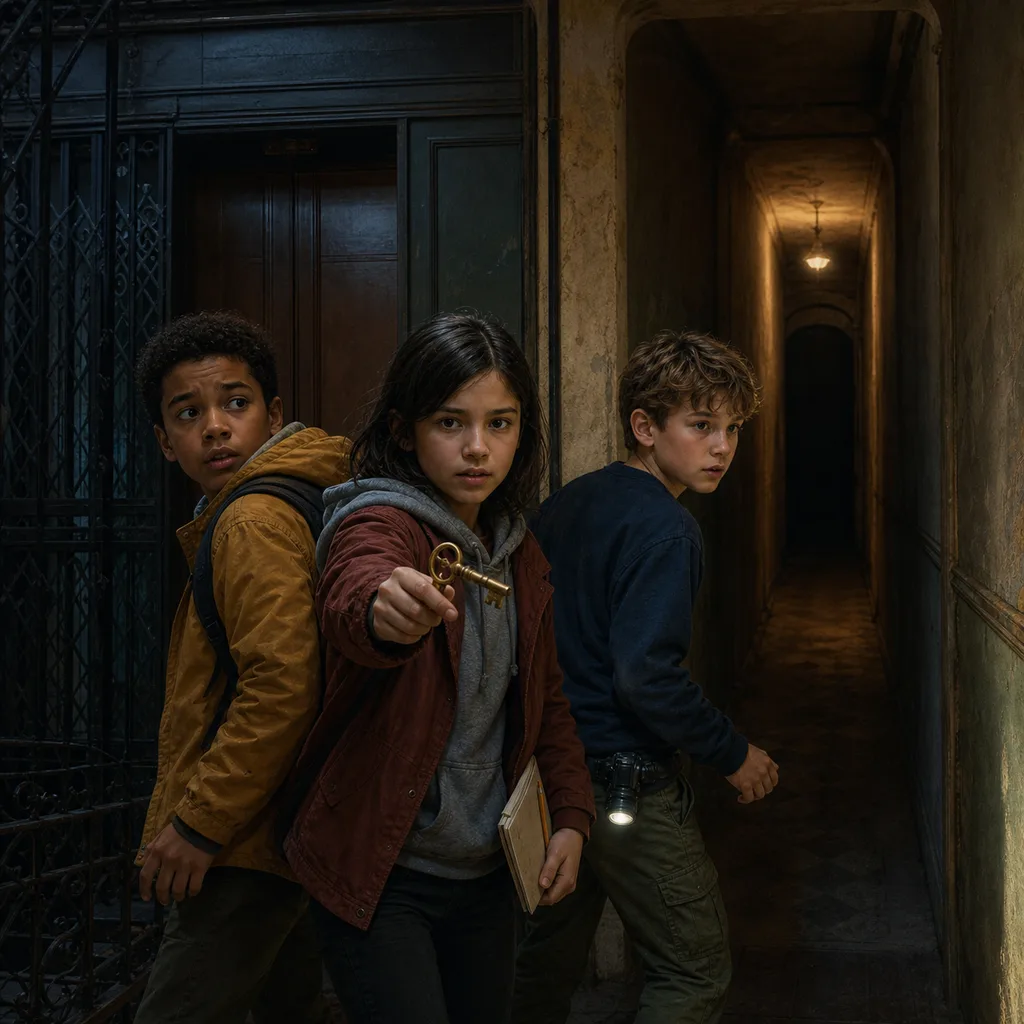
teplý kľúč je nová časť seriálu Chodba bez čísla, pripravená ako dvojjazyčný detský príbeh v slovenčine aj angličtine.
teplý kľúč: začína sa príbeh
Keď sa chodba bez čísla stratila, pri stene zostalo len obyčajné miesto s olupujúcou sa zelenou farbou. Nora naň ešte chvíľu hľadela. Pred pár minútami tam boli dvere, tmavý koberec a úzky priestor, ktorý podľa plánov domu vôbec nemal existovať.
„Takže sme sa zhodli,“ povedal Filip a snažil sa, aby jeho hlas znel pokojne. „Nevideli sme to iba preto, že sme boli unavení.“
Ben si pevnejšie pritiahol popruh tmavého batoha. „Ja som unavený teraz. A stále to vidím, keď zavriem oči.“
Výťah pri nich potichu zavrčal. Nebol to zvuk, aký vydáva moderný výťah. Pripomínal skôr starú chladničku, ktorá sa rozhodla šepkať cez stenu.
„Poďme radšej dole,“ navrhol Ben. „Aspoň kým tu ešte svieti.“
Nora prikývla, hoci sa jej odchádzať nechcelo. V malom papierovom zápisníku už mala napísané tri veci: svetlá zhasli, chodba sa objavila, na dverách neboli čísla. Pri štvrtej odrážke nechala prázdne miesto. Netušila ešte, čo doň dopíše.
Keď sa otočila k výťahu, niečo sa zablyslo na dlažbe.
Ležalo to tesne pri prahu, kde sa dvere výťahu zatvárali do dvoch kovových krídel. Malý starý kľúč. Mosadzný, tmavý od času, s okrúhlym očkom a dvoma drobnými zúbkami na konci.
„To tam predtým nebolo,“ povedala Nora.
Filip sa sklonil, ale nedotkol sa ho. „Možno vypadol niekomu z vrecka. Pani Richterová má veľký zväzok kľúčov.“
„Ona tu predsa nebola,“ pripomenul mu Ben.
„To neznamená, že ním nemohla prejsť včera. Alebo pred týždňom.“
Dievča si vyhrnulo rukáv sivej mikiny spod hrdzavočervenej bundy. Potom kľúč opatrne zodvihlo dvoma prstami.
Okamžite sa zarazila.
„Je teplý.“
„Teplý ako čo?“ spýtal sa Ben.
Nora si ho preložila do dlane. Mosadz nebola iba menej studená než dlažba. Bola príjemne teplá, skoro ako hrnček čaju, ktorý niekto pred chvíľou držal v rukách.
Filip zdvihol obočie. „Možno ležal pri motore výťahu.“
„Motor nie je pri prahu,“ povedala Nora.
„Dobre. Tak mohol byť vo vrecku niekoho dospelého.“
Ben sa obzrel k prázdnemu schodisku. Na konci chodby svietila žltkastá žiarovka a pod ňou sa chvela tenká pavučina. Nikde nikto.
„Keby tu bol dospelý,“ zašepkal, „asi by sme počuli dvere. Alebo kroky.“
„Možno odišiel výťahom,“ povedal Filip, hoci sa pritom pozrel na nepohnuté kabínové dvere.
Nora vytiahla zápisník a položila ho na parapet pri okne. Ceruzkou načrtla tvar kľúča, počet zúbkov a malé písmeno na očku. Vyzeralo ako písmeno K, len spodná čiarka bola zvláštne zahnutá.
„Toto som už niekde videla,“ zamrmlala.
„Na kľúči?“ spýtal sa Filip.
„Nie. V dome. Možno na starom poštovom boxe v pivnici. Alebo na tabuli pri kotolni.“
Chlapec sa naklonil bližšie. Baterka, ktorú nosil pripnutú na opasku, mu zavadzala o mikinu. „To môže byť znak výrobcu. Staré zámky mali svoje značky.“
„Alebo znak krídla,“ povedal Ben potichu.
Obaja sa naňho pozreli.
„Pani Richterová raz hovorila, že dom vraj kedysi vyzeral inak,“ pokračoval. „Spomínala zadnú časť, ktorú pri prestavbe zbúrali. Myslel som, že hovorí o nejakej šope. Lenže potom povedala: ,Niektoré dvere ostali, hoci za nimi už nič nie je.‘“
Nora si tú vetu zapísala presne. Aj s čiarkou pred hoci, lebo pani učiteľka tvrdila, že presné zápisky sú ako dobré stopy: nemajú sa rozmazávať.
Filip sa poškrabal vo vlasoch. „To ešte neznamená, že za touto stenou je tajné krídlo. Domy majú servisné šachty, staré ventilačné priestory a nepoužívané sklady.“
„A ktoré z nich sa ukážu iba po výpadku svetla?“ opýtala sa Nora.
Na to už nemal pripravenú odpoveď.
Výťah znovu zabručal. Tentoraz dlhšie. Kovové dvere sa ani nepohli, no zvuk prešiel stenou až do dlažby pod ich topánkami.
Ben stíchol. „Počujete to?“
„Výťahové káble,“ povedal Filip automaticky.
„Nie. Za tým.“
Všetci traja zadržali dych.
Najprv bolo počuť len jemné vrnenie starého výťahu. Potom sa pridalo čosi iné. Krátke, tiché cvaknutie. Akoby niekto na druhej strane steny odomkol zámok.
Keď sa veci začnú meniť
Nore stislo žalúdok. Kľúč v jej dlani bol stále teplý.
„Nemusíme tam ísť,“ povedal Ben rýchlo. „Ak sa to zasa objaví, môžeme sa len pozrieť. Z bezpečnej vzdialenosti.“
„To je dobrý plán,“ súhlasila Nora. „Najprv pozorujeme. Potom sa rozhodneme.“
Filip prikývol. „A ak pôjdeme bližšie, zostaneme spolu. Žiadne hrdinské rozdeľovanie sa v temnej chodbe. To funguje len vo filmoch, kde sú ľudia očividne zúfalí po problémoch.“
Ben sa napriek všetkému krátko usmial.
Práve vtedy svetlo nad nimi dvakrát bliklo.
Prvé bliknutie bolo rýchle. Druhé trvalo dlhšie.
Potom zhaslo všetko.
Tma v starej chodbe nebola úplná, lebo cez špinavé okno prenikalo matné svetlo z ulice. Aj tak však Nora nevidela Filipovu tvár. Počula len Benov rýchly nádych a škrtnutie zipsu na jeho bunde.
Niekde nad nimi sa pohli výťahové káble. Zaznelo dlhé kovové zahučanie.
„Som tu,“ povedala Nora.
„Tiež,“ ozval sa Filip.
Benovo „áno“ bolo tichšie, ale zaznelo hneď nato.
Svetlo sa vrátilo len na zlomok sekundy.
Stena oproti výťahu zmizla.
Na jej mieste sa otvorila úzka chodba s nízkym stropom. Tapeta na stenách bola vyblednutá do farby starého papiera a koberec tmavý, takmer modrý. Naľavo stáli prvé dvere. Mali mosadznú kľučku, na ktorej sa držal prach.
Vzápätí žiarovka opäť zhasla, no chodba nezmizla.
Z jej vnútra prichádzalo slabé sivé svetlo. Nie elektrické, skôr také, aké býva pred dažďom.
„Tentoraz ostala,“ zašepkal Filip.
Nora zdvihla ruku. Kľúč sa jej v dlani zahrial ešte viac.
„Možno neostala,“ povedal Ben. „Možno čaká.“
Nikto sa mu nesmial.
Dievča spravilo krok vpred, potom sa zastavilo na prahu. Za chrbtom mala výťah, schodisko aj obyčajný dom. Pred sebou priestor, ktorý tam nemal byť. Vedela, že strach nie je príkaz, aby človek utiekol. Niekedy je to iba upozornenie, aby sa pozeral lepšie.
„Filip, budeš svietiť. Ben, sleduj, či sa niečo nemení za nami,“ povedala. „Ja skúsim dvere. Ak sa chodba začne strácať, hneď sa vraciame.“
„To znie dosť rozumne,“ uznal Filip a vytiahol baterku.
„A dosť strašidelne,“ dodal Ben.
Vošli spolu.
Koberec pohltil zvuk ich krokov. Chodba bola kratšia, než sa zdala z prahu, ale aj tak sa Nora cítila, akoby šli dlhšie než pár metrov. Vzduch voňal po prachu, studenom kovovom potrubí a po niečom suchom, možno po starých knihách.
Pri prvých dverách sa zastavila.
Na ráme, tesne pod odlúpnutým lakom, bola kovová tabuľka. Filip na ňu posvietil.
Písmená boli malé a čiastočne zhrdzavené. Nora ich prečítala nahlas.
„Krídlo K. Služobný prístup. 3A.“
„Krídlo K,“ zopakoval Ben. „Ako na kľúči.“
Filip si kľakol, aby si tabuľku prezrel. „Tri A môže byť označenie miestnosti. Pri starých plánoch sa používali čísla aj písmená. To je normálne.“
„A chodba, ktorá sa objaví pri zhasnutých svetlách, je tiež normálna?“
„Povedal som, že tabuľka je normálna,“ odvetil. „Neber mi všetko naraz.“
Nora zasunula kľúč do zámky.
Pasoval presne.
Na okamih sa nič nestalo. Potom sa ozvalo pevné cvaknutie, tiché a jasné. Kľučka sa pohla pod jej prstami.
Ben spravil pol kroka dozadu. „Ak tam bude niečo, čo sa hýbe samo…“
„Tak sa vrátime,“ povedala Nora.
Dvere otvorila len trochu.
Za nimi nečakala žiadna príšera ani dlhé schody do tmy. Bola tam malá servisná miestnosť, sotva dosť veľká pre troch ľudí. Pozdĺž jednej steny viedli staré potrubia natreté sivou farbou. Na polici ležali zvinuté káble, dve prázdne sklenené fľaše a plechová krabička s hrdzavým vekom.
Na druhej strane stála úzka kovová skrinka.
„Vidíte?“ vydýchol Filip. „Technická miestnosť. Presne to som hovoril.“
„Presne to si nehovoril,“ pripomenula mu Nora. „Hovoril si o šachte.“
„Miestnosť, šachta… technické veci majú veľa tvarov.“
Ben však nehľadel na potrubia. Pozeral na skrinku. „Tá je zamknutá.“
Na jej dvierkach visel malý mosadzný zámok. Rovnaký kov ako kľúč v Norinej ruke. Dievča sa pozrela na kamarátov.
Dôležitý okamih
„Skúsime to?“
Filip si zahryzol do pery. „Ak kľúč otvoril dvere, možno patrí k celému starému systému. Len nič neťahajme prudko.“
Ben chvíľu mlčal. Potom prikývol. „Otvoríme. Ale ak nájdeme iba staré účty za kúrenie, budem sklamaný.“
Kľúč vošiel do zámku skrinky s rovnakou ľahkosťou ako predtým. Keď Nora otočila zápästím, zámok cvakol.
Vo vnútri neležali účty. Boli tam tenké fascikle, obálka previazaná vyblednutou modrou stužkou a poskladaný plán domu. Papier zažltol, no čiary na ňom boli stále čitateľné.
Filip ho opatrne rozložil na polici. Baterkou posvietil na kresbu pôdorysu.
„Pozrite,“ povedal.
Na pláne bola súčasná budova nakreslená tmavými čiarami. Za ňou sa však tiahla ďalšia časť, označená bledším atramentom. Mala vnútorné schodisko, dlhú chodbu a niekoľko malých miestností.
Nad tým stálo: KRÍDLO K – odstránené pri prestavbe v roku 1987.
Nora pocítila zimomriavky, ktoré jej prebehli po chrbte. Rýchlo si prepísala nápis do zápisníka.
„Takže naozaj existovalo,“ povedal Ben. „Nebola to šopa.“
„A táto miestnosť mala byť v ňom,“ doplnil Filip. Prstom sledoval čiarkovanú trasu na pláne. „Lenže podľa toho je teraz… pod časťou nášho schodiska. To nedáva zmysel.“
„Veľa vecí dnes nedáva zmysel,“ povedala Nora.
Pod plánom ležala malá kartónová menovka. Bola tenká ako lístok z knižnice a na rohu mala odtlačok modrého atramentu. Nora ju zdvihla.
Na prednej strane bolo úhľadným detským písmom napísané: KLÁRA V., 5. POSCHODIE.
Na zadnej strane stáli štyri kratšie riadky.
Ak dom zmenia, spomienky nemusia zmiznúť.
Uložila som ich tam, kde ich nájde ten, kto si všíma.
Pod textom bol nakreslený znak: zahnuté K, rovnaké ako na mosadznom kľúči.
V miestnosti bolo zrazu veľmi ticho.
„Klára,“ zašepkal Ben. „To je ona.“
Nora naňho pozrela. „Vieš, kto to je?“
„Nie celkom. Ale pani Richterová raz povedala jej meno, keď si myslela, že ju nikto nepočuje. Hľadala niečo v schránke a vravela: ,Klára by vedela, kam to dala.‘“
Filip si menovku prezeral bez žartov. „Toto je skutočná stopa. Papier, atrament, plán, rok prestavby. Dá sa overiť.“
„A odkaz,“ dodala Nora.
„Odkaz sa overuje ťažšie,“ priznal. Potom ukázal na značku K. „Ale toto nie. Znak je na kľúči, na dverách aj na menovke. To už nie je náhoda.“
Z chodby sa ozval tlmený zvuk, akoby sa niekde veľmi ďaleko zatvorili dvere.
Ben napol ramená, no tentoraz neutiekol pohľadom k východu. Len sa započúval.
„Je to iné,“ povedal. „Predtým som mal pocit, že nás niekto sleduje. Teraz… neviem. Akoby sme mali odísť, ale nie preto, že nás niečo naháňa.“
Sivé svetlo pri dverách zoslablo.
Nora položila menovku späť na policu, no potom zaváhala. Nebola si istá, či by mali odniesť pôvodnú stopu bez dovolenia. Preto ju len odfotografovať nemohla; v chodbe telefóny aj tak často nefungovali a jej mobil ostal v bunde ako zbytočný kus skla.
Namiesto toho otvorila zápisník a prepísala každé slovo. Nakreslila menovku, znak, číslo 3A aj časť plánu s vyznačeným krídlom K. Filip jej diktoval, kde presne sa miestnosť nachádza. Ben medzitým stál pri otvorených dverách a strážil ich cestu späť.
„Svetlo slabne,“ povedal po chvíli.
Nora zaklapla zápisník. „Hotovo.“
Kľúč vytiahla zo skrinky. Stále bol teplý.
Keď vyšli do chodby, koberec už nevyzeral taký tmavý ako predtým. Steny sa začali rozplývať v jemnom sivom prítmí. Nebolo to prudké ani hrozivé. Skôr ako keď sa para nad horúcim čajom pomaly stráca.
„Späť spolu,“ pripomenul Filip.
Prešli k miestu, kde mal byť výťah. Za nimi sa prvé dvere ticho zavreli samy, ale bez buchnutia. Nora sa neotočila. Držala zápisník pri hrudi a sledovala len svetlý obdĺžnik na konci chodby.
O chvíľu stáli opäť pri výťahu.
Žiarovka nad nimi sa rozsvietila naplno. Stena oproti bola obyčajná, zelená a popraskaná. Chodba bez čísla zmizla.
Ben vydýchol tak nahlas, až sa Filip usmial. „Myslím, že tvoja opatrnosť dnes zachránila môj plán, aby som sa netváril vystrašene.“
Čo sa ukáže neskôr
„Tvoj plán nefungoval,“ povedal Ben.
„To je technická pripomienka, nie osobný útok.“
Nora sa pozrela na kľúč. Jeho mosadz sa v svetle leskla jemne, no keď si ho priložila k dlani, stále cítila teplo.
Do zápisníka dopísala poslednú odrážku: Kľúč pri výťahu. Teplý. Znak K. Otvoril dvere 3A a skrinku.
Pod to pridala dve otázky.
Čo znamená krídlo K dnes, keď bolo dávno odstránené?
A kto nechal kľúč presne tam, kde ho mali nájsť?
Výťah konečne cinkol a dvere sa otvorili. Kabína bola prázdna. Deti do nej nastúpili spolu.
Tesne predtým, než sa kovové dvere zavreli, Nora ešte raz pozrela na stenu oproti. Na matnej zelenej farbe nebolo nič zvláštne.
Len pri podlahe sa na okamih zablysol drobný mosadzný odraz, akoby tam niekto práve odložil ďalší kľúč.
Pokračovanie nabudúce…
The Unnumbered Corridor, part 2: The Key That Was Warm
The Story Begins
When the unnumbered corridor disappeared, only an ordinary patch of wall remained, with peeling green paint. Nora looked at it for a moment longer. Just a few minutes ago, there had been doors there, a dark carpet, and a narrow space that did not exist in the building plans at all.
“So we agree,” Filip said, trying to keep his voice calm. “We did not only imagine it because we were tired.”
Ben pulled the strap of his dark backpack a little tighter. “I’m tired now. And I still see it when I close my eyes.”
The lift beside them gave a quiet groan. It was not the sound of a modern lift. It sounded more like an old fridge whispering through a wall.
“Let’s go down,” Ben suggested. “At least while the lights are still on.”
Nora nodded, even though she did not want to leave. In her small paper notebook, she had already written three things: the lights went out, the corridor appeared, there were no numbers on the doors. On the fourth line, she had left a blank space. She still did not know what to write there.
When she turned toward the lift, something flashed on the floor.
It lay just by the threshold, where the lift doors closed into two metal leaves. A small old key. Brass, dark with age, with a round ring and two tiny teeth at the end.
“That wasn’t there before,” Nora said.
Filip bent down, but did not touch it. “Maybe it fell out of someone’s pocket. Mrs. Richterová has a huge bunch of keys.”
“She wasn’t here,” Ben reminded him.
“That does not mean she could not have walked past yesterday. Or last week.”
The girl pushed up the sleeve of her grey hoodie under the rust-red jacket. Then she picked up the key very carefully with two fingers.
At once, she froze.
“It’s warm.”
“Warm like what?” Ben asked.
Nora moved it into her palm. The brass was not just less cold than the floor. It felt pleasantly warm, almost like a mug of tea someone had held only a moment ago.
Filip lifted his eyebrows. “Maybe it was near the lift motor.”
“The motor is not by the threshold,” Nora said.
“Fine. Then maybe it was in an adult’s pocket.”
Ben looked toward the empty staircase. At the end of the corridor, a yellow bulb shone, and under it a thin spider web trembled. No one was there.
“If an adult was here,” he whispered, “we would probably hear the door. Or footsteps.”
“Maybe they left in the lift,” said Filip, although he glanced at the still lift doors while he spoke.
Nora took out her notebook and placed it on the windowsill. With her pencil, she drew the shape of the key, the number of teeth, and the small letter on the ring. It looked like the letter K, except the bottom line curved strangely.
“I’ve seen this before,” she muttered.
“On the key?” Filip asked.
“No. In the building. Maybe on the old mail box in the basement. Or on the board by the boiler room.”
The boy leaned closer. The flashlight clipped to his belt knocked against his sweatshirt. “That could be the maker’s mark. Old locks had their own signs.”
“Or a wing mark,” Ben said quietly.
Both of them looked at him.
“Mrs. Richterová once said the building used to look different,” he went on. “She mentioned the back part that was torn down during the rebuild. I thought she meant some shed. But then she said, ‘Some doors stayed, even when there was nothing behind them anymore.’”
When Things Start to Change
Nora wrote the sentence down exactly, even the comma before even though. Their teacher always said exact notes were like good clues: they should not be blurred.
Filip scratched his hair. “That still does not mean there is a secret wing behind this wall. Buildings have service shafts, old air spaces, and unused storage rooms.”
“And which of those appears only after the lights go out?” Nora asked.
He had no answer for that.
The lift groaned again. This time it lasted longer. The metal doors did not move, but the sound travelled through the wall into the tiles under their shoes.
Ben went quiet. “Do you hear that?”
“Lift cables,” Filip said automatically.
“No. After that.”
All three of them held their breath.
At first there was only the soft hum of the old lift. Then something else joined it. A short, quiet click. As if someone on the other side of the wall had unlocked a lock.
Nora’s stomach tightened. The key in her palm was still warm.
“We do not have to go in,” Ben said quickly. “If it appears again, we can just look. From a safe distance.”
“That’s a good plan,” Nora agreed. “First we watch. Then we decide.”
Filip nodded. “And if we go closer, we stay together. No heroic splitting up in a dark corridor. That only works in films, where people are clearly begging for trouble.”
Even Ben gave a small smile at that.
Just then, the light above them flickered twice.
The first blink was fast. The second lasted longer.
Then everything went out.
The darkness in the old corridor was not complete, because weak light from the street came through the dirty window. Still, Nora could not see Filip’s face. She only heard Ben’s quick breath and the soft zip of his jacket.
Somewhere above them, the lift cables moved. A long metallic hum sounded.
“I’m here,” Nora said.
“Me too,” Filip answered.
Ben’s “yes” was quieter, but it came right after.
The light came back for just a split second.
The wall opposite the lift was gone.
In its place was a narrow corridor with a low ceiling. The wallpaper on the walls had faded to the colour of old paper, and the carpet was dark, almost blue. On the left stood the first door. It had a brass handle with dust still sitting on it.
Then the bulb went out again, but the corridor did not disappear.
A faint grey light came from inside it. Not electric light, more like the light that comes before rain.
“This time it stayed,” Filip whispered.
Nora raised her hand. The key in her palm grew even warmer.
“Maybe it did not stay,” Ben said. “Maybe it is waiting.”
Nobody laughed at him.
The girl took one step forward, then stopped at the threshold. Behind her were the lift, the staircase, and the ordinary building. In front of her was a space that should not have been there. She knew fear was not a command to run away. Sometimes it was only a warning to look more carefully.
“Filip, you’ll light the way. Ben, watch for any changes behind us,” she said. “I’ll try the door. If the corridor starts disappearing, we go back at once.”
“That sounds pretty sensible,” Filip admitted, taking out his flashlight.
“And pretty scary,” Ben added.
They went in together.
The carpet swallowed the sound of their steps. The corridor was shorter than it had looked from the doorway, but Nora still felt as if they were walking for longer than a few metres. The air smelled of dust, cold metal pipes, and something dry, maybe old books.
An Important Moment
She stopped at the first door.
On the frame, just below peeling paint, there was a metal plate. Filip shone his light on it.
The letters were small and partly rusted. Nora read them aloud.
“Wing K. Service access. 3A.”
“Wing K,” Ben repeated. “Like on the key.”
Filip knelt to look closer at the plate. “3A could be a room label. Old plans used both numbers and letters. That’s normal.”
“And a corridor that appears when the lights go out is normal too?”
“I said the plate was normal,” he replied. “Don’t take everything away from me at once.”
Nora put the key into the lock.
It fit exactly.
For a moment, nothing happened. Then there was a firm click, quiet and clear. The handle moved under her fingers.
Ben took half a step back. “If there’s something in there that moves on its own…”
“Then we leave,” Nora said.
She opened the door only a little.
No monster waited behind it, and no long stairs led into darkness. Instead, there was a small service room, barely big enough for three people. Along one wall ran old pipes painted grey. On a shelf lay coiled cables, two empty glass bottles, and a tin box with a rusty lid.
On the other side stood a narrow metal cabinet.
“See?” Filip let out a breath. “A technical room. Exactly what I said.”
“Not exactly what you said,” Nora reminded him. “You said a shaft.”
“Room, shaft… technical things come in many shapes.”
But Ben was not looking at the pipes. He was staring at the cabinet. “It’s locked.”
A small brass padlock hung on its doors. The same metal as the key in Nora’s hand. The girl looked at her friends.
“Should we try it?”
Filip bit his lip. “If the key opened the door, maybe it belongs to the whole old system. Just don’t pull hard on anything.”
Ben stayed silent for a moment. Then he nodded. “Open it. But if we only find old heating bills, I’ll be disappointed.”
The key slid into the cabinet lock as easily as before. When Nora turned her wrist, the lock clicked open.
Inside were not bills. There were thin files, an envelope tied with a faded blue ribbon, and a folded house plan. The paper had turned yellow, but the lines were still clear.
Filip unfolded it carefully on the shelf. He shone the flashlight on the floor plan.
“Look,” he said.
The present building was drawn in dark lines. Behind it, another part stretched out, marked in lighter ink. It had an inside staircase, a long corridor, and several small rooms.
Above it was written: WING K – removed during the rebuild in 1987.
Nora felt goose bumps run down her back. She quickly copied the note into her notebook.
“So it really existed,” Ben said. “It wasn’t a shed.”
“And this room was in it,” Filip added. He traced the dotted line on the plan with his finger. “But according to this, it is now under part of our staircase. That makes no sense.”
“Lots of things don’t make sense today,” Nora said.
Under the plan lay a small cardboard name tag. It was as thin as a library slip and had a blue ink mark on one corner. Nora picked it up.
On the front, neat childlike writing said: KLÁRA V., 5TH FLOOR.
On the back were four short lines.
If the building changes, memories do not have to disappear.
I put them where the one who notices will find them.
What Comes Next
Below the text was a drawn sign: a curved K, just like on the brass key.
The room suddenly became very quiet.
“Klára,” Ben whispered. “It’s her.”
Nora looked at him. “Do you know who that is?”
“Not really. But Mrs. Richterová said her name once when she thought nobody could hear. She was searching in a cupboard and said, ‘Klára would know where she put it.’”
Filip studied the tag without any jokes. “This is a real clue. Paper, ink, plan, rebuild year. We can check it.”
“And a message,” Nora added.
“That is harder to check,” he admitted. Then he pointed at the K sign. “But this is not. The same sign is on the key, on the door, and on the tag. That is not a coincidence anymore.”
A muffled sound came from the corridor, as if a door had shut far away.
Ben tensed his shoulders, but this time he did not look toward the exit. He only listened.
“It feels different,” he said. “Before, I felt like someone was watching us. Now… I don’t know. It’s like we should leave, but not because something is chasing us.”
The grey light by the doorway faded.
Nora put the name tag back on the shelf, then hesitated. She was not sure if they should take away the original clue without permission. She could not just photograph it either; phones often did not work in the corridor, and hers stayed in her jacket like a useless piece of glass.
Instead, she opened her notebook and copied every word. She drew the name tag, the sign, the number 3A, and part of the plan showing Wing K. Filip told her exactly where the room was. Meanwhile, Ben stood by the open door and watched the way back.
“The light is fading,” he said after a while.
Nora shut her notebook. “Done.”
She took the key out of the cabinet. It was still warm.
When they stepped back into the corridor, the carpet no longer looked so dark. The walls were starting to melt into a soft grey dimness. It was not sudden or threatening. It was more like steam slowly disappearing above a hot cup of tea.
“Together back,” Filip reminded them.
They walked to where the lift should have been. Behind them, the first door closed softly by itself, but without a bang. Nora did not turn around. She held the notebook against her chest and watched only the pale rectangle at the end of the corridor.
Soon they were standing by the lift again.
The bulb above them lit up fully. The wall opposite was ordinary, green, and cracked. The unnumbered corridor was gone.
Ben let out such a big breath that Filip smiled. “I think your carefulness saved my plan to pretend I wasn’t scared.”
“Your plan did not work,” Ben said.
“That is a technical note, not a personal attack.”
Nora looked at the key. Its brass gleamed softly in the light, but when she pressed it into her palm, she could still feel warmth.
She added the last note to her notebook: Key by the lift. Warm. K sign. Opened door 3A and the cabinet.
Below that, she wrote two questions.
What does Wing K mean today, if it was torn down long ago?
And who left the key exactly where they would find it?
The lift finally chimed, and the doors opened. The cabin was empty. The children stepped inside together.
Just before the metal doors closed, Nora looked once more at the wall opposite. There was nothing strange on the dull green paint.
The End of the Story
Only near the floor, for a second, a tiny brass reflection flashed, as if someone had just put down another key there.
To be continued…
