
Vypočujte si slovenskú audio verziu príbehu
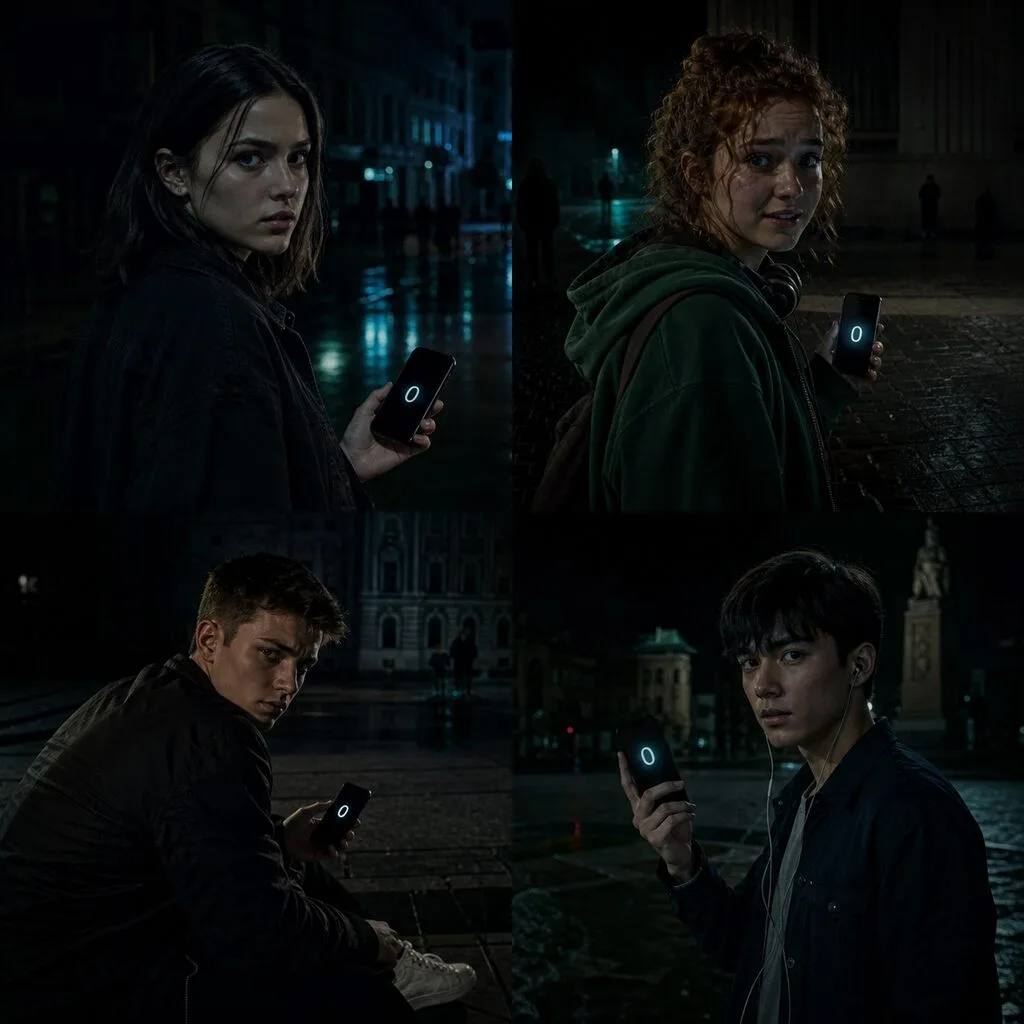
Štyria tínedžeri v rôznych častiach tmavého mesta držia telefóny s nultým signálom počas celomestského výpadku.

Výpadok je nová časť seriálu Nultý signál, pripravená ako dvojjazyčný detský príbeh v slovenčine aj angličtine.

Výpadok: začína sa príbeh

O 21.17 sa mesto ešte tvárilo úplne normálne.

Autobusy brzdili pri zastávkach, výklady svietili do mokrého chodníka a z okien bytoviek sa miešalo modré svetlo televízorov so žltým svetlom lámp. Lea stála pod prístreškom pri zastávke pri centre, ruky zastrčené vo vreckách čiernej džínsovej bundy. Autobus meškal sedem minút. Nie že by to bolo nezvyčajné, ale dážď sa menil na studenú hmlu a ona nemala náladu čakať ďalších sedem.

Potom zhaslo všetko.

Najprv reklama nad lekárňou. Hneď po nej pouličné lampy. O sekundu neskôr sa tma prehnala celou ulicou, od semaforov až po okná na najvyšších poschodiach. Zostali len svetlá áut, roztrasené lúče mobilov a vzdialené oranžové okno starej električky, ktorá zastala uprostred križovatky.

Niekto pri Lei povedal: „No super. Presne toto som dnes potreboval.“

Zastávka zašumela nervóznymi hlasmi. Jedna pani skúšala volať dcére. Chlapec s kolobežkou mával telefónom nad hlavou, akoby tým mohol chytiť signál. Lea vytiahla svoj mobil. V rohu svietilo prázdne miesto namiesto paličiek siete.

Bez služby.

To sa pri výpadku stáva, pomyslela si. Lenže nebolo počuť ani obvyklé cvaknutie núdzového osvetlenia. Mesto nezhaslo po častiach. Zhaslo naraz, presne a čisto, akoby niekto stlačil jediný vypínač.

Displej jej mobilu potemnel. Potom sa sám rozsvietil.

Neotvorila sa žiadna aplikácia. Nebola tam reklama, upozornenie ani chybové hlásenie. Iba čierna plocha a uprostred malá biela nula.

Pod ňou stálo jediné slovo: KANÁL.

Lea naň nezaťukala. Prst sa jej zastavil pár milimetrov nad sklom.

Obrazovka sa totiž nesprávala ako pri zaseknutej aplikácii. Nezamrzla. Čakala.

Nebolo to vidieť priamo. Skôr to cítila z nepatrného pulzu svetla okolo nuly, rovnomerného a trpezlivého. Ako keď výťah stojí za dverami a ešte sa nerozhodol, na ktorom poschodí ich otvorí.

„Funguje ti internet?“ spýtal sa chlapec s kolobežkou.

Lea pozrela na jeho telefón. Aj na ňom bola nula.

O chvíľu zmizla. Mobil sa vrátil na zamknutú obrazovku, akoby sa nič nestalo. Len čas v hornej lište ukazoval 21.17.

Lea si ho zapamätala. Nevedela prečo.

Medzitým, o niekoľko ulíc ďalej, Tami stála pod širokým prístreškom pri vchode do nákupnej pasáže. Na krku mala plátenné slúchadlá a jej medené kučery jej v studenom vetre lietali pred očami. Dvere do pasáže sa zasekli práve vo chvíli, keď zhasli pokladne aj hudba z obchodov.

Vo vnútri zostali ľudia. Vonku zostali ďalší ľudia. A medzi nimi sa zatvorili sklenené dvere, ktoré sa nedali otvoriť ani jedným smerom.

„Takže,“ povedala Tami dosť nahlas, aby ju počuli dvaja nervózni muži pri dverách, „máme nový escape room. Úloha číslo jeden: nájdite baterku. Úloha číslo dva: nepanikárte ako komparzisti v katastrofickom seriáli.“

Muž v kabáte sa na ňu zamračil. Dievča vedľa neho sa krátko zasmialo, hoci si hneď zakrylo ústa.

Tami mala rada ten okamih. Vtip nemusel byť dobrý. Stačilo, že na sekundu prerušil strach. Lenže keď vytiahla telefón, aby si posvietila, úsmev jej spadol z tváre.

Čierna obrazovka. Biela nula.

„To je čo?“ zašepkala.

Naľavo od nej si akási žena vydýchla. „Aj vám to ukazuje?"

Tami sa otočila. Žena držala mobil pred sebou. Rovnaká nula. Pri zamknutých dverách sa rozsvietil tretí telefón a na ňom sa objavil ten istý prázdny kanál.

„Možno nový spôsob, ako nám operátor oznamuje, že platíme priveľa,“ vyhŕkla Tami automaticky.

Nikto sa nezasmial. To ju vystrašilo viac než tma.

Rýchlo urobila snímku obrazovky. Prst sa jej po skle šmykol, ale fotografia sa uložila. Vtom nula blikla a zmizla. Služba stále nefungovala. Pasáž ostala tmavá, iba cez strešné okná prenikal matný odraz mesta bez elektriny.

„Mám to odfotené,“ povedala, skôr pre seba než pre ostatných.

„Čo máš?“ spýtalo sa dievča vedľa nej.

Tami si telefón hneď pritiahla k hrudi. „Nič. Asi len veľmi nudnú chybu.“

Na opačnej strane mesta Denis kopol špičkou bielej tenisky do obrubníka. Stál pri zastávke na kraji nákupnej zóny, pred ním tmavé logo športového obchodu a rad áut, ktoré sa bezradne tlačili pri križovatke. Semafory nefungovali. Vodiči trúbili tak dlho, až ich klaksóny začali znieť ako hádka bez slov.

Keď sa veci začnú meniť

„Výborné,“ zamrmlal. „Aj mestská doprava dostala rage quit.“

Skúsil odoslať správu spoluhráčovi, že dnes na tréning nepríde. Telefón však len krútil malým kolieskom. Potom sa koliesko zastavilo a zmizlo.

Objavila sa nula.

Denis sa zamračil. Otvoril nastavenia, skúšal režim lietadlo, vypol ho, zapol mobilné dáta, hoci vedel, že to je zbytočné. Nula zostávala na displeji, pokojná a nepríjemne čistá.

„To je nejaký test?“ spýtal sa chalan pri stánku s kebabom.

„Keby to bol test, dali by tam aspoň tlačidlo,“ odsekol Denis.

Chalan zdvihol vlastný mobil. Nula.

Denis vytiahol malé hodinky, ktoré nosil na ruke len preto, že mu nikto nemohol tvrdiť, že čas v telefóne sa pokazil. Displej hodiniek ukazoval 21.17. O dve sekundy neskôr sa nula stratila.

Zvláštne, pomyslel si. Nie strašidelné. Zvláštne.

Prešiel cez okraj parkoviska k bočnej ulici, kde býval slabší ruch. Chcel nájsť miesto, z ktorého by videl, či vypadla elektrina aj v ďalších blokoch. Vtom okolo neho prebehla skupina ľudí, niekto zakričal, že pri stanici otvorili núdzový vchod, a Denis sa prudko otočil.

Na okamih sa mu zatočila hlava.

Nebola to obyčajná nevoľnosť. Ulica pred ním akoby preskočila jedno políčko. Jednu chvíľu stál pri stojane na bicykle, v ďalšej mal pred sebou dva metre chodníka a ruku opretú o studenú stenu. Nezakopol. Len si vôbec nepamätal tie dva kroky medzi tým.

Zostal stáť a srdce mu búchalo až v krku.

„Super,“ povedal ticho. „Teraz už mám aj mozog v úspornom režime.“

Nepripustil si, že sa stalo niečo iné než stres. Výpadok, tma, hluk. Človek si ľahko niečo namyslí. Preto si zapísal čas do poznámok: 21.17. Nula. Krátky výpadok orientácie.

Keby sa mal báť, aspoň nech má dáta.

Viktor bol najbližšie k starej štvrti, kde sa medzi opravenými domami stále skrývali kovové rozvodné skrine, neoznačené technické dvere a káble miznúce pod chodníkom. Mal na sebe tmavomodrú košeľu cez sivé tričko a jedno staré káblové slúchadlo mu viselo pri golieri. Druhé držal pri uchu.

Nehrala mu hudba. Počúval šum z malého prijímača, ktorý si poskladal z lacných súčiastok a trpezlivosti.

Keď mesto zhaslo, šum sa zmenil.

Viktor zastal pri nízkej technickej budove s ošúchanou tabuľkou, na ktorej sa už nedalo prečítať takmer nič. Bežný výpadok by znamenal, že stanice postupne zmĺknu, povedal by si každý, kto sa tým nezaoberal. Lenže toto nebolo postupné. V slúchadle sa objavil krátky, ostrý tón, príliš nízky na bežné upozornenie a príliš pravidelný na náhodné rušenie.

Trval sotva dve sekundy.

Potom sa pri ňom ozval kovový rachot. Vietor pohol uvoľneným krytom na plote. Viktor strhol ruku od slúchadla a pozrel na telefón.

Nula.

Nepohnuté čierne pozadie. Jedna biela číslica. Pod ňou KANÁL.

Chlapec vytiahol prijímač z vrecka a podržal ho pri mobile. Prístroj znovu zachytil slabé praskanie. Nie mobilná sieť. Nie Wi-Fi. Ani rádio, ktoré poznal. Signál sa na chvíľu prehnal cez pásmo, akoby niekto otvoril dvere do miestnosti plnej starých vysielačov a hneď ich zasa zavrel.

O dve sekundy neskôr bolo ticho.

Viktor sa pozrel cez cestu na tmavú vežu za strechami domov. Už roky sa nepoužívala naplno. Aspoň oficiálne nie.

„To nešlo zvonku,“ povedal do prázdnej ulice. „Prišlo to cez mestskú vrstvu.“

Neskôr sa na križovatkách objavili mestskí policajti s baterkami a z vedľajších domov vyšli správcovia, ktorí otvárali vchody. Výpadok sa ešte neskončil, ale ľudia sa začali hýbať. Niekto tvrdil, že problém je v rozvodni. Iný prisahal, že videl modrý záblesk nad starou vežou. Každá ďalšia verzia bola hlasnejšia než tá predchádzajúca.

Tami sa s davom dostala von z pasáže a zamierila k najbližšiemu otvorenému vchodu do bytovky. Vrátnik tam pustil ľudí, aby sa zahriali a počkali, kým sa obnovia autobusy. Pri schodoch narazila do niekoho ramenom.

Dôležitý okamih

„Prepáč, ja—“ začala.

„Pozeraj, kam ideš,“ povedal Denis a hneď nato si všimol jej výraz. „Čo je?“

„Nič. Len celé mesto práve prehráva najhorší level v histórii.“

Poznali sa z videnia zo školy. Nie natoľko, aby sa rozprávali, ale natoľko, aby Denis vedel, že dievča v zelenej mikine zvyčajne hovorí viac než všetci ostatní dokopy.

Pri zábradlí stála Lea. Všimla si Tamiin telefón, ktorý tá stále držala príliš pevne.

„Ukázalo ti to nulu?“ spýtala sa bez úvodu.

Tami zažmurkala. „Prosím?“

Denis sa posmešne usmial, no úsmev mu vydržal len chvíľu. „Aj tebe?“

Viktor vošiel do chodby práve vtedy, keď sa nad vchodom rozsvietila slabá núdzová lampa. Mal mokré vlasy pri čele a v ruke prijímač.

„Vy tiež?“ povedal opatrne.

Štyria sa na seba pozreli. Okolo nich ľudia riešili baterky, vodu, zamknuté garáže a nefunkčné výťahy. Ich malý kruh pri schodoch však zrazu pôsobil oddelene od zvyšku budovy.

„Dobre,“ vydýchla Tami. „Buď sme sa všetci pokazili naraz, alebo to nebola len chyba.“

„Stále to môže byť chyba,“ namietol Denis. „Veľká chyba. Sietí, mobilov, čohokoľvek.“

„Na viacerých značkách telefónov?“ spýtal sa Viktor. „A s rovnakým rozhraním?“

Tami otvorila fotografiu. Nula na nej svietila ostro, až neprirodzene jasne. V rohu bol čas: 21.17.42.

Denis vytiahol hodinky a ukázal poznámku v mobile. „Mám 21.17. Presné sekundy telefón neuložil. Hodinky áno. Štyridsaťdva.“

Lea sa zahľadela na snímku. „Nebola to zamrznutá obrazovka.“

„Ako to vieš?“ Denisov tón nebol milý, ale ani výsmešný. Skôr príliš napätý.

„Lebo chyba sa správa chaoticky. Toto nie.“ Prešla nechtom popri okraji svojho telefónu. „Tá nula… čakala, kým na ňu niekto klikne.“

Tami stíšila hlas. „Ja som skoro klikla.“

„Ja tiež,“ priznal Viktor.

Denis nič nepovedal.

Viktor položil prijímač na parapet. „Zachytil som rušenie. Krátke a zvláštne. Vyzeralo to, akoby sa na okamih zapla stará vysielacia vrstva mesta. Nie moderné antény. Skôr niečo pri veži v starej štvrti.“

„A všetci sme boli v jej dosahu?“ opýtala sa Lea.

Chlapec prikývol. „Približne. Nie tesne pri nej. Ale dosť blízko.“

Tami si objala ruky. „Takže nás neodpojil internet. Zavolala nás… veža?“

„To je presne typ vety, po ktorej ľudia začnú vymýšľať mimozemšťanov,“ povedal Denis.

„Nikto nepovedal mimozemšťanov,“ odvetila Tami. „To si priniesol ty.“

Napriek tomu sa kútik úst Leii pohol. Nebol to celkom úsmev, ale skoro.

Napokon Denis vydýchol a pozrel na všetkých troch. „Nevieme, čo to bolo. Vieme len, že sa to stalo naraz. A že to zjavne nevidel každý.“

„Tak to zatiaľ nikomu nerozprávajme,“ povedala Lea. „Kým nebudeme mať niečo viac než nulu na fotke a šum v krabičke.“

Viktor prikývol ako prvý. Tami po chvíli tiež.

Denis sa oprel o zábradlie. „Fajn. Ale ak sa ukáže, že je to marketing na nový paušál, odchádzam.“

Práve vtedy sa rozsvietila hlavná lampa na chodbe.

Ľudia v bytovke zatlieskali. Niekto zakričal, že prúd je späť. Vonku sa postupne rozsvietili okná, potom výklady a napokon vzdialené semafory. Mesto sa znova nadýchlo hluku.

Na parapete zavibroval Viktorov telefón.

Všetci štyria sa k nemu otočili.

Na displeji nebolo žiadne upozornenie. Iba čierna plocha, biela nula a pod ňou tenké blikajúce miesto, ako kurzor v prázdnej správe.

Čakalo na odpoveď.

Pokračovanie nabudúce…

Nabudúce: Objaví sa nové tajomstvo

The Zero Signal, part 1: The Blackout

The Story Begins

At 21:17, the city still looked completely normal.

Buses braked at the stops, shop windows spilled light onto the wet pavement, and in the apartment blocks the blue glow of TVs mixed with the yellow light of lamps. Lea stood under the shelter at the stop near the centre, her hands buried in the pockets of her black denim jacket. The bus was seven minutes late. Not unusual, really, but the rain was turning into cold fog and she was not in the mood to wait another seven.

Then everything went out.

First the ad above the pharmacy. Right after that, the street lamps. One second later, darkness rushed through the whole street, from the traffic lights to the windows on the top floors. Only car lights stayed on, shaky beams from mobile phones, and the distant orange window of an old tram that had stopped in the middle of the crossing.

Someone near Lea said, “Great. Exactly what I needed today.”

The stop filled with nervous voices. One woman tried to call her daughter. A boy with a scooter waved his phone above his head as if that might catch a signal. Lea pulled out her own mobile. In the corner, where the signal bars should have been, there was only empty space.

No service.

That happens during a blackout, she thought. But there was no usual click of emergency lights either. The city had not gone dark in pieces. It had gone out all at once, clean and exact, as if someone had pressed one switch.

Her screen dimmed. Then it lit up by itself.

No app opened. There was no ad, no alert, no error message. Only a black screen with a small white zero in the middle.

Under it was one word: CHANNEL.

Lea did not tap it. Her finger stopped a few millimetres above the glass.

The screen did not act like a frozen app. It had not crashed. It was waiting.

She could not see it directly. She only felt a tiny pulse of light around the zero, steady and patient. Like a lift waiting behind a door, not yet sure which floor it would open on.

“Is your internet working?” the boy with the scooter asked.

Lea looked at his phone. There was a zero on that one too.

A moment later it vanished. His mobile went back to the lock screen as if nothing had happened. Only the time at the top still said 21:17.

She remembered it. She did not know why.

Meanwhile, a few streets away, Tami stood under the wide shelter by the entrance to a shopping passage. She had canvas headphones around her neck, and her copper curls blew in the cold wind across her face. The doors into the passage had jammed just as the tills and the music from the shops went dead.

People were trapped inside. More people were trapped outside. And between them were the glass doors, impossible to open in either direction.

“So,” Tami said loudly enough for two nervous men near the doors to hear, “we have a new escape room. Task one: find a flashlight. Task two: do not panic like extras in a disaster show.”

The man in the coat frowned at her. The girl beside him gave a short laugh, then quickly covered her mouth.

Tami liked that moment. The joke did not need to be good. It only had to break the fear for one second. But when she pulled out her phone to get some light, the smile fell from her face.

Black screen. White zero.

When Things Start to Change

“What is that?” she whispered.

To her left, a woman let out a sharp breath. “Do you have it too?”

Tami turned. The woman was holding up her mobile. The same zero. By the locked doors, a third phone lit up, and on it appeared the same empty channel.

“Maybe it’s the operator’s new way of telling us we pay too much,” Tami blurted out automatically.

Nobody laughed. That scared her more than the dark.

Quickly, she took a screenshot. Her finger slipped on the glass, but the picture saved. Right then the zero blinked and disappeared. Service still did not work. The passage stayed dark, with only the dull reflection of an electricity-free city coming through the roof windows.

“I got it,” she said, more to herself than to the others.

“What did you get?” the girl beside her asked.

Tami pulled the phone to her chest at once. “Nothing. Just a very boring glitch, I guess.”

On the other side of town, Denis kicked the curb with the tip of his white trainer. He was standing by a stop at the edge of a shopping zone, in front of the dark logo of a sports shop and a row of cars pressed uselessly near the crossing. The traffic lights were dead. Drivers were honking so long that the horns began to sound like a fight with no words.

“Brilliant,” he muttered. “Even public transport has rage quit.”

He tried to send a message to his teammate that he would not make training today. The phone only spun a small wheel. Then the wheel stopped and vanished.

A zero appeared.

Denis frowned. He opened settings, tried airplane mode, turned mobile data off and on again, though he already knew it was useless. The zero stayed on the screen, calm and unnervingly clean.

“Is this some kind of test?” the boy at the kebab stand asked.

“If it was, they’d at least give us a button,” Denis shot back.

The boy lifted his own phone. Zero.

Denis pulled out the small watch he wore only because nobody could claim the time on his phone was broken. The watch still showed 21:17. Two seconds later, the zero disappeared.

Weird, he thought. Not scary. Weird.

He crossed the edge of the car park to a side street, where the noise was weaker. He wanted to find a place where he could see whether the power was out in the next blocks too. Then a group of people rushed past him, someone shouted that an emergency entrance had opened near the station, and Denis turned sharply.

For a moment, his head spun.

It was not ordinary dizziness. The street in front of him seemed to skip one square. One second he was by a bike rack, and the next he had two metres of pavement in front of him and one hand against a cold wall. He had not tripped. He just could not remember the two steps in between.

He froze, his heart pounding up in his throat.

“Great,” he said quietly. “Now my brain is in energy-saving mode too.”

He did not let himself think it was anything else but stress. Blackout, darkness, noise. A person could imagine things easily. So he wrote the time in his notes: 21:17. Zero. Short loss of orientation.

If he was going to be scared, at least he should have data.

Viktor was closest to the old district, where repaired houses still hid metal power boxes, unmarked technical doors, and cables disappearing under the pavement. He wore a dark blue overshirt over a grey T-shirt, and one old wired earbud hung near his collar. He held the other one to his ear.

An Important Moment

No music was playing. He was listening to the hiss from a small receiver he had built from cheap parts and patience.

When the city went dark, the hiss changed.

Viktor stopped beside a low technical building with a worn sign that was almost impossible to read. A normal blackout would mean stations slowly going silent, as anyone who knew the system would say. But this was not slow. In his ear, a short, sharp tone appeared, too low for a normal alert and too steady to be random interference.

It lasted barely two seconds.

Then there was a metal crash near him. Wind moved a loose cover on the fence. Viktor jerked his hand away from the earbud and looked at his phone.

Zero.

Still black background. One white number. Under it: CHANNEL.

He pulled the receiver from his pocket and held it near the phone. The device caught faint crackling again. Not mobile service. Not Wi-Fi. Not even radio like he knew it. The signal rushed through the band for a moment, as if someone had opened a door into a room full of old transmitters and shut it again at once.

Two seconds later, it was silent.

Viktor looked across the road at the dark tower behind the rooftops. It had not been used fully for years. At least officially, not.

“That didn’t come from outside,” he said into the empty street. “It came through the city layer.”

Later, city police appeared at the crossroads with flashlights, and building managers came out of side houses to open entrances. The blackout had not ended yet, but people started moving. Some said the problem was in a substation. Others swore they had seen a blue flash above the old tower. Every new version was louder than the last.

Tami got out of the passage with the crowd and headed for the nearest open entrance to an apartment block. The caretaker there let people in to warm up and wait for the buses to return. Near the stairs, she bumped shoulders with someone.

“Sorry, I—” she began.

“Watch where you’re going,” Denis said, and then he noticed her face. “What?”

“Nothing. The whole city is just losing the worst level in history.”

They knew each other from school, but only by sight. Not enough to talk, but enough for Denis to know that the girl in the green hoodie usually talked more than everyone else put together.

Lea was standing by the railing. She noticed Tami’s phone, which the girl was still holding too tightly.

“Did it show you a zero?” Lea asked without any greeting.

Tami blinked. “Excuse me?”

Denis gave a mocking smile, but it only lasted a second. “You too?”

Viktor came into the corridor just as the weak emergency lamp above the entrance switched on. His hair was wet at the front, and he had the receiver in his hand.

“You as well?” he asked carefully.

The four of them looked at each other. Around them, people were dealing with flashlights, water, locked garages, and dead lifts. But their small circle by the stairs suddenly felt separate from the rest of the building.

“Okay,” Tami breathed out. “Either we all broke at the same time, or this was not just a glitch.”

“It can still be a glitch,” Denis said. “A big one. Of the network, the phones, whatever.”

“On several phone brands?” Viktor asked. “And with the same interface?”

Tami opened her photo. The zero was still there, sharp and almost unnaturally bright. In the corner was the time: 21:17:42.

What Comes Next

Denis took out his watch and showed the note in his phone. “I have 21:17. The phone did not save the exact seconds. The watch did. Forty-two.”

Lea looked at the screenshot. “It wasn’t a frozen screen.”

“How do you know?” Denis’s tone was not kind, but it was not mocking either. Just too tense.

“Because a glitch behaves in a messy way. This didn’t.” She ran a fingernail along the edge of her phone. “That zero… it was waiting for someone to click it.”

Tami lowered her voice. “I almost clicked it.”

“So did I,” Viktor admitted.

Denis said nothing.

Viktor placed the receiver on the windowsill. “I caught interference. Short and strange. It felt like the old transmission layer of the city switched on for a moment. Not modern antennas. Something near the tower in the old district, more like.”

“And we were all within its range?” Lea asked.

The boy nodded. “Roughly. Not right next to it. But close enough.”

Tami folded her arms. “So the internet didn’t disconnect us. The tower called us?”

“That is exactly the kind of sentence that makes people start inventing aliens,” Denis said.

“Nobody said aliens,” Tami replied. “That was you.”

Still, the corner of Lea’s mouth moved. It was not quite a smile, but almost.

At last Denis let out a breath and looked at the other three. “We don’t know what it was. We only know it happened at the same time. And clearly not everybody saw it.”

“So we don’t tell anyone yet,” Lea said. “Not until we have something more than a zero on a photo and some hiss in a box.”

Viktor nodded first. After a moment, Tami did too.

Denis leaned on the railing. “Fine. But if it turns out to be a marketing stunt for a new phone plan, I’m leaving.”

Right then, the main light in the corridor switched on.

People in the building clapped. Someone shouted that the power was back. Outside, windows began to glow again, then shop fronts, and finally the far-off traffic lights. The city took a breath and started making noise again.

Viktor’s phone buzzed on the windowsill.

All four of them turned toward it.

There was no notification on the screen. Only a black field, a white zero, and beneath it a thin blinking space, like a cursor in an empty message.

It was waiting for an answer.

To be continued…

Next time: A new mystery appears