
Vypočujte si slovenskú audio verziu príbehu
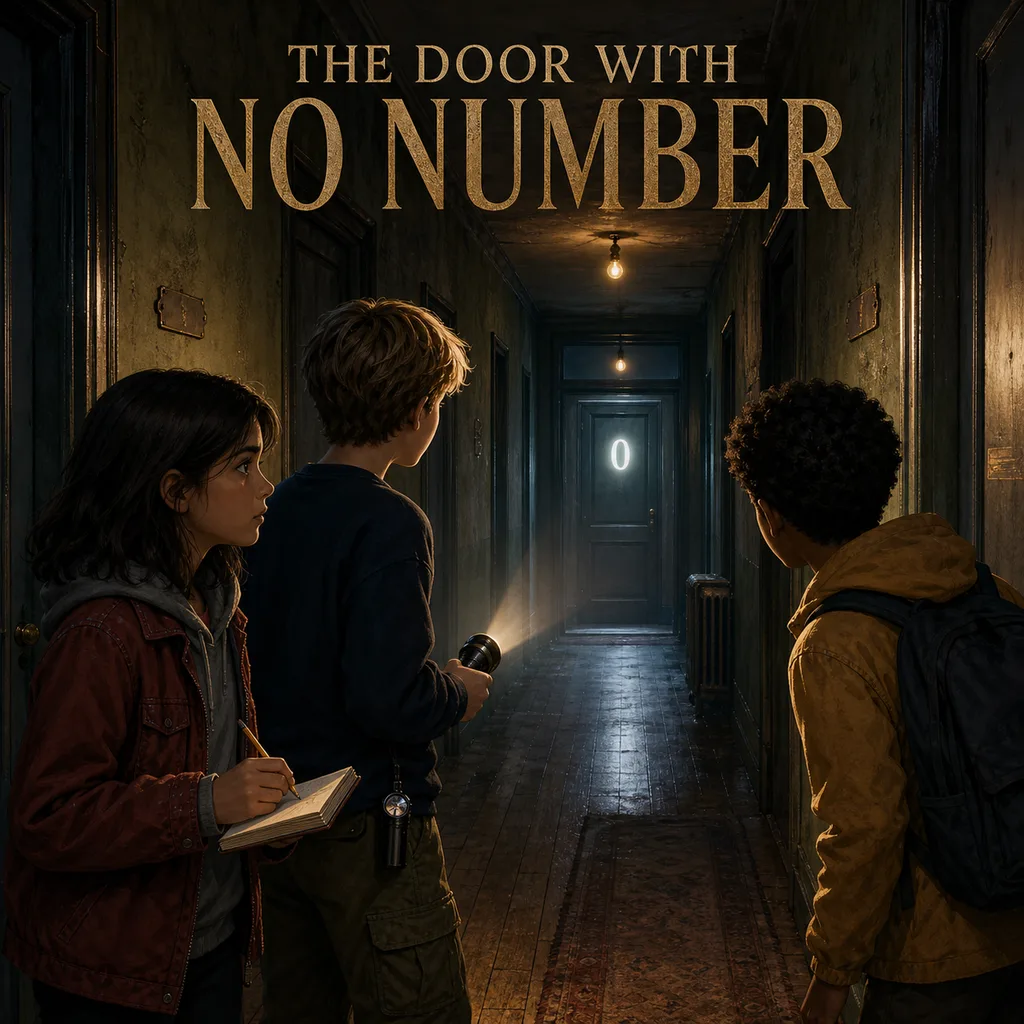
zhasnuté čísla je nová časť seriálu Chodba bez čísla, pripravená ako dvojjazyčný detský príbeh v slovenčine aj angličtine.
zhasnuté čísla: začína sa príbeh
Slnko už dávno zmizlo za strechami susedných domov, keď Nora vyšla vyniesť malé vrecko s papiermi. Na chodbe horela iba jedna žiarovka. Mala žlté svetlo a vždy trochu bzučala, no dnes bzučanie znelo nepravidelne, akoby svetlo váhalo, či má zostať svietiť.
Nora sa zastavila pri dverách bytu pani Richterovej. Mosadzné číslo 34 bolo cez deň lesklé a jasné. Teraz vyzeralo matne. Najprv si pomyslela, že naň padá tieň zo zábradlia.
Potom sa číslica štyri pomaly rozmazala.
Nebolo to rýchle. Neodpadla ani nezhasla. Len jej okraje bledli, až napokon na dverách zostala iba tmavšia škvrna po mieste, kde pred chvíľou bola.
Nora pustila vrecko na zem.
„To nie je možné,“ zašepkala.
Vytiahla z vrecka bundy svoj malý papierový zápisník. Telefón by jej aj tak nepomohol. V Chodbe bez čísla nemal signál nikdy a Nora sa už dávno naučila, že ceruzka funguje spoľahlivejšie než akákoľvek aplikácia.
Napísala: 20.47 – dvere 34, číslo zmizlo. Svetlo bez výpadku.
O dve dvere ďalej bolo číslo 35 ešte viditeľné. Lenže kým si ho zapisovala, trojka stratila lesk a zmenila sa na takú slabú sivú, že ju videla iba zblízka.
„Nora?“ ozval sa za ňou Filipov hlas. „Prečo stojíš pri pani Richterovej? Dúfam, že si jej nič nepokazila, lebo ona vie opraviť pohľadom aj človeka.“
Filip prišiel po schodoch s baterkou pripnutou na opasku. Za ním kráčal Ben a rukami si držal popruhy tmavého batoha.
„Pozrite na dvere,“ povedala Nora.
„Dvere sú dosť nudné na to, aby som ich nepozeral,“ odvetil Filip. Potom sa však naklonil bližšie. Úsmev mu stuhol. „Počkať. Kde je tridsaťpäť?“
Ben ukázal na opačný koniec chodby. „A tam nie je dvadsaťdeväť. Ani tridsať.“
Všetci traja sa rozhliadli. Čísla nad kukátkami, na mosadzných štítkoch aj na starých bielych tabuľkách slabli jedno po druhom. Niektoré mizli pomaly. Iné sa stratili naraz, keď žiarovka nad nimi krátko zablikala.
Za dverami bytov sa ozývali tiché kroky. Niekto otočil kľúčom v zámke, no neotvoril. O poschodie nižšie zašepkal ženský hlas: „Zase je to tu?“
„Čo zase?“ opýtal sa Ben, hoci vedel, že ho nikto nepočuje.
Nora rýchlo listovala v zápisníku. Pri starších poznámkach mala nakreslené dvere, šípky a časy krátkych výpadkov. Chodba bez čísla sa objavila vždy po tom, čo svetlá na pár sekúnd zhasli. Dnes však svetlo nezhaslo úplne.
„Možno je to iná časť toho istého systému,“ povedala.
Filip pokrčil ramenami. „Alebo niekto vymenil čísla za také, čo reagujú na teplo. Staré domy sú plné divných riešení.“
„A všetky sa pokazili naraz?“ spýtala sa.
Chlapec sa zamračil. „Dobre. To by bolo divné aj na starý dom.“
Medzitým zmizlo číslo na dverách oproti nim. Chodba zrazu vyzerala prázdnejšia. Bez čísel boli dvere iba rovnaké obdĺžniky s kukátkami, kľučkami a tieňmi pod prahmi.
Ben si ticho povedal: „Keď ľudia nevedia, kde bývajú, začnú sa báť aj obyčajných dverí.“
Nora prikývla. „Preto nesmieme robiť hluk. Len sa pozrieme, čo sa deje.“
Vybrali sa nahor. Na každom poschodí Nora zapisovala, ktoré označenia ešte vidí. Filip svietil baterkou, hoci svetlá zatiaľ fungovali. Tvrdil, že chce porovnať odraz na kovových číslach, no Ben vedel, že sa mu jednoducho lepšie kráča so svetlom v ruke.
Na najvyššom poschodí sa chodba stáčala okolo rohu. Práve tam pred týždňom našli po krátkom výpadku svetla dvere, ktoré tam cez deň nebývali. Tentoraz dvere zostali na svojich miestach, ale všetky boli bez čísel.
Všetky okrem jedných.
Na úzkych sivých dverách pri konci chodby žiarila malá nula.
Nebola mosadzná ani plastová. Svetielkovala priamo na dreve tenkým belavým kruhom, akoby ju niekto nakreslil kriedou, ktorá si pamätá svetlo.
Filip zastal tak prudko, až mu baterka udrela o pracku opaska. „To určite nie je normálne označenie bytu.“
„Nikto tu nebýva,“ povedal Ben. Hovoril potichu, no nie vystrašene. „Všimli ste si, že sa tomu miestu všetci vyhýbajú? Aj pani z päťdesiatdvojky šla po schodoch, hoci býva o poschodie nižšie.“
Keď sa veci začnú meniť
Pod dverami bol úzky tmavý pás. Prúdil z neho chladný vzduch, ktorý Nore pohol koncami vlasov pri líci.
Zapísala si: Horné poschodie. Dvere bez menovky. Nula. Chlad.
„Nula môže znamenať suterén,“ navrhol Filip. „Ale sme hore. Alebo sklad. Alebo technickú miestnosť.“
„Ale prečo svieti iba ona?“ opýtal sa Ben.
Na to nemal odpoveď nikto.
Za stenou niečo jemne cvaklo.
Všetci traja stíchli.
Zvuk sa o chvíľu zopakoval. Nebol hlasný. Pripomínal kovovú súčiastku, ktorá preskočí na ďalšie miesto. Potom bolo opäť ticho.
Nora sa nedotkla kľučky. Namiesto toho ukázala na schody. „Najprv plán. Ak sa dvere zavrú, vieme sa dostať späť?“
„Schody sú voľné,“ povedal Ben po rýchlom pohľade. „Výťah nepoužijeme.“
„A ja nechám klin pod dverami,“ doplnil Filip. Vytiahol z batoha malý gumový klin, ktorý nosil od chvíle, keď sa raz zasekli dvere do pivnice. „Nie preto, že čakám príšeru. Len nemám rád dvere, ktoré si robia, čo chcú.“
„To je rozumné,“ uznala Nora.
Filip položil klin vedľa prahu, vzal kľučku a pomaly ju stlačil. Dvere neboli zamknuté. Otvoril ich len na šírku dlane.
Zvnútra nevyskočilo nič. Neozval sa ani výkrik, ani škrípanie pazúrov. Bola tam len malá miestnosť, sotva taká široká, aby sa do nej zmestili dvaja ľudia vedľa seba.
Po stenách viedli staré káble potiahnuté sivou látkou. Pod nimi viseli kovové skrinky s poistkami. Na niektorých boli vyblednuté štítky: SVETLÁ, ZVONČEKY, ORIENTÁCIA. Vzduch voňal prachom, chladným kovom a niečím, čo pripomínalo mokrý kartón.
„No vidíte,“ povedal Filip, ale príliš rýchlo. „Technika. Žiadna záhada. Teda… záhada je, prečo to ešte funguje.“
Nora vstúpila až po tom, čo sa presvedčila, že klin drží dvere otvorené. Ben zostal najbližšie pri východe. Nebolo to preto, že by sa chcel schovať. Jednoducho mal najlepší výhľad na chodbu aj na miestnosť.
Za jednou kovovou skrinkou si Nora všimla roh papiera. Skrinka nebola úplne pri stene. Niekto ju nedávno posunul a potom starostlivo vrátil späť. Prach okolo nej bol zotretý v čistom polkruhu.
„Sem niekto chodí,“ povedal Ben a ukázal na to isté miesto.
Filip si kľakol. „Možno správca.“
„Správca nemá dôvod schovávať papier za poistky,“ namietla Nora.
Spoločne skrinku neposúvali. Bola ťažká a nechceli nič poškodiť. Filip však baterkou posvietil do medzery a Nora opatrne dvoma prstami vytiahla papier, ktorý tam uviazol.
Najprv sa ukázala mapa.
Bola stará, vytlačená na žltkastom papieri. Čiary znázorňovali pôdorys domu, no na ľavej strane pokračovali ďalej, za dnešnú stenu. Tam bolo nakreslené dlhé krídlo s viacerými miestnosťami.
„To je zaniknuté krídlo,“ vydýchol Ben. „Pani Richterová hovorila, že ho pri prestavbe zbúrali.“
Na mape bolo červenou ceruzkou zakrúžkované miesto s označením 0. Vedľa neho stálo: ZBERNÝ BOD – ORIENTAČNÝ SIGNÁL.
Filip sa naklonil bližšie. „Takže čísla na dverách neboli iba čísla. Pozrite. Tento panel posiela signál do chodieb. Keď bol výpadok alebo porucha, systém asi prepol na núdzový režim. Možno mali ľudia podľa svetiel nájsť správnu cestu.“
„A nula?“ spýtala sa Nora.
Pod mapou našla druhý papierik. Bol zložený na štvrtiny a na okrajoch trochu natrhnutý. Keď ho rozprestrela, uvidela jemný rukopis písaný modrým atramentom.
Ben sa nadýchol. „To písmo… videl som ho v starej knihe pani Richterovej. Pri mene Klára.“
Nora čítala nahlas, veľmi potichu:
„Nula nie je nič. Je to začiatok pamäte. Miesto, kde sa všetko zhromažďuje, aby sa na nikoho nezabudlo. Ak chodba znova zhasne, hľadaj to, čo zostane svietiť. — Klára“
V malej miestnosti bolo zrazu počuť iba slabé bzučanie káblov.
Nora prepísala odkaz do zápisníka, písmeno po písmene. Dvakrát si skontrolovala, či nezamenila slovo. Potom si nakreslila nulu presne tak, ako svietila na dverách.
„Pamäť domu,“ povedal Ben. „Možno sem kedysi prichádzali správy. Mená. Odkazy pre ľudí, ktorí bývali v tom krídle.“
Filip prešiel svetlom po paneloch. Na jednom z nich boli drobné otvory ako pri starom reproduktore. „A možno aj zvuky. Pamätáte si výťah? Tú nahrávku, čo sa pustila sama?“
Dôležitý okamih
Všetci si spomenuli na hlas z reproduktora. Ben ho spoznal z rozprávania pani Richterovej, ale vtedy nikto nevedel, prečo sa ozval práve vo výťahu.
Práve vtedy kov za zadnou stenou znovu cvakol.
Raz.
Potom ešte raz, presne po troch úderoch srdca.
Filip zdvihol prst. „Relé. Starý spínač. Pravdepodobne.“
„Pravdepodobne?“ zopakoval Ben.
„Dobre, znie to, akoby niekto klopal zvnútra. Ale relé klopú tiež. Len nemávajú ruky.“
Nora sa pozrela na mapu. Cvaknutie prichádzalo zo smeru, kde bývalo zaniknuté krídlo. Za stenou dnes mala byť len úzka medzera medzi domami.
„Nič ďalšie neotvárame,“ rozhodla. Hlas sa jej trochu triasol, no slová boli pevné. „Máme dôkaz. Máme cestu späť. To zatiaľ stačí.“
Ben prikývol s viditeľnou úľavou. „A susedia už aj tak pozerajú, akoby sme opravovali výťah kladivom.“
Keď vyšli na chodbu, dve dvere oproti sa ticho privreli. Starší pán pri schodoch sa na nich zahľadel, ale nič nepovedal. Napätie sa šírilo rýchlo, podobne ako keď sa niekto v triede zľakne osy a o chvíľu všetci posúvajú stoličky.
Filip zavrel technickú miestnosť, no nie skôr, než sa uistil, že sa klin nezachytil pod prahom. Nula na dverách ešte chvíľu svietila. Potom zoslabla.
„Myslíš, že sa systém zapol sám?“ spýtal sa Ben cestou dolu.
„Podľa schémy by mohol,“ odpovedal Filip. „Ak zistí poruchu, výpadok alebo zlý kontakt.“
Nora sa zastavila na medziposchodí a dopísala poslednú vetu pod Klárin odkaz: Otázka: vie ho niekto zapnúť naschvál?
Nikto z nich tú otázku nahlas neprečítal.
Neskôr v noci sa čísla začali vracať. Najprv na prízemí, potom na prvom poschodí. Nevyskočili z ničoho. Slabo sa objavili ako stopy ceruzky, ktoré niekto prešiel gumou, a postupne zosilneli. Keď hodiny v Norinej izbe ukazovali 5.12, na dverách pani Richterovej už znovu svietilo 34.
Ráno bola chodba obyčajná. Žiarovky bzučali ako vždy, výťah unavene jazdil medzi poschodiami a niekto niesol tašku s pečivom. Iba Nora, Filip a Ben sa na čísla dívali trochu dlhšie než ostatní.
Pri schránkach stála pani Richterová v tmavom bordovom svetri. V ruke držala veľký mosadzný zväzok kľúčov. Keď zbadala Norin otvorený zápisník, pohľadom sa zastavila na nakreslenej nule.
„Boli ste hore,“ povedala.
Nebola to otázka.
Nora prikývla. „Našli sme technickú miestnosť. A mapu krídla, ktoré už neexistuje.“
Pani Richterová si pomaly vložila jeden kľúč späť medzi ostatné. „Dom mal kedysi viac systémov, než má teraz. Ľudia sa v nich vyznali, lebo ich potrebovali. Potom prišla prestavba a veľa vecí sa zazdilo. Ale nie všetko prestalo fungovať.“
„Poznáte Kláru?“ spýtal sa Ben.
Žena sa na okamih zadívala ku schodom. „Poznala som dievča, ktoré si myslelo, že každé meno a každý príbeh stojí za zapamätanie.“
„Nechala nám odkaz,“ povedala Nora.
„Viem,“ odvetila pani Richterová tak ticho, že si neboli istí, či to naozaj povedala. Potom sa vzchopila. „Ak budete hľadať ďalej, nechoďte sami. A neotvárajte dvere len preto, že vás zavolajú.“
Filip si prehodil baterku na opasok. „My máme plán.“
„To je dobre,“ povedala pani Richterová. V očiach sa jej na chvíľu objavil smutný, ale pokojný výraz. „Plán sa v starom dome zíde.“
Odišla k výťahu a deti zostali pri schránkach. Nora otvorila zápisník na čistej strane. Nakreslila zaniknuté krídlo podľa mapy, červený krúžok a vedľa neho nulu.
Na koniec stránky napísala: Začiatok pamäte.
Z horného poschodia sa ozvalo vzdialené, takmer nepočuteľné cvaknutie.
Tentoraz sa však nikto nerozbehol hore. Trojica sa na seba len pozrela a Nora zápisník pevne zavrela.
Pokračovanie nabudúce…
The Unnumbered Corridor, part 6: The Night the Numbers Went Dark
The Story Begins
The sun had long disappeared behind the roofs of the houses next door when Nora went out to throw away a small bag of papers. Only one light was burning in the hallway. It gave off a yellow glow and always buzzed a little, but today the buzzing sounded uneven, as if the light could not decide whether it wanted to stay on.
Nora stopped by Mrs. Richterová’s apartment door. The brass number 34 was shiny and clear during the day. Now it looked dull. At first, she thought a shadow from the stair railing had fallen across it.
Then the number four slowly blurred.
It did not happen fast. It did not fall off or go dark. Its edges just faded, until only a darker spot remained on the door where it had been a moment earlier.
Nora dropped the bag to the floor.
"That’s not possible," she whispered.
She pulled her small paper notebook from her jacket pocket. A phone would not help anyway. In the Unnumbered Corridor, there was never any signal, and Nora had long ago learned that a pencil worked better than any app.
She wrote: 20:47 – door 34, number disappeared. Light without a blackout.
Two doors farther away, the number 35 was still visible. But while she was writing it down, the three lost its shine and turned into such a weak grey that she could only see it up close.
"Nora?" came Filip’s voice behind her. "Why are you standing by Mrs. Richterová’s door? I hope you didn’t break anything, because she can repair a person with just one look."
Filip came up the stairs with a flashlight clipped to his belt. Ben walked behind him, holding the straps of his dark backpack.
"Look at the doors," Nora said.
"Doors are boring enough that I usually don’t," Filip answered. Then he leaned closer, and his smile froze. "Wait. Where is thirty-five?"
Ben pointed to the other end of the corridor. "And there is no twenty-nine. Or thirty."
All three looked around. The numbers above the peepholes, on the brass plates, and on the old white signs faded one after another. Some disappeared slowly. Others were gone at once when the bulb above them flickered briefly.
Behind the apartment doors, quiet footsteps could be heard. Someone turned a key in a lock but did not open the door. One floor below, a woman’s voice whispered, "Is it happening again?"
"Again what?" Ben asked, even though he knew no one could hear him.
Nora quickly flipped through her notebook. In her older notes, she had drawn doors, arrows, and times of short blackouts. The Unnumbered Corridor had always appeared after the lights went out for a few seconds. But today the light did not go fully dark.
"Maybe it’s another part of the same system," she said.
Filip shrugged. "Or someone replaced the numbers with ones that react to heat. Old buildings are full of strange solutions."
"And they all broke at the same time?" she asked.
The boy frowned. "All right. That would be strange even for an old building."
Meanwhile, the number on the door opposite them disappeared too. The corridor suddenly looked emptier. Without numbers, the doors were just the same rectangles with peepholes, handles, and shadows under the thresholds.
Ben said quietly, "When people do not know where they live, even normal doors start to feel scary."
Nora nodded. "That’s why we must not make noise. We’ll only look and see what is happening."
They went upstairs. On each floor, Nora wrote down which signs she could still see. Filip shone his flashlight, even though the lights were still working. He said he wanted to compare the reflection on the metal numbers, but Ben knew he simply felt better walking with a light in his hand.
When Things Start to Change
On the top floor, the corridor turned around the corner. That was exactly where, a week ago, they had found, after a short blackout, a door that had not been there during the day. This time the doors stayed in their places, but all of them were without numbers.
All except one.
On a narrow grey door near the end of the corridor, a small zero shone.
It was not brass or plastic. It glowed right on the wood in a thin, pale circle, as if someone had drawn it with chalk that remembered light.
Filip stopped so suddenly that his flashlight hit the buckle of his belt. "That is definitely not a normal apartment label."
"No one lives here," Ben said. He spoke softly, but not in a scared voice. "Did you notice that everyone avoids this place? Even the lady from 52 took the stairs, although she lives one floor below."
Under the door was a narrow dark strip. Cool air came through it and moved the ends of Nora’s hair against her cheek.
She wrote: Top floor. Door without a name. Zero. Cold.
"Zero could mean the basement," Filip suggested. "But we’re up here. Or a storage room. Or a technical room."
"Then why is it the only one shining?" Ben asked.
No one had an answer.
Something clicked softly behind the wall.
All three went quiet.
After a moment, the sound came again. It was not loud. It sounded like a metal part jumping into another place. Then there was silence again.
Nora did not touch the handle. Instead, she pointed at the stairs. "First, a plan. If the door closes, can we get back?"
"The stairs are clear," Ben said after a quick look. "We won’t use the lift."
"And I’ll leave a wedge under the door," Filip added. He pulled a small rubber wedge from his backpack. He had carried it since the day a basement door had once jammed. "Not because I expect a monster. Just because I don’t like doors that do what they want."
"That makes sense," Nora agreed.
Filip placed the wedge by the threshold, took the handle, and slowly pushed. The door was not locked. He opened it only as wide as a hand.
Nothing jumped out. There was no scream, no scraping claws. Inside was only a tiny room, hardly wide enough for two people to stand side by side.
Old cables covered in grey fabric ran along the walls. Under them hung metal boxes with fuses. Some had faded labels: LIGHTS, BELLS, ORIENTATION. The air smelled of dust, cold metal, and something like wet cardboard.
"See?" Filip said, but too quickly. "Technical stuff. No mystery. Well… the mystery is why it still works."
Nora stepped in only after she made sure the wedge was holding the door open. Ben stayed nearest the exit. It was not because he wanted to hide. He simply had the best view of the corridor and the room.
Behind one metal box, Nora noticed the corner of a piece of paper. The box was not quite flush against the wall. Someone had moved it recently and then carefully put it back. The dust around it had been wiped away in a clean half-circle.
"Someone comes here," Ben said, pointing to the same spot.
Filip knelt down. "Maybe the building manager."
"A building manager has no reason to hide paper behind fuses," Nora said.
Together, they did not move the box. It was heavy, and they did not want to damage anything. But Filip shone his light into the gap, and Nora carefully pulled out the paper with two fingers.
An Important Moment
At first, it was a map.
It was old, printed on yellowish paper. The lines showed the floor plan of the building, but on the left side they continued farther, beyond the present wall. There, a long wing with several rooms had been drawn.
"That’s the demolished wing," Ben breathed. "Mrs. Richterová said they tore it down during reconstruction."
A place on the map was circled in red pencil. Beside it were the words: ZERO POINT – ORIENTATION SIGNAL.
Filip leaned closer. "So the numbers on the doors were not just numbers. Look. This panel sends a signal into the corridors. When there was a blackout or a fault, the system probably switched to emergency mode. Maybe people were supposed to find the right way by the lights."
"And zero?" Nora asked.
Under the map, she found a second note. It was folded into quarters and a little torn at the edges. When she opened it, she saw a neat handwriting in blue ink.
Ben sucked in a breath. "That handwriting… I saw it in Mrs. Richterová’s old book. Next to the name Klára."
Nora read out loud, very quietly:
"Zero is not nothing. It is the beginning of memory. The place where everything gathers so no one will be forgotten. If the corridor goes dark again, look for what stays lit. — Klára"
In the little room, the only sound was the faint buzzing of cables.
Nora copied the note into her notebook, letter by letter. Twice she checked that she had not mixed up a word. Then she drew a zero exactly as it shone on the door.
"The building’s memory," Ben said. "Maybe messages used to come here. Names. Notes for the people who lived in that wing."
Filip swept the light across the panels. On one of them were tiny holes like an old speaker. "And maybe sounds too. Do you remember the elevator? That recording that started by itself?"
All three remembered the voice from the speaker. Ben had recognized it from Mrs. Richterová’s stories, but back then no one knew why it had sounded in the elevator.
Just then, the metal behind the back wall clicked again.
Once.
Then once more, exactly after three heartbeats.
Filip lifted a finger. "A relay. An old switch. Probably."
"Probably?" Ben repeated.
"All right, it sounds like someone knocking from inside. But relays knock too. They just don’t have hands."
Nora looked at the map. The clicking was coming from the direction where the demolished wing had once been. Today, only a narrow space between the buildings should have been there.
"We are not opening anything else," she decided. Her voice trembled a little, but the words were firm. "We have proof. We have a way back. That is enough for now."
Ben nodded with clear relief. "And the neighbours are already staring like we’re fixing the lift with a hammer."
When they came out into the corridor, two doors across from them closed softly. An older man by the stairs looked at them but said nothing. The tension spread quickly, like when someone in class gets scared of a wasp and everyone starts pushing their chairs back.
Filip closed the technical room, but only after making sure the wedge was not stuck under the threshold. The zero on the door still shone for a while. Then it dimmed.
"Do you think the system turned on by itself?" Ben asked on the way down.
"According to the plan, it could," Filip answered. "If it detects a fault, a blackout, or a bad contact."
On the landing, Nora stopped and wrote the last sentence under Klára’s note: Question: can someone turn it on on purpose?
What Comes Next
None of them read the question out loud.
Later that night, the numbers began to return. First on the ground floor, then on the first floor. They did not appear from nowhere. They showed up weakly, like pencil marks someone had partly erased, and slowly became stronger. By 5:12 in Nora’s room, the number 34 was shining on Mrs. Richterová’s door again.
In the morning, the corridor was ordinary. The bulbs buzzed as always, the lift moved tiredly between floors, and someone carried a bag of bread rolls. Only Nora, Filip, and Ben looked at the numbers a little longer than the others.
By the mailboxes stood Mrs. Richterová in a dark burgundy sweater. She held a big brass ring of keys in her hand. When she noticed Nora’s open notebook, her eyes stopped on the drawn zero.
"You went upstairs," she said.
It was not a question.
Nora nodded. "We found a technical room. And a map of a wing that does not exist anymore."
Mrs. Richterová slowly put one key back among the others. "This building used to have more systems than it has now. People knew how to use them because they needed them. Then reconstruction came, and many things were sealed up. But not everything stopped working."
"Do you know Klára?" Ben asked.
The woman looked toward the stairs for a moment. "I knew a girl who thought every name and every story was worth remembering."
"She left us a note," Nora said.
"I know," Mrs. Richterová answered so quietly that they were not sure whether she had really said it. Then she straightened up. "If you keep looking, don’t go alone. And don’t open doors just because they call to you."
Filip moved his flashlight back onto his belt. "We have a plan."
"Good," Mrs. Richterová said. For a moment, a sad but calm expression appeared in her eyes. "A plan is useful in an old building."
She walked to the lift, and the children stayed by the mailboxes. Nora opened her notebook to a clean page. She drew the demolished wing from the map, the red circle, and the zero next to it.
At the end of the page, she wrote: The beginning of memory.
From the top floor, a distant click sounded, almost too quiet to hear.
This time, no one ran upstairs. The three of them only looked at each other, and Nora closed the notebook firmly.
To be continued…