
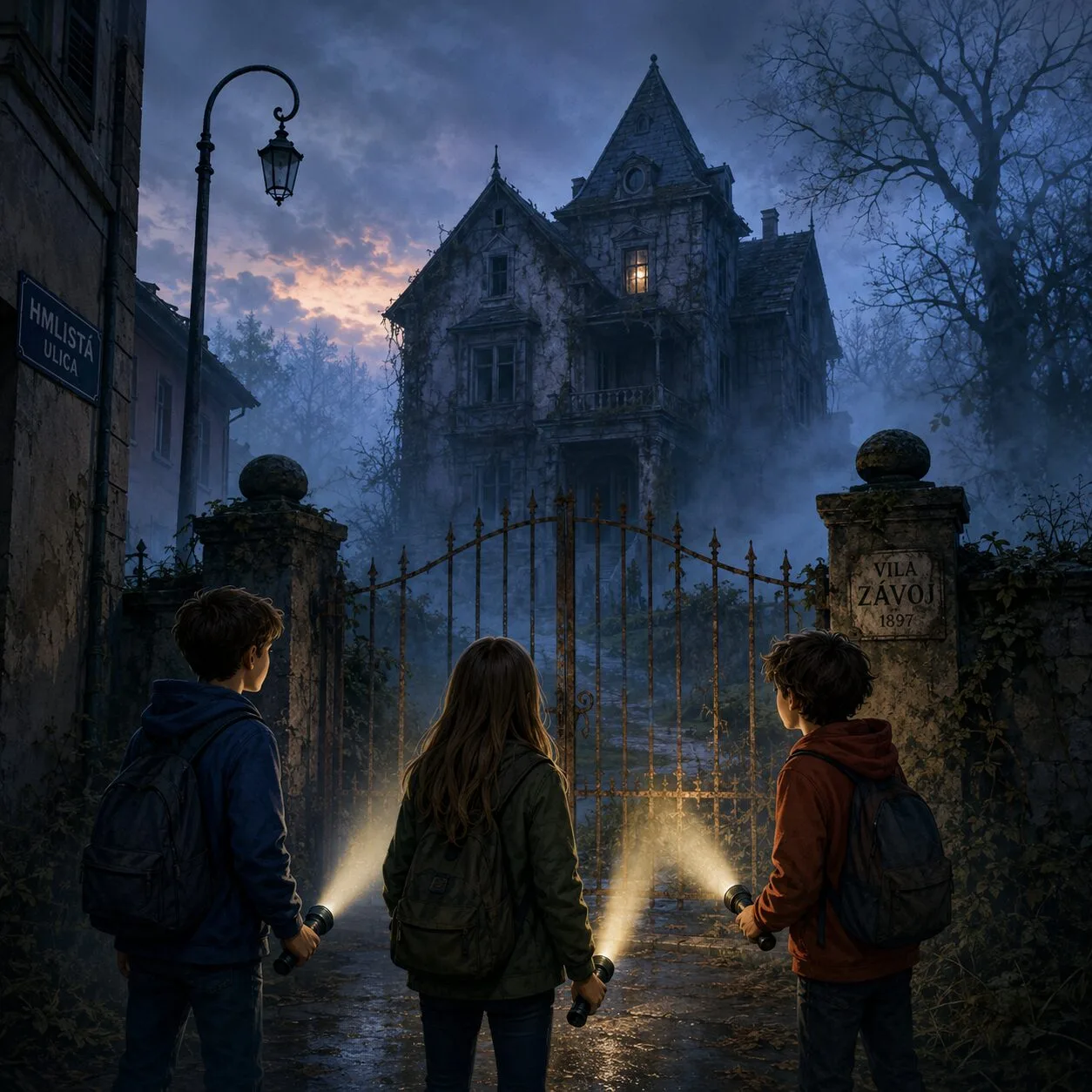
Ulica, ktorá sa večer strácala
Na konci Sivej ulice stál dom, ku ktorému sa cez deň nikto nepribližoval a večer sa mu vyhýbali aj dospelí. Nebol najväčší ani najstarší, no keď padla hmla, zmizol ako kameň hodený do mlieka. Ľudia tvrdili, že v ňom nikto nebýva, ale Tomáš si raz všimol, že sa na poschodí rozsvietilo okno.
Tri baterky a jedna stávka
Tomáš, Lea a Mišo sa rozhodli, že zistia, či sú príbehy o dome pravdivé. V škole sa hovorilo, že elektrinu odpojili pred dvadsiatimi rokmi, no každú hmlistú noc sa za záclonou pohne tieň. Mišo tvrdil, že sa nebojí ničoho. Lea mu podala baterku a povedala, že dnes to môže dokázať.
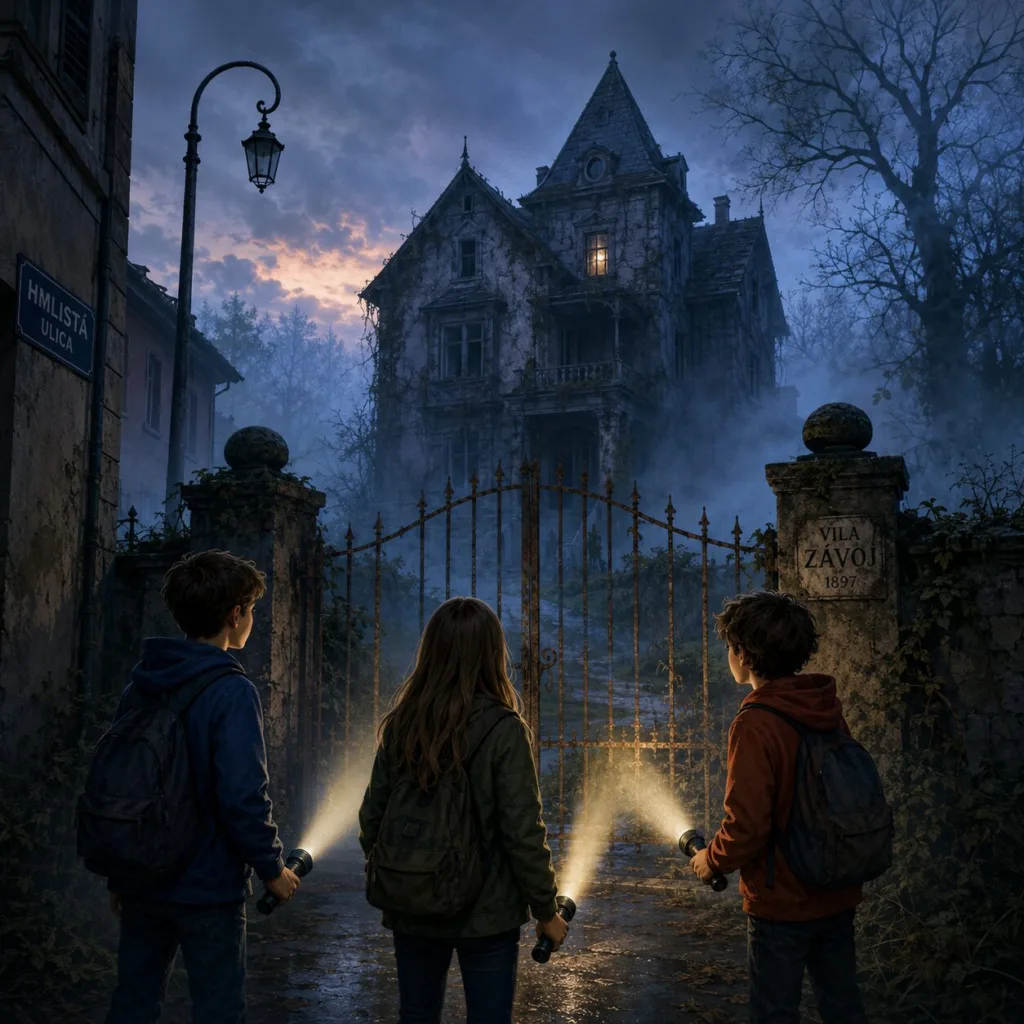
Brána zavŕzgala skôr, než sa jej dotkli
Keď Tomáš natiahol ruku k bráne, otvorila sa sama. Zavŕzgala tak hlasno, až Mišo podskočil a skoro pustil baterku. Lea si všimla stopy v mokrej zemi. Neboli čerstvé, ale smerovali presne ku dverám. Najčudnejšie bolo, že stopy viedli iba dnu. Žiadne sa nevracali späť.
Vnútri nebol chlad ani prach, ako čakali. Z domu vyšiel teplý vzduch, akoby niekto práve prikúril v peci. Na zemi ležal čistý koberec a na stenách viseli obrazy ľudí bez tvárí. Keď deti prešli cez halu, oči na obrazoch sa neobjavili, ale všetci traja mali pocit, že ich niekto sleduje.
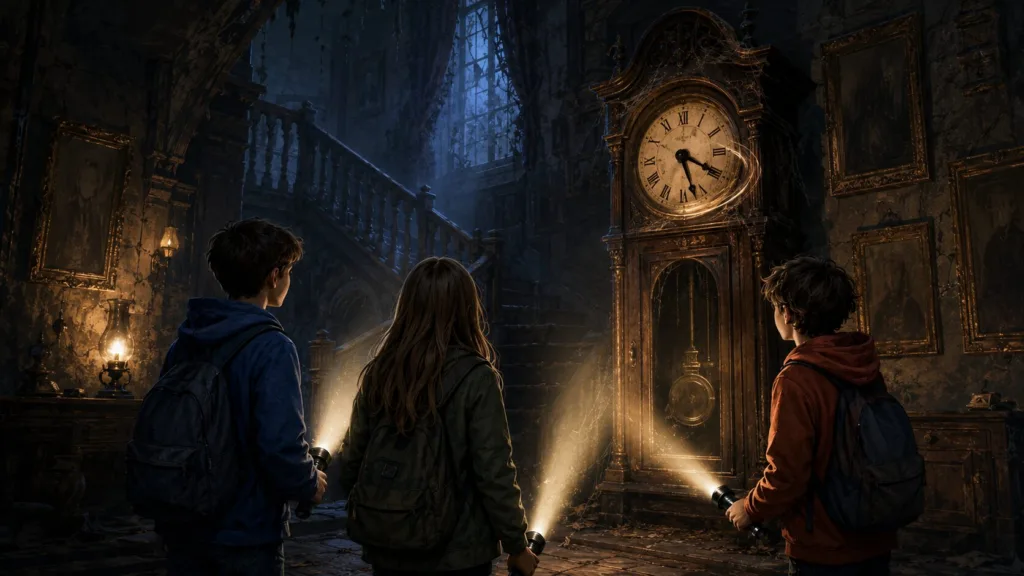
Hodiny, ktoré išli dozadu
V hale stáli vysoké drevené hodiny. Tikali pomaly, ale ručičky sa nehýbali dopredu. Cúvali. Keď ukázali deväť, podlaha sa zachvela a z poschodia sa ozval šepot: „Prišli ste príliš neskoro.“ Mišo chcel okamžite odísť, lenže vchodové dvere už za nimi ticho zapadli.
Dvere bez kľučky
Na konci chodby stáli biele dvere bez kľučky. Do dreva bol vyrytý nápis: Otvorí ten, kto sa nebojí pravdy. Lea si kľakla a všimla si pásik modrého svetla, ktorý presakoval spod dverí. Tomáš položil dlaň na drevo. Mišo ho napodobnil a Lea sa pridala. Dvere sa otvorili bez jediného zvuku.
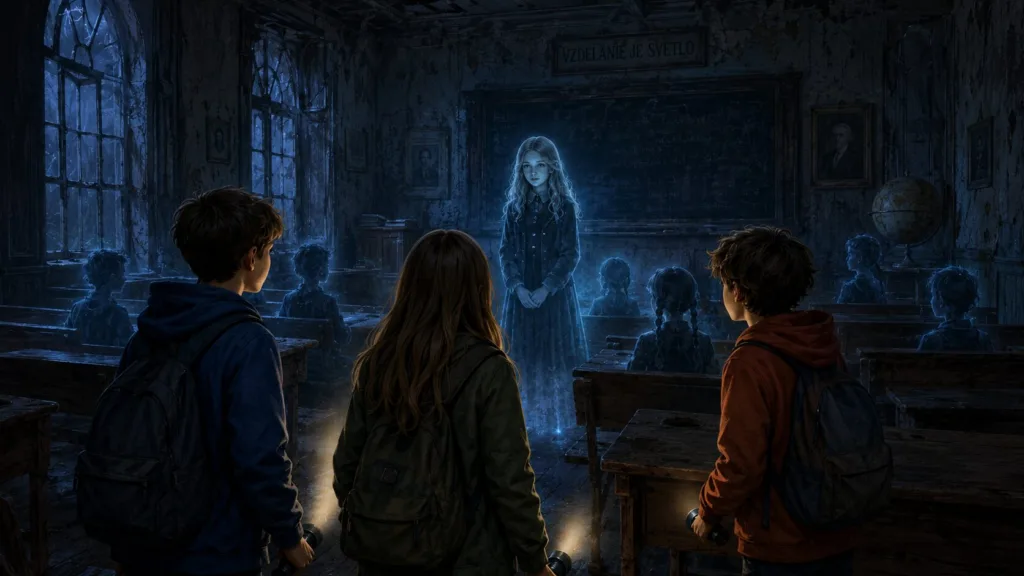
Za nimi nebola izba, ale stará trieda. V laviciach sedeli tiene detí a šepkali otázky, ktoré zneli ako písomka, na ktorú sa nikto nepripravil. Pri tabuli stálo dievča v starom kabáte. Malo bledú tvár, no oči neboli zlé. „Volám sa Nora,“ povedalo. „Tento dom si pamätá tých, ktorí utekali pred pravdou.“
Pravda, ktorú nechceli povedať
Dom chcel od každého jednu pravdu. Tomáš priznal, že rozbil susedovo okno a zvalil to na vietor. Lea povedala, že sa tvári odvážne, hoci sa bojí, že stratí kamarátov. Mišo priznal, že si často vymýšľa, aby bol zaujímavejší. Keď dopovedali, tiene v laviciach sa pomaly postavili.
Neboli nahnevané. Vyzerali skôr unavene, akoby čakali veľmi dlho. Nora sa usmiala. „Dom drží len tých, ktorí pred pravdou utekajú,“ povedala. „Vy ste ju pustili von.“ Vtom sa hodiny v hale opäť roztikali správnym smerom a dvere na prízemí sa samy otvorili.
Svetlo v hornom okne
Deti vybehli von a hmla sa pred nimi rozostúpila ako záves. Až na ulici zistili, že brána je znovu zamknutá. Na druhý večer sa Tomáš vrátil, ale len po roh ulice. V hornom okne sa na chvíľu objavilo modré svetlo. Potom silueta dievčaťa zamávala. Nebolo to rozlúčenie. Skôr poďakovanie.
Od toho dňa sa dom na konci hmly už nezdal taký hrozivý. Stále bol starý a tichý, ale Tomáš, Lea a Mišo vedeli, že niektoré strašidlá nechcú ublížiť. Iba čakajú, kým niekto povie pravdu nahlas.
The House at the End of the Fog
The Street That Disappeared at Night
At the end of Grey Street stood a house that nobody went near during the day, and even adults avoided after sunset. It was not the biggest or the oldest house, but when the fog came down, it vanished like a stone dropped into milk. People said nobody lived there, but Tomáš once noticed a light in an upstairs window.
Three Flashlights and One Dare
Tomáš, Lea, and Mišo decided to find out whether the stories about the house were true. At school, everyone said the electricity had been cut off twenty years ago, yet every foggy night a shadow moved behind the curtain. Mišo claimed he was afraid of nothing. Lea handed him a flashlight and said he could prove it tonight.
The Gate Creaked Before They Touched It
When Tomáš reached toward the gate, it opened by itself. It creaked so loudly that Mišo jumped and almost dropped his flashlight. Lea noticed footprints in the wet ground. They were not fresh, but they led straight to the door. The strangest thing was that the footprints only went in. None came back out.
Inside, there was no cold air or dust, as they had expected. Warm air flowed from the house, as if someone had just lit a fire. A clean carpet lay on the floor, and portraits of people without faces hung on the walls. As the children crossed the hall, the pictures did not grow eyes, but all three felt watched.
The Clock That Ran Backward
In the hall stood a tall wooden clock. It ticked slowly, but its hands did not move forward. They moved backward. When they reached nine, the floor trembled and a whisper came from upstairs: “You have come too late.” Mišo wanted to leave at once, but the front door had already closed quietly behind them.
The Door Without a Handle
At the end of the hallway stood a white door without a handle. Words were carved into the wood: It opens for those who are not afraid of the truth. Lea knelt down and noticed a strip of blue light under the door. Tomáš placed his palm on the wood. Mišo copied him, and Lea joined in. The door opened without a sound.
Behind it was not a room, but an old classroom. Shadows of children sat at the desks and whispered questions that sounded like a test nobody had studied for. A girl in an old coat stood by the board. Her face was pale, but her eyes were not cruel. “My name is Nora,” she said. “This house remembers those who ran from the truth.”
The Truth They Did Not Want to Say
The house wanted one truth from each of them. Tomáš admitted he had broken a neighbor’s window and blamed the wind. Lea said she acted brave, although she was afraid of losing her friends. Mišo admitted he often made things up to seem more interesting. When they finished speaking, the shadows in the desks slowly stood.
They were not angry. They looked tired, as if they had been waiting for a very long time. Nora smiled. “The house only holds those who run from the truth,” she said. “You have let yours out.” Then the clock in the hall began ticking the right way again, and the front door opened by itself.
The Light in the Upstairs Window
The children ran outside, and the fog parted before them like a curtain. Only in the street did they see that the gate was locked again. The next evening, Tomáš returned, but only as far as the corner. A blue light appeared for a moment in the upstairs window. Then the shape of a girl waved. It was not goodbye. It felt more like thank you.
From that day on, the house at the end of the fog no longer seemed so frightening. It was still old and silent, but Tomáš, Lea, and Mišo knew that some ghosts did not want to hurt anyone. They were only waiting for someone to speak the truth aloud.