
Robo a stratená planéta, 1. časť: Signál v hre

signál v hre: dvojjazyčný detský príbeh slovensky aj po anglicky.
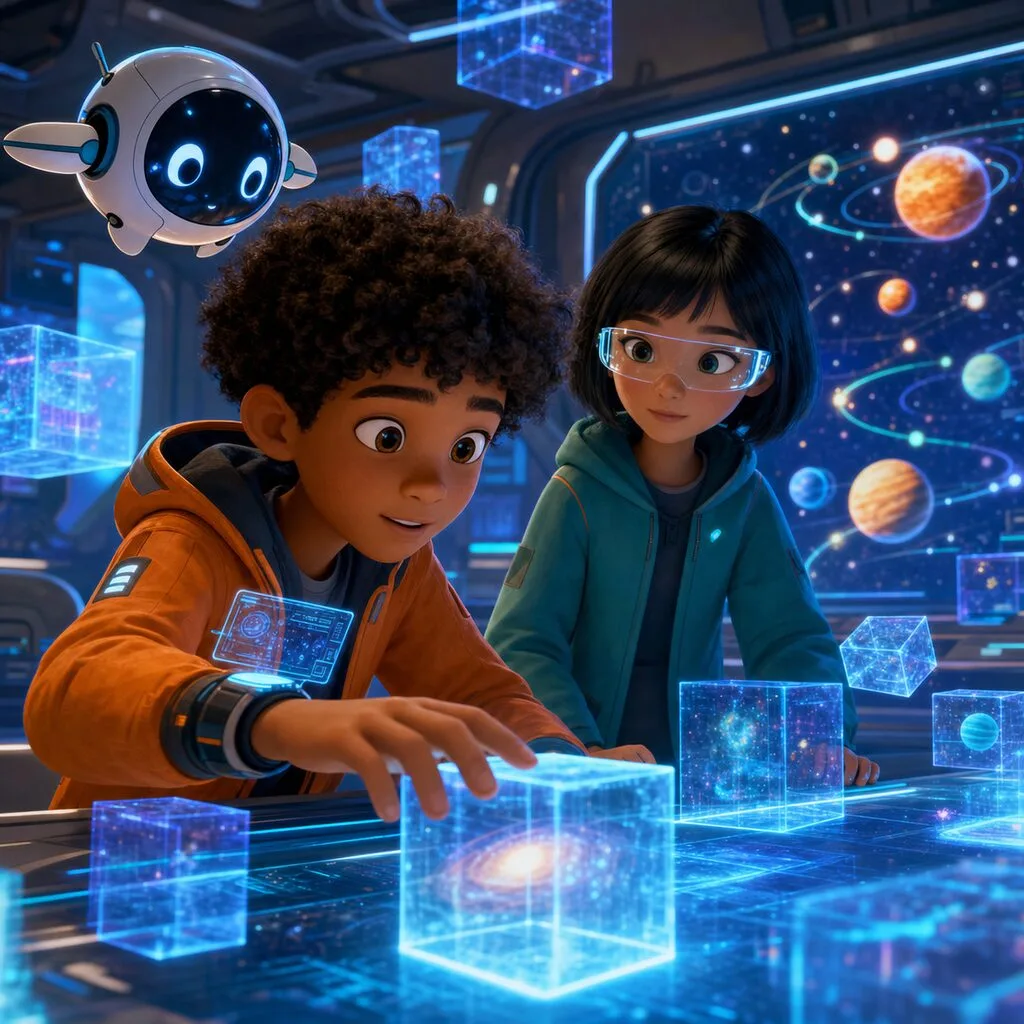
Na stanici bolo po večeri ticho, aké Robo nemal veľmi rád. Ticho mu pripadalo ako priestor, v ktorom sa môže ukryť niečo zaujímavé. Sedel pri digitálnom archíve, rukáv oranžovej smart bundy mal vyhrnutý a jeho hologramový náramok jemne svietil. Prezeral si staré dátové kocky, programy na učenie a mapy hviezdnej oblohy. Väčšina súborov bola nudná, ale Robo mal nos na veci, ktoré iní prehliadli.
„Aha!“ vyhŕkol zrazu a naklonil sa bližšie k plávajúcemu menu archívu. „Toto ešte funguje.“
Na displeji sa objavila stará vzdelávacia hra s názvom Hviezdna navigácia pre kadetov. Bola to jednoduchá vesmírna simulácia určená pre deti z prvej úrovne výcviku. Vidieť bolo farebné planéty, hviezdne dráhy a malé úlohy, ktoré mali hráča učiť orientáciu v priestore.
Robo sa usmial. Staré veci ho fascinovali. Keď niečo stále fungovalo aj po rokoch, pripadalo mu to ako malé víťazstvo.
Okamžite zavolal Ami a Pipovi.
„Poďte sem! Našiel som hru, ktorá je staršia než väčšina archívu, ale beží!“
Ami prišla prvá. Mala krátky čierny bob, tyrkysovú mikinu a malé AR okuliare, ktoré si posúvala na nose, keď chcela niečo lepšie vidieť. Pozrela na Robovo nadšenie a usmiala sa.
„Staré hry sú niekedy plné prekvapení,“ povedala pokojne. „Ale najprv zistíme, či je bezpečná.“
Za ňou priletel Pip. Jeho bielo-modré telo sa lesklo v svetle archívu a modré LED oči rýchlo zablikali. Malý robot sa vzniesol vyššie, urobil kruh okolo názvu hry a hneď začal zapisovať údaje.
„Program je aktívny,“ zahlásil presným hlasom. „Stabilita deväťdesiattri percent. Úroveň rizika: nízka. Vítam školský zážitok.“
Robo sa zasmial. „Pip, ty vieš povedať aj niečo bez čísel?“
„Áno,“ odpovedal Pip po chvíli. „Toto je školský zážitok.“
Ami sa zasmiala tiež. „To bol pokus o vtip?“
„Pravdepodobne,“ odvetil Pip vážne.
Troch priateľov to rozveselilo, ale len na chvíľu. Potom sa všetci pozerali na starú hru. Robo už takmer netrpezlivo podupkával na mieste.
„Tak ju spustíme?“ spýtal sa.
Ami prikývla. „Len ako bezpečný program. Nič nemeníme, nič neotvárame mimo hry, nič nepreskakujeme.“
„Súhlasím,“ povedal Pip a jeho oči jemne zasvietili. „Bezpečnosť je základ.“
Robo stlačil spustenie.
Hologram sa rozsvietil a okolo nich sa rozvinul veselý vesmír. Planéty žiarili ako gule z cukríkov, medzi nimi sa objavovali navigačné čiary a krátke úlohy. Hra ich najprv učila rozoznávať smery, odhadovať vzdialenosti a vyberať správnu dráhu letu. Robo sa do toho ponoril okamžite.
„Doprava! Nie, nie, ešte viac doprava!“ volal a nadšene mával rukou.
„Pozor na mapu,“ upozornila ho Ami. „Planéta je síce blízko, ale dráha je zakrivená.“
Pip sa vznášal nad hologramom a porovnával údaje zo hry so svojimi senzormi. „Zobrazená vzdialenosť sa zhoduje. Rýchlosť letu je správna. Všetko je v norme.“
Bolo to príjemné. Bežná hra. Bežné úspechy. Bežné modré body za splnené úlohy. Robo sa už chystal povedať, že by mohli skúsiť ďalší level, keď sa obraz na okamih zachvel.
Na okraji simulácie sa mihla tenká vlna svetla.
Najprv vyzerala ako súčasť hry. Ako ďalší efekt. Potom sa však vlna zopakovala. A potom znova. Vždy rovnako, presne po rovnakom čase.
Robo zamrkal. „Videli ste to?“
Ami si rýchlo upravila okuliare. „Áno. A nevyzeralo to ako náhodný efekt.“
Pip sa priblížil takmer až k hologramu. „Zaznamenávam opakovanie signálu. Intervaly sú takmer identické.“
„Možno je to tajná súčasť hry!“ vyhŕkol Robo.
Ami pokrútila hlavou. „Možno. Ale najprv musíme zistiť, či sa to opakuje vždy rovnako.“
Robo si zahryzol do pery. Chcel hneď pokračovať, no tentoraz sa zadržal. Pozrel na Ami, potom na Pipa. Bolo vidieť, že v ňom stále vrie zvedavosť, ale tentoraz počúva.
„Dobre,“ povedal napokon. „Tak to zmeriame.“
Pip sa rozžiaril. „Výborné rozhodnutie.“
Začali sledovať signál podrobne. Pip zapisoval presný čas každého výskytu. Ami si cez AR okuliare zobrazovala jeho rytmus ako vlnu. Robo držal hologram v zornom poli a čakal na ďalšie opakovanie.
Keď sa veci začnú meniť
Vlna sa vrátila.
Potom znova.
A ešte raz.
Robo sa naklonil bližšie a prstom jemne prešiel po vzduchu tesne nad svietiacou čiarou, akoby chcel skontrolovať, či sa mu to len nezdá. Svetlo sa mihlo presne v tom istom rytme.
„Každý návrat je takmer rovnaký,“ oznámil Pip. „Odchýlka je veľmi malá. Príliš malá na bežnú náhodu.“
Ami sa zamyslela. „Skôr to vyzerá ako kód než ako chyba obrazu.“
Robo sa nahol dopredu. „Kód? Ale v hre?“
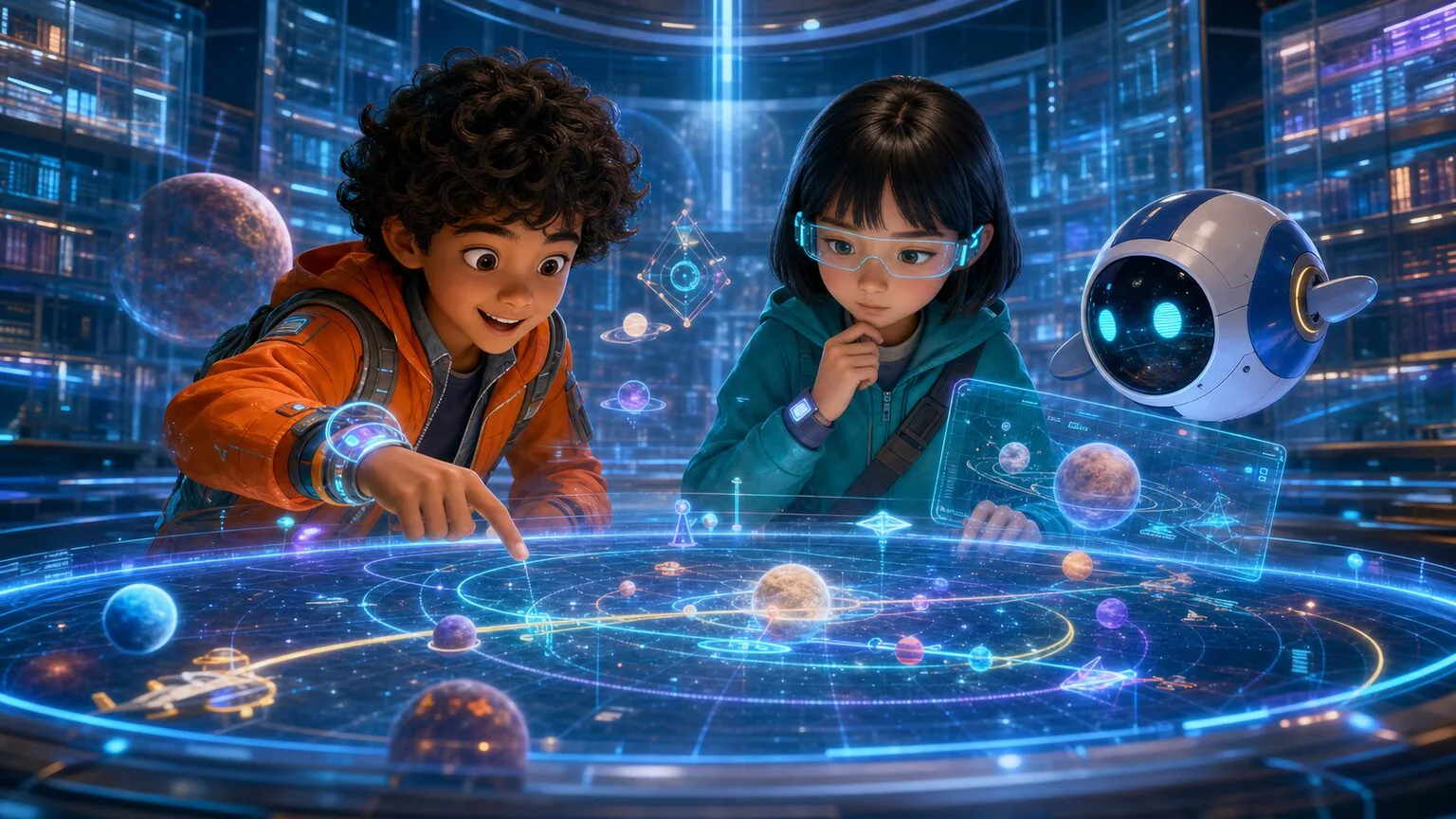
„Aj v hre môže byť niečo ukryté,“ povedala Ami. „Ale nesmieme sa ponáhľať.“
Pip premietol pred nich malé modré grafy. Na jednej osi bola časová vzdialenosť, na druhej sila signálu. Čiary boli čisté a pravidelné, akoby ich niekto nakreslil podľa pravítka.
„Toto nie je rozbitý chaos,“ povedal Pip. „Toto je poriadok.“
A v tej chvíli sa v strede hologramu objavil nový pruh textu.
Najprv bol rozmazaný, akoby sa len snažil dostať na povrch. Potom sa vyjasnil.
Niva-7.
Robo stuhol.
„Počkajte… Niva-7?“ zašepkal.
Ami sa otočila k nemu. „Poznáš to meno?“
Robo prikývol, oči dokorán. „Je v starých záznamoch. Stratená planéta. Kedysi sa o nej učilo, ale potom sa jej stopa stratila.“
Pip si rýchlo načítal databázu. „Potvrdzujem. Niva-7 je evidovaná ako stratený svet v historických záznamoch stanice.“
Na chvíľu bolo ticho. Hologram stále pulzoval, akoby čakal na ich reakciu.
„To už nie je náhoda,“ povedala Ami pomaly. „Toto meno sa v signáli neobjavilo len tak.“
„Takže je to odkaz!“ Robo sa už opäť nadchol. „A možno vedie priamo k planéte!“
Ami zdvihla ruku. „Ale najprv si všimni toto.“
Ukázala na spodnú časť signálu. Medzi pulzmi sa objavovali čísla, ale neboli celé. Niektoré chýbali. Iné sa opakovali. Vyzeralo to ako rozbitá veta z čísel, no stále v nej bol zmysel.
Pip priblížil údaje na maximum. „Ide o neúplný súradnicový fragment.“
Robo zamrkal. „Čiže niečo ako adresa vo vesmíre?“
„Presne tak,“ povedala Ami. „Ale nie celá adresa. Len časť.“
Pip doplnil: „Chýbajúce čísla nie sú náhodné. Opakujú sa v pravidelnom poradí. Ak by sme mali viac dát, mohli by sme doplniť vzor.“
Robo sa pozrel z jedného na druhého. Už nechcel len behať za záhadou. Chcel jej rozumieť.
„Tak to nie je len chyba starej hry,“ povedal tichšie. „Je to stopa.“
Ami prikývla. „Možno hra len niečo ukrývala. Alebo niečo zachovala.“
„Alebo niekto chcel, aby to niekto objavil až teraz,“ dodal Pip.
Táto veta zostala visieť vo vzduchu.
Robo si prekrížil ruky. Vždy túžil objavovať. Teraz však cítil aj niečo iné. Bolo to vzrušenie, ale aj rešpekt. Keď je niečo skutočné, nie je dobré sa vrhať dopredu bez rozmýšľania.
„Tak čo urobíme?“ spýtal sa.
Ami sa usmiala, len veľmi jemne. „Porovnáme údaje. Zistíme, či sa signál opakuje aj po ďalšom leveli. A až potom sa rozhodneme, čo ďalej.“
Pip prikývol. „Súhlasím. Presnosť je lepšia než rýchlosť, keď hľadáme pravdu.“
Robo vydýchol a usmial sa. „Dobre. Tentoraz počkám.“
Ami sa naňho pozrela trochu prekvapene, potom spokojne. „To bolo múdre.“
„Nerob si z toho veľkú vec,“ zamrmlal Robo, ale usmieval sa. „Len som nechcel minúť niečo dôležité.“
„A to je presne dôvod, prečo je tím tímom,“ povedala Ami.
Spoločne si sadli k holografickému stolu v archíve. Na jeho povrchu pulzoval súradnicový fragment. Pip ho rozdelil na jednotlivé časti, Ami porovnávala vzory a Robo si zapisoval všetko, čo im prišlo zvláštne. Zrazu to už nebola len hra. Bola to prvá skutočná stopa k niečomu, čo sa skrývalo ďalej vo hviezdach.
Keď sa signál naposledy rozozvučal, tentoraz znel takmer ako pozvanie.
Nie zlovestné. Skôr záhadné. Ako keby niekto potichu klepal na dvere a čakal, či niekto odpovie.
Robo zdvihol zrak od dát. „Takže… kto alebo čo to posiela?“
Dôležitý okamih
Ami sa zahľadela na pulzujúce čísla. „To ešte nevieme.“
Pip mierne naklonil hlavu. „Ale vieme, že to nie je len chyba programu.“
Robo sa usmial, tentoraz pokojnejšie než zvyčajne. „A to znamená, že sme niečo našli.“
Na holograme sa ešte raz rozžiarilo meno Niva-7. Potom sa obraz stlmil, no súradnicový fragment zostal svietiť ďalej ako malý maják v archíve.
Trojica sa naň dívala v tichu, ktoré už nepôsobilo prázdne. Pred nimi bola prvá stopa a s ňou aj ďalšie tajomstvo, ktoré ich čakalo za hranicou hry.
Pokračovanie nabudúce…